This site is supported by our readers. We may earn a commission, at no cost to you, if you purchase through links.
A small bird can lose up to 10% of its body weight overnight in winter—simply staying warm burns that much fuel. For chickadees, nuthatches, and woodpeckers working through frozen landscapes, finding enough calories isn’t a convenience issue. It’s survival.
That’s where suet comes in. Delivering 8 to 9 calories per gram, it’s one of the most energy-dense foods you can offer wildlife during the months when natural food sources are buried under snow or gone entirely. Fat that dense helps birds generate heat through the night and return to your feeder the next morning instead of not returning at all.
Suet cakes for winter wildlife feeding done right—the right ingredients, the right preparation, the right placement—can make your backyard a genuine refuge. What follows covers everything you need to know to do it well.
Table Of Contents
Key Takeaways
- Suet delivers 8–9 calories per gram, making it one of the most effective winter foods you can offer birds that burn up to 10% of their body weight overnight just staying warm.
- Homemade suet built on rendered beef tallow with black oil sunflower seeds, unsalted peanuts, and dried mealworms gives birds cleaner, more customizable nutrition than most store-bought alternatives.
- Safe preparation matters as much as ingredients—render fat between 225–250°F, cool to 120–140°F before molding, and refrigerate finished cakes at 34–40°F for up to two weeks or freeze for up to nine months.
- Feeder placement—5–7 feet high, near cover, away from windows, and fitted with an upside-down or tail-prop design—determines which birds benefit most and keeps unwanted visitors like squirrels and starlings at bay.
Why Suet Cakes Help Winter Birds
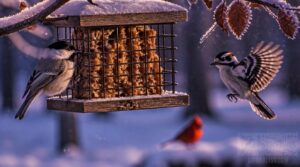
Winter is hard on birds — their bodies burn through calories fast just to stay warm when temperatures drop.
A good starting point is knowing which bird foods work best in winter — high-fat options like suet and black oil sunflower seeds make a real difference.
Suet cakes step in as a concentrated fat source that delivers the energy birds desperately need during those lean months. Here’s what makes them so effective, and why knowing the difference can shape how you feed your backyard visitors.
High-fat Winter Energy
Suet delivers 8 to 9 calories per gram — making it an incredibly high-calorie bird food for winter survival strategies. Here’s why that density matters:
- Saturated fats release energy steadily through cold nights
- Polyunsaturated fats support mitochondrial health
- Fat slows feeding frequency, conserving movement energy
- Lipids stabilize cell membranes during temperature drops
That thermal regulation support keeps birds alive when temperatures plunge. Research suggests that extreme temperatures promote high-fat diets in various biological contexts.
Birds Suet Attracts
That caloric density draws a predictable cast of visitors. Downy and hairy woodpeckers arrive first, pecking confidently at firm fat cakes. Nuthatches follow, hunting the protein they’d normally find in bark insects. Chickadees dart in between, fueling their rapid metabolisms.
Wrens prefer suet mixed with fruit or mealworms. Even starlings and blue jays appear when seeds or nuts are blended in.
Extreme Cold Benefits
When temperatures plunge, birds face a brutal metabolic challenge. Their metabolic rate rises by 5–15%, burning through energy reserves just to stay warm. Brown fat activity increases to generate internal heat, and thermogenic hormones kick in to regulate that demand.
That’s why winter high-energy suet matters so much:
- It replaces calories lost to cold-driven thermogenesis
- It helps keep the immune system strong during peak illness season
- It fuels cardiovascular vascular training as birds forage in freezing air
Energy-dense food sources like suet cakes are simply irreplaceable in extreme winter.
Store-bought Vs Homemade
When the cold hits hardest, every calorie counts. Store-bought suet cakes are convenient, but homemade suet recipes let you customize nutrition, cut fillers, and target the birds visiting your feeders.
| Feature | Store-bought | Homemade |
|---|---|---|
| Shelf life | Months | 2 weeks |
| Ingredients | Stabilizers added | Fresh, pure |
| Protein level | Fixed | Customizable |
For winter bird feeding, homemade wins on ingredient purity — store-bought simply saves time.
Best Ingredients for Winter Suet

Not all suet is created equal, and what you put into yours makes a real difference for the birds depending on it. The right combination of fats, seeds, and protein sources gives them exactly what they need to survive freezing nights and short winter days. Here’s what belongs in a quality winter suet cake.
Whether you’re stocking up for winter or switching to warmer-weather blends, this guide to year-round bird food options breaks down the best choices for every season.
Beef Tallow Base
Beef tallow is the key ingredient in any effective suet cake recipe. With roughly 900 calories per 100 grams, it delivers the energy winter birds desperately need:
- Roughly 50% saturated fats for structural stability
- High oleic acid content for smooth texture
- Negligible water content, reducing spoilage risk
- A firm, seed-binding matrix at cold temperatures
Proper rendering keeps it clean and shelf-stable for months.
Black Oil Sunflower Seeds
Few ingredients pull their weight in suet cakes quite like black oil sunflower seeds. Their shells are thin enough for chickadees and nuthatches to crack open easily, yet sturdy enough to stay intact during mixing.
Each seed carries 40–50% oil by mass, largely linoleic acid, which helps keep feathers healthy. Store them sealed and cool — they turn rancid faster than you’d expect.
Peanuts and Sunflower Hearts
Peanuts and sunflower hearts earn their place in any winter suet recipe. Together, they cover nearly every nutritional base:
- Protein density — peanuts deliver about 25g of protein per 100g
- Linoleic acid — sunflower hearts keep feathers and skin healthy
- Aflatoxin risk — store peanuts in dry conditions to prevent mold
- Moisture control — seal both tightly after opening
Always use unsalted forms only.
Mealworms for Protein
Dried mealworms punch well above their weight — delivering 47 to 64 percent protein by dry weight, with all nine essential amino acids birds need to survive brutal cold snaps.
Dried mealworms deliver up to 64 percent protein and every essential amino acid birds need to survive brutal cold
That protein is highly digestible, meaning birds actually absorb it efficiently. They also supply iron, zinc, and B vitamins. For insect-eating species like bluebirds and wrens, mealworms are irreplaceable in suet recipes.
Ingredients to Avoid
Not all ingredients are safe. Avoid these five:
- Bacon grease or drippings — stays too soft and destroys feather waterproofing
- Hydrogenated fats — rancidify quickly and deliver harmful trans fats
- Added salt — raises sodium to dangerous levels, especially in cold weather
- Artificial sweeteners — no energy value, attract unwanted pests
- BHA or BHT preservatives — linked to potential health risks for wildlife
When in doubt, simpler is safer.
Homemade Winter Suet Cake Recipes
Making your own suet cakes gives you full control over what goes into them — and birds can taste the difference.
Each recipe below is built around a specific nutritional goal, whether that’s pure caloric density, added protein, or natural fruit sugars. Here are five homemade blends worth trying this winter.
Classic Suet Cake
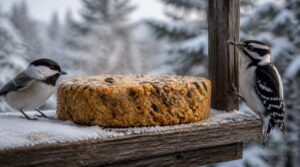
The classic suet cake is where winter bird feeding begins. Melt rendered beef fat slowly, then stir in two cups of mixed seeds — black oil sunflower seeds work especially well — plus enough cornmeal to thicken the paste.
Press it firmly into molds and refrigerate until solid. That 1:1 fat-to-dry ratio gives you a dense, high-calorie bird food birds return to all season.
Peanut Butter Cornmeal Cake
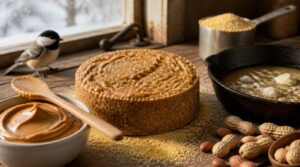
When you want something richer than the classic, try folding one cup of unsalted peanut butter into your melted beef fat before stirring in two cups of fine yellow cornmeal.
The cornmeal creates a slightly gritty, toothsome texture birds grip easily, while peanut butter boosts the fat and protein balance. Press into molds, chill until firm, and it’s ready.
Fruit and Nut Blend

Swap the cornmeal for texture you can forage through: fold in dried cranberries, raisins, and chopped hazelnuts alongside your melted beef tallow. The fruits deliver natural sugars for quick energy, while nuts add fat and protein that lasts.
Source unsalted, additive-free dried fruits — no added syrups. Chocolate or artificially flavored pieces can harm birds, so keep the ingredient list clean and simple.
Insect-enriched Suet
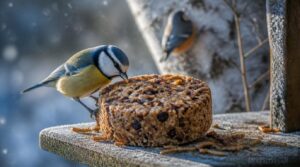
Fruits and nuts cover energy needs well, but insectivorous birds need more. Dried mealworms stirred into melted tallow deliver essential amino acids that support feather growth and protein for fledglings through cold months.
- Blue tits hunting bark beetles
- Nuthatches spiraling bare winter trunks
- Thrushes scanning frost-hardened ground
That insect flavor palatability draws these species straight to your feeder.
Woodpecker-friendly Recipe
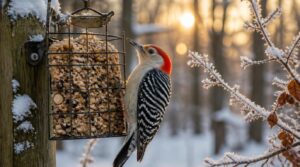
Woodpeckers burn serious calories drilling through frozen bark, so your suet cake recipe needs serious caloric density. Melt beef tallow, stir in black oil sunflower seeds, chopped unsalted peanuts, and dried mealworms for protein additives that support drumming muscles.
Cornmeal acts as a binding agent, keeping this nutty woodpecker delight firm enough for vigorous pecking without crumbling — true foraging efficiency in every bite.
Safe Suet Preparation and Storage

Getting your suet right in the kitchen matters just as much as what you put in it. A few straightforward steps keep your cakes safe, fresh, and genuinely useful to the birds counting on them. Here’s what you need to know to handle and store suet properly.
Rendering Beef Fat Safely
Rendering beef fat is slow, patient work — rush it and you’ll scorch the fat before it’s useful. Keep heat steady between 225 and 250°F, never letting it climb above 260°F.
Once melted, strain through fine mesh or cheesecloth to remove cracklings. Keep a lid nearby, work in a ventilated space, and never walk away from the pot.
Pressing Suet Into Molds
Getting the mixture into molds properly makes all the difference between a solid, long-lasting cake and one that crumbles at the feeder. Let your fat cool to 120–140°F before pouring — too hot and the ingredients separate.
Press firmly in stages, tapping the mold to settle seeds and mealworms evenly. Smooth the surface with a spoon, filling to within ¼ inch of the rim.
Refrigerating Fresh Cakes
Once cooled, refrigerate suet cakes at 34–40°F — that keeps spoilage at bay for up to two weeks:
- Store on the middle shelf for stable temperatures
- Keep away from the door to avoid temperature swings
- Wrap in wax paper to prevent moisture loss
- Distance from strong-smelling foods to block flavor transfer
- Use airtight containers to slow rancidity
Check weekly for spoilage.
Freezing for Long Storage
Freezing extends your suet cakes to six to nine months when done right. Cool cakes completely, then freeze flat on a tray for rapid, even solidification — this prevents large ice crystals from breaking down the fat structure.
Vacuum-seal or airtight freezer bags work best; remove all air before sealing. Label each package with the freezing date, and thaw portions slowly in the refrigerator to preserve texture.
Spoilage Warning Signs
Even well-stored suet can turn. Watch for color changes — healthy suet stays creamy white; brown or grey patches signal fat breakdown. A sour or rancid smell is your clearest warning. Slimy texture or visible mold growth means discard it immediately.
At the feeder, birds refusing suet they normally love is often your first clue something’s wrong.
Smart Winter Feeding Station Tips

Getting suet to your birds is only half the job — where and how you set up your feeder makes all the difference. A thoughtful feeding station keeps the right birds coming back while quietly discouraging the wrong visitors. Here’s what you need to know to get your winter setup working harder for the wildlife in your yard.
Best Feeder Placement
Where you hang your suet feeders matters just as much as what’s inside them.
- Hang suet cages 5–7 feet above ground to deter predators
- Position near shrubs or conifers for quick cover
- Keep feeders 10+ feet from windows to prevent collisions
- Mount in weather-sheltered spots away from strong prevailing winds
- Space multiple suet feeders 10–15 feet apart to reduce crowding
Upside-down Suet Feeders
Once your feeders are well-positioned, the type of feeder you choose shapes which birds actually show up.
Upside-down suet feeders require birds to cling beneath the cake — a posture completely natural for woodpeckers, nuthatches, and chickadees. Starlings usually avoid this awkward angle, which keeps your winter suet cakes less crowded. Most models include a weather-protective canopy and removable grid, making refilling and quick rinse-cleaning straightforward between visits.
Tail-prop Woodpecker Feeders
Woodpeckers need more than a flat surface — they brace their stiff tail feathers against a backing to stay stable while feeding. Tail-prop feeders mimic a tree trunk by providing that flat rear surface.
- Helps pileated woodpeckers feeding comfortably
- Aligns body for safer, controlled pecking
- Cedar builds resist freezing temperatures
Mount yours 5–6 feet high for the best results.
Squirrel-deterrent Options
Getting birds to your tail-prop feeder is one thing — keeping squirrels away from it is another.
Squirrel baffles mounted at least 5 feet up on a pole create a slippery barrier no squirrel can bypass. For suet specifically, mixing cayenne pepper directly into your recipe works well; birds can’t taste capsaicin, but squirrels absolutely can.
When to Replace Suet
Even the best squirrel deterrents can’t help birds if the suet itself has gone bad. Detecting rancid odors is your clearest signal — trust your nose. Visible mold, dark discoloration, or a greasy texture all mean it’s time to swap it out.
- Color shifts to dark patches
- Surface feels sticky or overly soft
- Birds abandon it after a short visit
- A sheen of seeping oils appears
In warm spells, replace every 3–7 days.
Frequently Asked Questions (FAQs)
What is the 5 7 9 rule for bird feeders?
The 5-7-9 rule guides bird feeder placement: mount feeders 5 feet high, 7 feet from structures, and 9 feet above potential squirrel launch points like decks or railings to create a secure feeding zone.
When should you stop putting suet out for birds?
As spring insects emerge and feeder visits drop steadily over one to two weeks, that’s your cue. In warmer regions, late February signals the shift; northern areas may feed through April.
Can squirrels eat suet cakes?
Squirrels can eat suet, and they genuinely enjoy it. High fat content appeals strongly to their winter energy needs, but excess suet risks obesity. Offer it primarily for birds using squirrel-deterrent feeders.
How to make suet for birds in the winter?
Imagine melting beef tallow over low heat, then pressing it into a mold with oats, peanut butter, and sunflower seeds. Once cooled, you’ve made a high-calorie bird food that sustains small birds through freezing nights.
How often should suet feeders be cleaned?
Clean suet feeders at least once a week during warm weather. In cooler months with light use, every two weeks works. Always check for mold or foul odors and clean immediately if spotted.
Should suet feeding stop when temperatures rise?
Not necessarily. Once daily highs consistently exceed 70°F (21°C), standard suet risks spoilage and feather damage. Switch to no-melt formulations or remove suet entirely during heat waves above 90°F.
Are store-bought suet cages safe for all birds?
Most store-bought suet cages work well for common backyard species, but mesh size and edge finish matter. Sharp wire edges can injure small birds, and openings larger than 1 cm risk entrapment.
Conclusion
Picture a chickadee returning to your yard on a bitter January morning—the same bird that burned through 10% of its body weight just surviving the night. Your feeder is there.
Suet cakes for winter wildlife feeding give that bird exactly what it needs: dense, fast-burning fuel when nothing else exists. Render the fat carefully, choose quality ingredients, and place your feeder thoughtfully. That small cake can mean the difference between a bird that makes it and one that doesn’t.
- https://www.wbfi.org/2022/11/15/make-your-yard-a-winter-destination-with-suet-cakes
- https://peckperk.com/blog/best-suet-for-birds-fall-winter-feeding-guide
- https://deckers-nursery.com/garden-learning-center/guide-to-suet-cakes-for-backyard-wild-birds
- https://www.audubon.org/news/make-your-own-suet
- https://thecookscook.com/article/making-fat-suet-cakes-best-no-waste-idea-yet