This site is supported by our readers. We may earn a commission, at no cost to you, if you purchase through links.

Melted suet dripping down your railing isn’t just messy. It’s a fast track to angry emails from your HOA or landlord. Apartment balconies bring tight spaces, hot surfaces, and nosy neighbors into the mix, so a suet block that works great in a backyard can turn into a grease slick two floors up.
The fix isn’t complicated. Suet cakes for apartment balcony birding need no-melt formulas, compact sizes, and clean ingredients that won’t stain concrete or attract pests.
Grab the right cake and feeder combo, and you’ll pull in chickadees, woodpeckers, and cardinals without a single complaint from downstairs.
Table Of Contents
Key Takeaways
- Choose no-melt suet formulas with heat-stable binders like beeswax so cakes hold their shape past 90–100°F without dripping grease on balcony railings.
- Match feeder style to your space by picking wire cage feeders, railing-mounted holders, or shallow dishes that fit tight balconies without drilling.
- Deter squirrels with hot pepper suet formulas and smart placement, keeping feeders at least 10 feet from railings since squirrels can leap six feet sideways.
- Maintain safety and cleanliness by storing suet in airtight containers, freezing extras for up to three months, and cleaning feeders every two weeks with hot soapy water or a bleach solution.
Top 7 Balcony Suet Cakes
Not all suet cakes work for tight balcony spaces. Some melt too fast, crumble everywhere, or bring in birds you don’t want. Here are seven options that hold up and keep your feathered visitors happy.
If you’re new to feeding backyard birds, this beginner’s guide to suet bird feeders breaks down which cakes and feeder styles work best in warmer weather.
1. Peanut Butter Wild Bird Suet
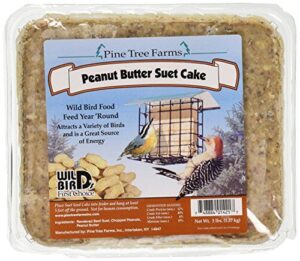
Peanut butter is the perfect crowd-pleaser at any backyard buffet, and this suet cake proves it. Weighing in at 3 pounds, this organic, allergen-free formula packs serious energy into every bite.
It’s built for year-round feeding, so your balcony regulars get consistent nutrition whether it’s July or January. Just remember: hang it at least 5 feet off the ground, and make sure your feeder’s compatible with standard cake sizes. Simple setup, reliable results.
| Best For | backyard bird enthusiasts who want an easy, mess-free way to offer high-energy, year-round nutrition to a wide variety of wild bird species. |
|---|---|
| Formula Type | Standard |
| Life Stage | All life stages |
| Season Use | Year-round |
| Country of Origin | Not specified |
| Attracts | Various wild birds |
| Feeder Requirement | Suet feeder |
| Additional Features |
|
- Organic, allergen-free formula that’s safe for sensitive birds and all life stages
- High-energy peanut butter flavor that attracts a wide range of wild bird species
- Durable 3-pound size works well for year-round outdoor feeding
- Requires a separate, compatible suet feeder (not included)
- Must be hung at least 5 feet off the ground, which may limit placement options
- Fixed 8.5 x 7 x 2 inch size may not fit all feeder styles
2. High Energy All Season Suet
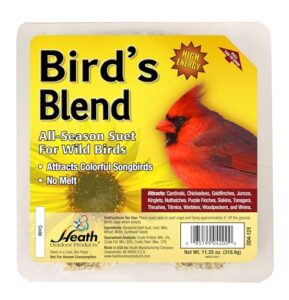
Bacon lovers, take note: this cake runs on rendered beef suet, the same dense energy source that fuels winter survival.
Seed blends like sunflower and peanut chips draw in chickadees and woodpeckers fast. The all-season formula holds its shape whether it’s 90°F or snowing.
Comes in an 11.25-ounce cake, 18 to a case, with peel-tab packaging. No tools needed. That’s a lot of suet for a small balcony, so plan your storage space accordingly.
| Best For | Backyard bird enthusiasts who want to attract a wide variety of songbirds like woodpeckers, cardinals, and nuthatches with a high-energy, year-round suet option. |
|---|---|
| Formula Type | Nut based |
| Life Stage | All life stages |
| Season Use | Year-round |
| Country of Origin | USA |
| Attracts | Songbirds, woodpeckers, cardinals |
| Feeder Requirement | Suet feeder |
| Additional Features |
|
- All-season formulation holds up in both hot summer days and cold winter weather
- Easy peel-tab packaging means no tools needed for quick, mess-free setup
- Made in the USA and packed with energy to support birds through every season
- High consumption rate means you’ll likely be restocking feeders more often
- Some buyers have reported occasional insect presence in the product
- The 18-cake case takes up a fair amount of storage space, which may not suit smaller homes
3. Hot Pepper No Melt Suet Dough
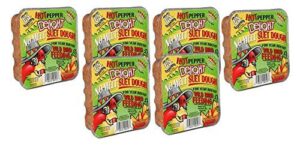
Squirrels raiding your balcony feeder? This dough fights back.
Made from rendered beef suet and oats, it’s spiked with red pepper calibrated to irritate mammals, not birds. Squirrels feel the burn; chickadees don’t notice a thing.
The no-melt formula holds firm up to 130°F, so hot decks won’t turn it greasy. Sold as 11 to 12-ounce cakes, it packs roasted peanuts and mealworms for protein, plus calcium carbonate for egg-laying females.
| Best For | Bird lovers dealing with squirrel problems who want a reliable, year-round suet option that stays put in hot weather. |
|---|---|
| Formula Type | No-melt |
| Life Stage | All life stages |
| Season Use | Year-round |
| Country of Origin | USA |
| Attracts | Wild birds |
| Feeder Requirement | Suet feeder |
| Additional Features |
|
- Hot pepper formula deters squirrels while remaining safe and appealing to birds
- No-melt design holds up in warm temperatures, making it great for hot decks or patios
- Made in the USA with a beef and soy base suited for wild birds at every life stage
- Hot pepper content means it’s not appropriate for feeders visited by other wildlife, like squirrels you’re trying to feed elsewhere
- Comes in a multi-pack, so you can’t buy a single cake if you just want to try it out
- Beef-based suet may not appeal to those looking for a fully plant-based bird food option
4. C&S Sunflower Suet Bird Nuggets
Not every balcony bird wants a whole cake to peck at. That’s where nuggets come in.
For picky visitors who prefer smaller bites, a nugget feeder or one of the best woodpecker feeders for suet nuggets offers portion-sized snacking without the mess of a full cake.
C&S Sunflower Suet Bird Nuggets skip the block format entirely, offering bite-sized pieces built from sunflower meal, rendered beef suet, oats, and soybean oil. The no-melt formula holds up in summer heat, so your railing stays grease-free.
At 8 pounds, one bag stretches across multiple feedings. Scatter nuggets alone or mix them into seed for woodpeckers, chickadees, nuthatches, and warblers.
| Best For | Backyard bird lovers who want a mess-free, no-melt suet option that works well in nugget feeders year-round. |
|---|---|
| Formula Type | No-melt nugget |
| Life Stage | All life stages |
| Season Use | Year-round |
| Country of Origin | Not specified |
| Attracts | Woodpeckers, chickadees, wrens |
| Feeder Requirement | Nugget feeder |
| Additional Features |
|
- No-melt formula holds up in summer heat without turning greasy
- Bite-sized nuggets are easy to scatter alone or mix with seed
- Attracts a wide variety of species, including woodpeckers, chickadees, nuthatches, and warblers
- Requires a nugget feeder for best results
- Meant for outdoor use only, so it’s not versatile for indoor feeding setups
- Contains rendered beef suet, which won’t suit those wanting a plant-based option
5. Heath Outdoor Peanut Suet Cake
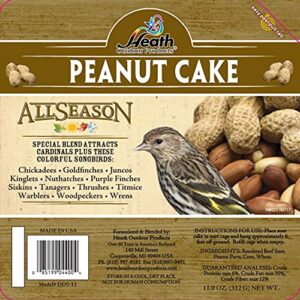
Ten ounces of rendered beef suet, peanuts, corn, and wheat go into every Heath Outdoor Peanut Suet Cake. The no-melt formula holds firm through summer heat and stays solid in winter cold, so your balcony rail stays clean either way.
Cardinals, woodpeckers, nuthatches, and goldfinches all show up for this mix. It fits standard suet cages without crumbling, and the individually wrapped cakes make swapping out an easy, mess-free job every few days.
| Best For | Backyard bird lovers who want to attract a wide variety of songbirds like cardinals, woodpeckers, and nuthatches with a mess-free, year-round feeding option. |
|---|---|
| Formula Type | No-melt |
| Life Stage | All life stages |
| Season Use | Year-round |
| Country of Origin | Not specified |
| Attracts | Cardinals, woodpeckers, nuthatches |
| Feeder Requirement | Suet feeder |
| Additional Features |
|
- No-melt formula holds up in both summer heat and winter cold
- High protein and nutrient-dense suet supports healthy bird weight
- Individually wrapped cakes make refills quick and mess-free
- May contain traces of peanuts, which could be an issue near allergy-sensitive households
- Not intended for human consumption, so careful storage away from kids or pets is needed
- Requires a cool, dry storage spot to maintain freshness
6. Kaytee Blueberry Seed and Suet Bird Blend

Ten pounds of hulled sunflower seed and suet nuggets combine here, no shells, no mess. Blueberry flavoring pulls in extra visitors beyond what plain black oil sunflower can do alone.
Chickadees, nuthatches, and woodpeckers all show strong interest, with three times more woodpecker activity reported than sunflower seed alone. Works fine in tube, hopper, or platform feeders.
Watch the millet content, though. It skews toward sparrows and smaller birds, so don’t expect cardinals or jays to dominate your balcony rail with this one.
| Best For | People with balconies or small outdoor spaces who want to attract woodpeckers and other birds without dealing with shells or seed debris. |
|---|---|
| Formula Type | Seed and suet mix |
| Life Stage | All life stages |
| Season Use | Year-round |
| Country of Origin | Not specified |
| Attracts | Woodpeckers, various birds |
| Feeder Requirement | Tube, hopper, platform |
| Additional Features |
|
- Blends hulled sunflower seed and suet nuggets for a no-shell, low-mess option
- Attracts three times more woodpeckers and twice as many birds overall compared to black oil sunflower seed alone
- Works in tube, hopper, or platform feeders, so it fits most setups
- High millet content mainly draws smaller birds like sparrows, not larger species such as cardinals or jays
- Texture can turn dusty or crumbly depending on how it’s stored
- Contains artificial cherry flavoring and other additives rather than being fully natural
7. St Albans Bay Suet Variety Pack
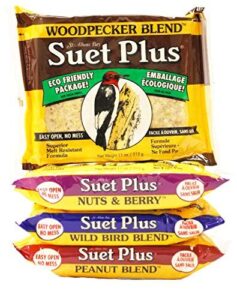
Six flavors in one pack means you’re basically running a taste test on your own balcony. St Albans Bay covers peanut, berry, cherry, apple, and woodpecker blends without any single-flavor commitment.
Each 11-ounce cake holds its shape thanks to a melt-resistant formula, and the easy-open wrapping skips the scissors hunt entirely. Fits standard cages and railing holders.
Expect chickadees, nuthatches, jays, and cardinals to rotate through—handy for figuring out what your specific balcony crowd actually wants.
| Best For | Backyard bird enthusiasts who want to attract a wide range of species—like woodpeckers, cardinals, and nuthatches—with one convenient, all-in-one feeder option. |
|---|---|
| Formula Type | Melt-resistant |
| Life Stage | All life stages |
| Season Use | Year-round |
| Country of Origin | USA |
| Attracts | Woodpeckers, cardinals, nuthatches |
| Feeder Requirement | Suet feeder |
| Additional Features |
|
- Assorted variety pack offers four different flavors, giving birds options and helping you learn their preferences
- Melt-resistant formula and easy-open packaging make it convenient and stable in feeders
- Made from 100% recyclable materials with high-energy ingredients suited for year-round feeding
- Some users report a crumbly texture that may require refrigeration or freezing to maintain shape
- Despite the melt-resistant design, cakes can still soften or melt in extreme heat
- Effectiveness depends on local bird populations, so results may vary by region
Choose Balcony-Friendly Suet Cakes
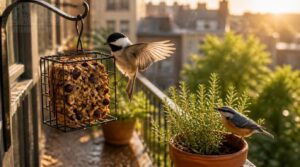
Balconies come with tight space and unpredictable weather, so not every suet cake makes the cut. You need options built for small spots and warm days without turning into a greasy mess. Here’s what actually matters when picking your next cake.
No-melt Formulas
No-melt formulas solve the summer suet problem: no grease, no puddles, no mess on your railing.
They use heat stable binders instead of lard or butter, often wax based matrices like beeswax that hold shape past 100°F.
- Solid discs that resist sagging in July sun
- Zero grease drips on balcony floors
- Stays put through structural integrity testing
- True nomelt suet for year-round feeding
That’s melt resistance you can count on.
Low-mess Ingredients
Balcony floors take a beating from crumbs and husks. That’s where low-mess ingredients earn their keep.
Peanut butter bases act as a strong binding agent, preventing oil separation while milled seeds cut down loose debris. Fruit purees and finely ground nuts boost texture without grease.
For no-mess lawn feeding below your railing, choose blends with texture enhancing additives like oat flour instead of whole seeds.
Compact Cake Sizes
Size matters more than you’d think on a cramped railing. Standard suet cake pucks run 4 to 6 inches wide, so measure your feeder opening before buying.
Smaller pucks fit tighter spaces and reduce waste since birds finish them faster, cutting down on rancid leftovers baking in the sun on your bird feeder.
Nugget Versus Cake Formats
Once you’ve got the puck size sorted, the format question comes next: nuggets or cakes?
Nuggets melt slower and suit warm balconies, feeding fewer birds at once for easier portion control. Cakes stay put longer, drawing bigger, varied crowds to your bird feeder.
- Nuggets: quick refills, low mess
- Cakes: fewer refills, longer draw
- Both: fit a squirrel-resistant feeder
Pick nuggets for tight storage; pick cakes for weekend ease.
Filler-free Blends
Nuggets or cakes, the ingredient list matters just as much. Filler-free blends skip corn and millet, packing in seeds and nut butters for pure nutrient concentration.
That means higher calorie per gram, better protein weight ratios, and no wasted space in your bird feeder. Seed oil binding keeps nuggets together without starch. For small balconies feeding fewer birds, that ingredient density stretches every ounce further.
Best Feeders for Apartment Balconies
The right suet cake means nothing without the right feeder to hold it. Balcony space is tight, so every option here works with limited room and tight rules in mind. Here are five feeder styles worth considering for your setup.
Hanging Wire Cage Feeders
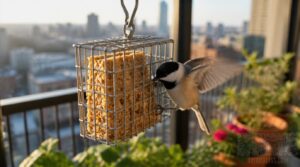
A wire cage feeder is your best bet for tight balconies. Small mesh openings, about 1/4 inch, keep bigger birds and squirrels from yanking out chunks while chickadees peck freely.
These metal wire constructions provide a chew-proof surface that protects your seed from squirrels.
Look for galvanized steel—it resists rust for years. Hang it 5 to 8 feet up, away from foliage, using a rated hook for mounting stability and solid predator protection against nighttime raiders.
Railing-mounted Suet Holders
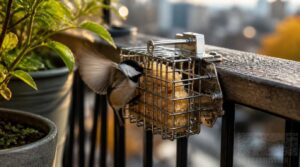
No drilling needed—that’s the beauty of rail-mounted holders. Clamp versatility means squeeze or screw designs fit both round and flat rails, up to 2.5 inches wide.
Choose stainless steel for holder durability and rust resistance. Look for locking lips and hinged doors for mess prevention, keeping grease off your deck.
Solid mounting stability rounds out your backyard birding setup, no tools required for refills.
Small Dish Feeding

Skip the cage entirely and try a shallow dish instead—simple, cheap, and easy for small birds to reach.
A 1 to 2 inch well holds suet without spilling. Choose stainless steel or BPA-free plastic for safety, and stick with light-colored dishes for visibility. Chickadees and nuthatches land easily on low rims. Clean weekly with hot water to prevent mold and rancid buildup.
Cling-style Woodpecker Feeders

Woodpeckers need something sturdier than a dish. That’s where cling-style feeders shine—their angled facade gives real stability, letting birds brace their tail against the built-in tail prop while pecking.
Look for weatherproof cedar construction and a single feeding port sized for peanuts or chunky suet, paired with a screened back for seed extraction, one bite at a time.
Secure Squirrel-resistant Placement

Ever watched a squirrel launch itself six feet sideways? That’s why placement beats everything else in your squirrel deterrent strategy.
Squirrels can launch six feet sideways, so smart placement matters more than any other deterrent
- 10-foot clearance from railings and branches
- Smooth pole mounting, no grip points
- Dome baffles, 15-18 inches wide
- Weight-activated mechanisms on feeding ports
- Vertical barrier systems below the cage
Squirrelproof feeders fail without proper squirrel launching distances built into your bird feeder placement.
Birds Attracted to Balcony Suet
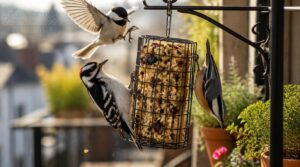
Hang a suet cake on your balcony, and word gets out fast. Different species show up for different reasons, from clinging feet to sweet tooths for berries. Here’s who you can expect to see stopping by.
Chickadees and Nuthatches
Two birds, one loud alarm system. Chickadees and nuthatches team up in mixed foraging flocks, with nuthatches often eavesdropping on chickadee alarm calls to gauge predator risk.
Chickadees glean seeds from your wire cage feeders, while nuthatches probe bark headfirst nearby. Both shift diets seasonally, leaning harder on suet once insects thin out each winter.
Woodpeckers and Wrens
Two toes forward, two back. That’s the zygodactyl foot letting woodpeckers grip bark while drumming out territory calls on your feeder pole or nearby trunks.
Wrens work the opposite angle, nesting low in brush and sometimes claiming abandoned woodpecker cavities. On your balcony, woodpeckers cling to wire cage feeders; wrens dart underneath, grabbing crumbs from suet cakes overhead.
Bluebirds and Thrushes
A splash of sky-blue on your railing feels like a small miracle. Eastern bluebirds crave open edges, not tight balcony corners, but insect-enriched suet still pulls them in during fall.
Thrushes forage low, ground-style, building mud-lined cup nests nearby. Both switch from insects to berries and fat as temperatures drop, making high-calorie suet a smart seasonal boost for backyard bird watching.
Cardinals and Blue Jays
Red and blue don’t always mix peacefully at the feeder. Cardinals feed quietly near shrubs, while blue jays crash in loud, sometimes mimicking hawk calls to clear the rail.
Jays eat almost anything—nuts, insects, even eggs—while cardinals stick to seeds and fruit. Both build cup-shaped nests nearby, so suet cakes double as breeding-season fuel for backyard bird watching.
Seasonal Feeding Patterns
Your feeder crowd shifts with the calendar. Longer daylight in spring brings earlier visits, while cold snaps push high-calorie bird food demand higher fast.
Warmer temps boost appetite and activity, but real cold sends birds hunting fat reserves. Fall migration adds transient guests fueling up for the trip—prime seasonal bird feeding for dedicated backyard bird watching of shifting bird species.
Keep Balcony Suet Safe

A balcony is a small space, so messes and safety slips show up fast. Good suet habits protect your birds and keep your deck clean. Here’s what to watch for.
Prevent Melting and Grease
Balcony decks and grease don’t mix, especially in summer heat. Look for heat stable binders that hold shape up to 90°F, plus beeswax and palm oil blends cutting drip by 65%.
Nomelt summer suet with weatherproof wrappers stops oil seepage after rain. That’s real melt resistance—no greasy footprints, no wasted cakes, just steady feeding all season long.
Avoid Unsafe Ingredients
Keeping cakes weatherproof matters, but what’s actually inside them matters more. Reading the label saves you from harmful food dyes and toxic preservative risks that harm avian health.
Skip these:
- Artificial dyes like Red No. 40
- Bromate-containing fillers
- Propylparaben preservatives
- Carrageenan thickeners
Stick with unsalted peanut butter and quality fats for safe, high-calorie bird food.
Store Cakes Properly
Stock up smart: extra suet cakes need a real home, not just a cupboard shelf.
Airtight containers stop rancid odors and lock out moisture. Toss extras in the freezer—they’ll stay fresh up to three months. For fridge storage, keep temps at or below 40°F.
Wrap individual cakes before freezing. Thaw overnight in the fridge to avoid condensation soaking your feeder cake before it even hits the balcony.
Clean Feeders Regularly
Grease builds up fast on balcony feeders, and that’s a mold risk waiting to happen. Clean every two weeks minimum, weekly during peak spring and summer activity.
Scrub ports and perches with a stiff, dedicated brush using hot soapy water or a 10 percent bleach solution. Rinse thoroughly, then air dry completely before refilling—damp feeders invite mold every time.
Reduce Pests and Mess
Squirrels and ants don’t care that you’re on the third floor—they’ll find your suet if you let it. Sealed storage and quick spill cleanup stop that fast.
- Wipe up drips immediately
- Trim nearby balcony plants
- Keep drains debris-free
- Use no-melt formulas
- Check weekly for pest signs
A little pest monitoring now saves you a messy, ant-covered railing later.
Frequently Asked Questions (FAQs)
How to attract birds to bird feeder on apartment balcony?
Hang a shaded feeder near railings, add a birdbath, and skip glare-causing glass spots. Native potted plants attract insects.
High-calorie bird food, like suet, draws chickadees and woodpeckers fast—consistent feeding turns any balcony into real backyard birdwatching.
Can I make suet cakes at home myself?
Yes—melt lard or suet with peanut butter, mix in oats and birdseed, then pour into molds. This DIY suet mixture yields high-calorie bird food, letting you control binding ratios and skip cheap fillers entirely.
What molds work best for shaping suet cakes?
Silicone molds win for easy release and freezer durability. Muffin tins work too, but oil plastic molds lightly to prevent sticking. Metal cools fastest yet risks cracking.
Match shape to your cage size for mess-free, homemade suet cakes.
Why do birds need extra fat during winter?
Cold nights demand fuel. Winter energy reserves power metabolic heat production and thermoregulation, letting birds conserve energy overnight.
Fat delivers roughly nine kilocalories per gram—dense, efficient, and critical for fat-driven survival when foraging slows and food grows scarce.
Can crushed eggshells be added to suet mixtures?
Crushed, dried eggshells add a solid calcium boost for breeding birds and offer digestive grit aid.
Grind finely to avoid shell texture issues, and always clean shells thoroughly first—proper preparation safety steps keep your DIY bird feeder recipes safe and effective.
How high should woodpecker feeders be mounted?
Aim for five to six feet — the sweet spot for predator deterrence and the ideal canopy zone. This height keeps woodpeckers visible, stable during mounting, and safely away from window collisions while feeding on your suet cake.
Conclusion
Like David facing Goliath, your small balcony can still win over the biggest backyard birding rivals. All it takes is smart choices. Pick no-melt formulas, mount a secure feeder, and keep things clean. That’s the whole game for suet cakes for apartment balcony birding.
Chickadees will find you. Woodpeckers will cling to your railing. Cardinals will show up like clockwork. Your neighbors won’t even notice, except for the birdsong drifting past their window. That’s a balcony worth having.
- https://www.thelookoutaz.com/weekly-articles/read-bird-suet-labels-to-ensure-nutritional-value
- https://deckers-nursery.com/garden-learning-center/guide-to-suet-cakes-for-backyard-wild-birds
- https://www.perkypet.com/articles/how-to-make-no-melt-suet
- https://www.massaudubon.org/nature-wildlife/birds/bird-feeding
- https://birdsconnectsea.org/2024/03/19/bird-feeding-101-suet-earthcare-northwest