
This site is supported by our readers. We may earn a commission, at no cost to you, if you purchase through links.
Most people put out their hummingbird feeders when they think the birds might show up—and miss the first arrivals entirely. Ruby-throated hummingbirds can appear in the Southeast as early as late February, well before most feeders are cleaned, filled, and hanging.
Timing matters because early migrants are burning through fat reserves built during a grueling journey across the Gulf of Mexico. They need reliable nectar fast, and if your feeder isn’t ready, they move on.
Knowing when to put out hummingbird feeders for your specific region—and what to watch for in your own backyard—makes the difference between catching that first flash of iridescent green and hearing about it from a neighbor instead.
Table Of Contents
- Key Takeaways
- Put Feeders Out Before Arrival
- Follow Regional Feeder Timing
- Adjust for Year-Round Hummingbirds
- Watch Local Timing Clues
- Leave Feeders Up Through Fall
- Prepare Feeders for Safe Feeding
- Frequently Asked Questions (FAQs)
- When should I put my hummingbird feeders out?
- When should hummingbirds start feeding?
- When to put hummingbird feeders in Colorado?
- When to put out hummingbird feeders in Arkansas?
- When is the best time to put out feeders?
- When should I put my hummingbird feeders out in Iowa?
- What month should you put out hummingbird feeders?
- What month should I put my hummingbird feeders out?
- Where should hummingbird feeders be placed in sun or shade?
- Where should you not hang a hummingbird feeder?
- Conclusion
Key Takeaways
- Put your feeder up two weeks before hummingbirds typically arrive in your region, because early migrants burning fuel after crossing the Gulf of Mexico can’t afford to find an empty feeder.
- Timing varies widely by location — the Southeast needs feeders up by mid-February, while Midwest and Northeast birders should aim for mid-to-late April.
- Mix one part plain white sugar with four parts water, skip dyes and honey, and refresh nectar daily when temperatures climb above 85°F to keep birds safe.
- Leaving your feeder up two weeks after your last fall sighting gives juvenile birds — on their very first migration — the fuel they need to complete the journey south.
Put Feeders Out Before Arrival
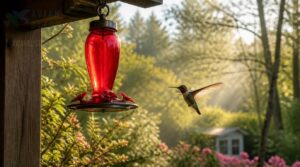
Getting your feeder up early is one of the simplest things you can do to help hummingbirds start the season strong.
Timing it right starts with knowing when hummingbirds migrate through your area, so you’re ready before that first tiny traveler arrives.
The goal is to have nectar ready and waiting before the birds even show up — not scrambling to hang a feeder after you spot the first one. A few key timing factors will help you figure out exactly when to set up.
Two Weeks Before First Sightings
Put feeders out two weeks before your first expected sighting. Spring arrivals often appear before natural blooms catch up, leaving early migrants with almost no nectar. That gap can be hard on birds burning fuel after a long journey.
The American Robin arrival often aligns with the timing of other spring migrants.
Having nectar ready early also gives returning hummingbirds time to recognize your feeder as a reliable stop.
Early Spring Migrants
Hummingbirds don’t all arrive at once. Early spring migrants can begin appearing over a 2–6 week window, with southern regions seeing first arrivals as early as late February. Longer-distance travelers tend to arrive later than shorter-distance ones.
Males usually lead the way, staking out territories before females appear — which means your feeder needs to be ready for that first scout.
Limited Natural Blooms
Early spring often brings fewer nectar-rich flowers than hummingbirds need. Bloom timing shifts caused by mild winters can trigger early flowering, then leave gaps when migrants arrive. That’s why put out hummingbird feeders before natural sources peak:
- Bridges mid-spring nectar gaps
- Helps birds when blooms are sparse
- Reduces energy costs from searching
- Helps attract hummingbirds reliably each season
Weather-based Timing Shifts
Weather doesn’t follow a calendar. Warm urban heat islands can push arrivals up by 7–10 days, while cloudy cool spells delay first feeder check-ins by 2–5 days. High winds shorten foraging trips, concentrating visits into tighter windows.
During storms, move feeders to sheltered spots so birds can still reach them without fighting the weather.
Local Migration Maps
Think of a local migration map as a live weather radar for birds. Sites like Journey North track hummingbird arrival times in real time, showing exactly where migrants are moving across avian migration patterns and routes.
Check these maps weekly in late winter. Sightings reported 200–300 miles south of you mean your feeders should go up now.
Follow Regional Feeder Timing
Hummingbird timing isn’t one-size-fits-all — where you live shapes everything about when to hang your feeder. A yard in Georgia operates on a completely different calendar than one in Vermont or Colorado. Here’s a region-by-region breakdown to help you plan for your specific area.
Southeast: Late February
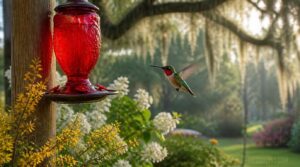
Late February catches birders off guard. Ruby-throated hummingbirds push north as Southeast highs climb into 60s–70s°F. That warmth, often paired with rain and humidity, signals spring migration. Put feeders out by mid-February to welcome early scouts.
Watch for these arrival cues:
- Forsythias and viburnums blooming
- Aphids appearing on plants
- Nights holding above 40°F
- Coastal humidity rising
- Pollinators visiting early flowers
Mid-Atlantic: Early April
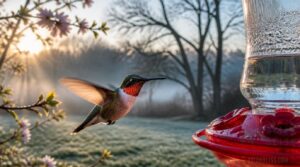
By early April, Ruby-throated Hummingbirds begin crossing into the Mid-Atlantic. Daytime highs reach the low 60s°F, but nights drop into the 40s, and April frost risks remain real.
Cool spring nights also slow nectar fermentation, though warming afternoons can trigger hummingbird feeder air lock problems that leave birds hovering at an empty port.
| Timing | Condition | Action |
|---|---|---|
| Late March | After spring rains | Hang feeders |
| Early April | First blooms open | Refresh nectar |
| Mid-April | Males arriving | Monitor daily |
Put out feeders by late March to catch early scouts.
Midwest: Mid-April
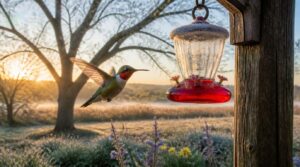
In the Midwest, mid-April is your target. Ruby-throated Hummingbirds usually arrive as daytime highs climb into the 50s–60s°F, though overnight lows still dip into the 30s–40s.
Three reasons to hang feeders by April 10th:
- Males scout ahead of females by days
- Natural blooms are scarce during variable spring temperatures
- Late frosts can wipe out early flower nectar overnight
Have feeders ready early — migrants won’t wait.
Northeast: Late April
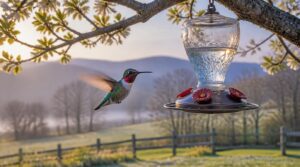
Ruby-throated Hummingbirds reach the Northeast by late April, when daytime highs settle between 60°F and 70°F. Males arrive first, staking out territory near early nectar sources.
Natural blooms are still thin, so your feeder may be the only reliable stop. Hang it by April 10th, place it in shade, and swap nectar every one to two days during warm afternoons.
Mountain States: April to May
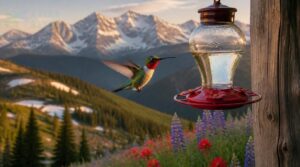
The Mountain States don’t rush spring. Hummingbirds begin appearing mid to late April, but at elevations above 8,000 feet, nights still drop into the 20s°F.
Put out feeders by April 10th to 15th in foothill areas, and a week later at higher elevations. Snowmelt delays wildflower blooms, so your feeder fills a real gap until lupine and Indian paintbrush open in May.
Adjust for Year-Round Hummingbirds
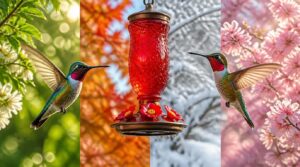
Not every hummingbird follows the same migration script. In some parts of the country, you’ll have visitors year-round, which means your feeder never really gets a day off. Here’s what to expect by region.
California Resident Species
California hosts Anna’s hummingbird year-round, meaning your feeder never really gets a day off. Unlike most states where seasonal timing matters, California’s mild coastal chaparral and diverse native blooms support resident birds in every month.
Keep nectar fresh and your feeder filled continuously — these birds aren’t migrating anywhere.
Arizona Winter Hummingbirds
Arizona keeps things interesting. While California’s Anna’s hummingbirds hold steady on the coast, Arizona draws multiple winter species into its desert scrub and riparian canyons. Anna’s and Costa’s hummingbirds are your most reliable winter visitors near Phoenix and Tucson, with occasional Rufous individuals turning up during milder stretches.
Keep your feeder filled and your nectar fresh — desert winters don’t pause.
Texas and Gulf Coast
Move east along the Gulf, and Texas brings its own year-round story. Ruby-throated and Buff-bellied hummingbirds stay active through mild winters along the coast.
Keep your feeders ready through:
- Hurricane season disruptions (June–November)
- Barrier island stopover feeding points
- Fall migration peaks in early September
- Coastal humidity accelerating nectar spoilage
Change your nectar daily when the summer heat climbs past 90°F.
Florida Winter Feeding
Florida takes a different path. Unlike Texas, where summer heat drives the challenge, here it’s the mild winter warmth that catches feeders off guard — nectar can still ferment quickly even in December.
Keep nectar fresh by replacing it every three to four days, and shade your feeder to slow spoilage. Ruby-throated hummingbirds visit regularly through winter here.
Pacific Coast Activity
Along the Pacific Coast, you’re hosting year-round residents. Anna’s hummingbirds stay active from California through the upper Pacific coast in every season, while Rufous and Allen’s arrive in spring after wintering further south.
Keep feeders ready through:
- Coastal fog season, when natural blooms stay sparse
- Shorebird stopovers near estuaries and mudflats
- Pacific storm cycles that disrupt foraging
- Marine protected area corridors used during migration
Replace nectar every 2–3 days — mild coastal air still spoils it fast.
Watch Local Timing Clues
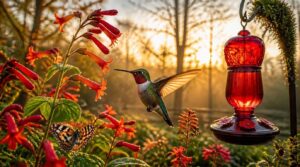
Regional timing charts give you a helpful starting point, but your own backyard tells a more accurate story. Nature drops several quiet signals that hummingbirds are close — if you know what to look for. Watch for these five clues to fine-tune exactly when to hang your feeder.
First Hummingbird Sightings
That first flash of iridescent green is your signal to pay attention. Male hummingbirds arrive first, often emitting sharp chipping calls to claim feeders as territory before females appear.
| Region | Typical First Sighting |
|---|---|
| Southeast | Late February–March |
| Mid-Atlantic | Early April |
| Midwest | Mid-April |
| Northeast | Late April–May |
| Mountain States | April–May |
Log each sighting by date and species — citizen science data sharpens regional arrival maps considerably.
Blooming Spring Flowers
Spring flowers act as a reliable calendar. When forsythia and tulips appear — usually late February through May depending on your region — hummingbirds aren’t far behind.
These early blooms signal that nectar-rich flowers are opening, drawing migrants northward. A pollinator garden with varied flower shapes and fragrant species gives you a living arrival forecast, often more accurate than any app.
Consistent Mild Temperatures
When daytime highs settle between 60 and 75°F, something shifts in hummingbird behavior — arrivals become more predictable, nesting activity picks up, and feeder visits grow more regular. Mild temperatures slow nectar evaporation, so your solution stays fresh longer and draws birds reliably.
Stable warmth also helps the flowering plants and insects hummingbirds depend on, making mild-weather microclimates natural gathering points during migration.
Males Arriving First
Male hummingbirds are scouts — they arrive one to two weeks ahead of females to claim the best territories near reliable nectar. Larger males with longer wings tend to win these early races.
If you spot your first hummingbird and it has an iridescent throat patch, a female won’t be far behind. That’s your sign spring migration is fully underway.
Late Frosts or Heat Waves
Unexpected weather can throw off even careful plans. A late frost after budburst — or a sudden heat wave above 85°F — signals you need to act fast.
Cold snaps slow migrating hummingbird arrival times, while extreme heat causes nectar spoilage risks within hours. When temperatures spike, replace nectar daily and put out hummingbird feeders in shadier spots to slow fermentation.
Leave Feeders Up Through Fall
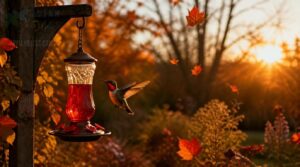
Most people take their feeders down too soon. Keeping them up through fall gives late migrants and young birds the fuel they need to complete their journey. Here’s what you should know about timing your fall feeding right.
Two Weeks After Last Sighting
Once your last hummingbird disappears, keep feeders up for two weeks. Late migrants and juvenile birds still pass through, needing fuel for long journeys south.
Watch for these signs that lingering birds remain:
- Brief, sporadic solo visits instead of flock activity
- Slower nectar decline between refills
- Fledglings still accompanying adult females
A sudden cold snap can extend that window further.
Support Migrating Juveniles
Young hummingbirds hatched that summer haven’t made this journey before. They need late-season nectar at reliable stops along migratory corridors to build the fat reserves that carry them south.
Keeping feeders stocked gives these first-year travelers a fighting chance — especially on a state-by-state basis, where natural blooms have already faded and fuel is hard to find.
Early September Peak Activity
Early September is when things get busy. Feeder visits can jump to 25–40 birds at a time, as juveniles explore new routes while adult males defend their favorite ports through territorial displays.
Late-summer salvias and asters still offer some natural nectar, but artificial feeders fill the gap fast — especially during heat waves, when birds need extra fuel before fall departure.
Late-season Hummingbirds
After the September rush settles, a quieter wave follows. Late-season migrants — including juveniles in fresh plumage and occasional vagrant species blown off course — may show up through October or beyond. Birds at higher elevations tend to linger longest, especially during warm spells.
Autumn fattening behavior drives more frequent feeder visits as natural blooms disappear and fall departure draws near.
Feeders Do Not Delay Migration
Many backyard feeders wonder if leaving nectar out too long will convince hummingbirds to stay. It won’t. Internal biological programs — not food availability — control when birds depart. Hummingbirds respond to day length and temperature shifts, and those cues override anything in your yard.
Hummingbirds leave on biological instinct, not because your feeder runs dry
Your feeder simply offers stopover refueling along established migration routes, giving travelers the energy reserves to keep moving.
Prepare Feeders for Safe Feeding
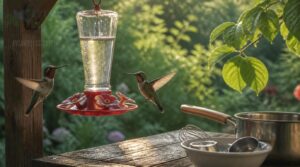
Getting the timing right is only half the job — what you put in your feeder and how you maintain it matters just as much. A few simple habits keep your nectar fresh, your feeder clean, and your hummingbirds healthy all season long. Here’s what you need to know before you fill that feeder.
One-to-four Nectar Ratio
The right sugar-water ratio makes all the difference. Mix one part white sugar to four parts water — this DIY hummingbird nectar mimics natural flower nectar without overloading their kidneys. Dissolve the sugar completely in warm water, then cool it before filling the feeder.
A too-sweet nectar solution risks dehydration, while evaporation in heat can slowly shift the dilution accuracy, so refresh often.
No Dye or Honey
Skip red dye and honey — they cause more harm than you’d think.
- Honey ferments quickly, promoting dangerous mold and bacteria
- Artificial dyes may irritate a hummingbird’s digestive system
- Plain white sugar keeps your DIY hummingbird nectar safe and clear
Stick to the simple nectar recipe: your sugar water ratio of one part plain white granulated sugar to four parts water is all you need.
Change Nectar by Temperature
Heat is nectar’s enemy. Above 85°F, spoilage accelerates fast — microbial growth clouds sugar water within hours, shifting viscosity and lowering sugar concentration.
| Temperature | Refill Schedule |
|---|---|
| Below 70°F | Every 4–5 days |
| 70°F–85°F | Every 2–3 days |
| Above 85°F | Daily |
Fresh nectar keeps your feeder safe and birds coming back.
Clean Before Every Refill
Nectar residue doesn’t just sit — it feeds bacteria. Before every refill, wash all parts with hot water and dish soap, rinse well to clear soap residue risks, then air dry completely.
- Use a bottle brush for hard-to-reach corners
- Apply vinegar sanitization on cloudy film or staining
- Watch for mold detection signs like dark specks
- Keep your dedicated cleaning tools feeder-only
Use Shade and Ant Moats
Ants don’t give up easily — they’ll find your feeding station fast. An ant moat, a small water-filled cup above the feeder, stops them cold since ants can’t swim. Fill it 1/4 to 1/2 inch deep and refresh the water every 2–3 days.
Shade slows evaporation in the moat and keeps nectar cooler, reducing fermentation by up to 40 percent.
Frequently Asked Questions (FAQs)
When should I put my hummingbird feeders out?
You don’t need to wait for your first sighting. Put feeders out two weeks before birds usually arrive in your geographic location, so early scouts find reliable fuel when natural blooms are still scarce.
When should hummingbirds start feeding?
Hummingbirds usually begin feeding in late February to early March in southern states, and by late April in northern regions, driven by warming temperatures and the scarcity of early-blooming flowers.
When to put hummingbird feeders in Colorado?
Like clockwork since frontier days, mid-April signals feeder time along Colorado’s Front Range. Higher elevations and mountain passes warrant waiting until late April to early May, especially after cold snaps or heavy spring snow.
When to put out hummingbird feeders in Arkansas?
Arkansas feeders go out between March 15 and April Ruby-throated Hummingbirds usually arrive in late March, with steady sightings by mid-April. A warming front can shift that window earlier.
When is the best time to put out feeders?
Two weeks before the first expected arrival is your best target. That window ensures feeders are ready when early scouts pass through, before competition builds and natural blooms catch up.
When should I put my hummingbird feeders out in Iowa?
Mid-April is your sweet spot in Iowa. Ruby-throated hummingbirds usually arrive in late April, so setting feeders out around April 15th gives early migrants a ready nectar source when natural blooms are still scarce.
What month should you put out hummingbird feeders?
The answer shifts by where you live — but for most regions, February through May covers the window, with southern states starting earliest and northern or mountain areas waiting until late April or May.
What month should I put my hummingbird feeders out?
The answer depends on your region. Most backyard bird feeding enthusiasts should aim for early to mid-April, though southern states like Texas and Florida can start as early as late February.
Where should hummingbird feeders be placed in sun or shade?
Morning sun, afternoon shade is the sweet spot. Place feeders where they catch gentle light until midday, then shade kicks in. This keeps nectar fresh longer and reduces spoilage without sacrificing visibility.
Where should you not hang a hummingbird feeder?
Avoid hanging feeders in direct sunlight, near windows, at ground level, or along visible ant trails. These spots invite spoilage, collisions, predators, and pests — all working against the birds you’re trying to help.
Conclusion
Feeders filled and faithfully hung before the first migrants arrive—that’s the quiet advantage patient observers build over years. Knowing when to put out hummingbird feeders for your region means you’re ready when a ruby-throated hummingbird burns through the last of its fuel crossing the Gulf.
Clean nectar, correct timing, and consistent care turn your yard into a dependable stop on a long and demanding route. Be ready early. Stay ready late.