This site is supported by our readers. We may earn a commission, at no cost to you, if you purchase through links.
 Your apartment window isn’t just glass separating you from the outside world—it’s prime real estate for an avian theater that operates from dawn to dusk. Installing a window bird feeder transforms that pane into a front-row seat where chickadees perform acrobatics inches from your coffee mug and cardinals flash crimson against winter snow.
For apartment dwellers without yards or balconies, these feeders solve the age-old problem of wanting to connect with wildlife while living stories above ground level. The catch? Not all window feeders stay put, attract diverse species, or withstand weather extremes.
Choosing the right one means understanding suction cup physics, bird feeding behavior, and which designs actually deliver on their promises without leaving seed-splattered windows or empty perches.
Table Of Contents
- Key Takeaways
- 9 Best Window Bird Feeders for Apartments
- 1. Clear Window Bird Feeder Design
- 2. Transparent Acrylic Window Bird Feeder
- 3. Squirrel Proof Bird Feeders Set
- 4. Clear Window Bird Feeder Box
- 5. Clear Window Bird Feeders Outdoor
- 6. Clear View Window Bird Feeder
- 7. Clear Window Bird Feeders Kit
- 8. Clear Window Bird Feeders House
- 9. Hummingbird Jewel Box Window Feeder
- Key Features of Apartment Window Bird Feeders
- Factors to Consider Before Buying
- Types and Designs of Window Bird Feeders
- Safe Installation and Placement Tips
- Maintenance and Bird Safety Practices
- Frequently Asked Questions (FAQs)
- Conclusion
Key Takeaways
- Window feeders with UV-stabilized polycarbonate and industrial-grade suction cups (10+ kg capacity) deliver 90% transparency retention after a year while maintaining 99% attachment success through storms, making durability and secure mounting the foundation of successful apartment birdwatching.
- Positioning feeders within three feet of glass dramatically reduces collision fatalities by allowing birds to decelerate before contact, contradicting the common assumption that distance provides safety—this counterintuitive placement protects the 50+ million birds affected by window strikes annually.
- Weekly cleaning with mild soap and immediate seed replacement during humidity above 85% prevents mold-related diseases like Aspergillus poisoning, while removable trays cut maintenance time to under five minutes and directly impact bird health and return rates.
- Platform feeders accommodate 92.5% of eastern species while tube designs target finches and chickadees, but feeder type matters less than seed choice—black oil sunflower attracts 89% of common visitors, making food selection the primary driver of species diversity at urban feeding stations.
9 Best Window Bird Feeders for Apartments
If you’re living in an apartment and want to bring birds closer without sacrificing space, window feeders are your best bet. We’ve tested and reviewed options that stick securely to glass, survive weather changes, and give you front-row seats to backyard wildlife.
Here are nine window bird feeders that actually work for apartment living.
1. Clear Window Bird Feeder Design
 View On Amazon
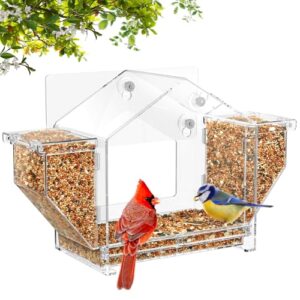
You’ll love what clear window bird feeders bring to apartment birdwatching—unobstructed views of visiting songbirds just inches from your nose. Most models use shatter-resistant polycarbonate that stays crystal-clear for years, letting you watch feeding behaviors up close without spooking shy species.
The transparent design boosts bird observation time by about a third compared to opaque feeders, and drainage holes keep seed fresh while preventing mold.
With sturdy suction cups supporting up to 4 kg and slide-out trays for easy cleaning, these feeders combine feeder durability with practical maintenance. Just remember: proper window placement matters for bird safety.
Best For: Apartment dwellers and bird enthusiasts who want close-up views of songbirds without a yard or balcony space.
- Crystal-clear polycarbonate construction provides unobstructed viewing and resists yellowing for 5 years
- Industrial-strength suction cups support up to 4 kg with less than 2% failure rate over a year
- Slide-out trays with drainage holes make cleaning fast and prevent seed mold that drives birds away
- Suction cups work best only on smooth, single-pane glass—textured or double-pane windows may cause issues
- Not completely weatherproof, with rainwater potentially entering models without roof overhangs
- Some users report loose connections between side feeders and main body, plus occasional moisture problems
2. Transparent Acrylic Window Bird Feeder
 View On Amazon
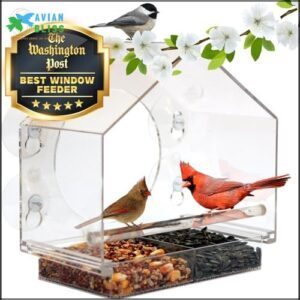
Acrylic benefits shine through with the Nature Anywhere feeder—its polycarbonate construction offers crystal-clear bird observation while managing temperature swings without cracking. Window bird feeders built from transparent acrylic attract cardinals, finches, and woodpeckers to your apartment window, turning apartment birdwatching into a daily habit.
Feeder designs like this one use EVERGRIP X4 suction cups to create reliable window mounts that stay put through storms, and the patented air circulation keeps seed capacity dry for days.
The clear design pairs with a sliding tray for easy cleaning—just pop it out, rinse, and refill.
Best For: Bird lovers in apartments or homes who want up-close views of cardinals, finches, and woodpeckers without yard space.
- Crystal-clear polycarbonate design with a giant viewing hole gives you front-row seats to feeding birds right outside your window
- EVERGRIP X4 suction cups and patented air circulation keep the feeder secure and seed dry through weather changes
- Sliding tray makes refilling and cleaning quick—no tools or complicated setup needed
- Not completely squirrel-proof despite the lifetime guarantee—some clever squirrels still find their way to it
- Suction cups may lose grip over time, especially on textured or non-glass surfaces
- Must be mounted 10 feet from branches or ledges to minimize squirrel access, limiting placement options
3. Squirrel Proof Bird Feeders Set
 View On Amazon
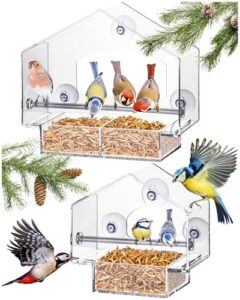
The Hatortempt Squirrel Proof set uses weight activated mechanisms that shut seed ports when squirrels (usually over 4–6 ounces) land, but songbirds feed freely. Squirrel deterrents like this cut seed waste by up to 75%, stretching your bird seed budget three to four times longer.
Sturdy design with durable plastic resists gnawing, though some users report broken tray tabs when heavy visitors push limits. Strong suction cups hold the window bird feeders firm, and feeder durability improves with chew-resistant bird feeder materials—just remember that crafty squirrel behavior occasionally outsmarts even clever engineering.
Best For: Bird watchers who want front-row window views without squirrels raiding the feeders and wasting seed.
- Weight-activated design blocks squirrels effectively, cutting seed waste by up to 75% and stretching refills three to four times longer
- Strong suction cups mount securely to windows, letting you watch cardinals, blue jays, and goldfinches up close from inside
- Durable plastic construction with easy-refill top makes maintenance quick—just 5–10 minutes weekly
- Some users report broken tray tabs or plastic edges, especially when heavier birds or determined squirrels push the limits
- Trays can slide out and fall if birds are too heavy or squirrels get crafty enough to bypass the weight mechanism
- Not all bird species use it comfortably—some avoid the perches and sit directly in seed trays instead
4. Clear Window Bird Feeder Box
 View On Amazon
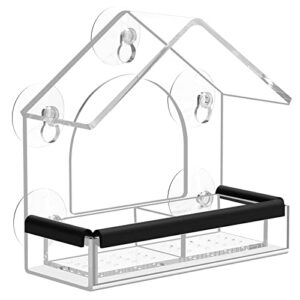
The Clear Window Bird Feeder Box from DY-SKTY brings urban birdwatching right to your glass with heavy-duty clear design acrylic that offers crystal views of cardinals, finches, and woodpeckers.
Strong suction cups secure window mounting even when seeds pile up, though you’ll notice kernels sometimes squish to the sides—making feeder maintenance tips like weekly checks essential for bird feeder safety.
Removable trays simplify cleaning, boosting bird species diversity by keeping feed fresh, and the sloped roof guards against rain so your apartment birdwatching stays mess-free year-round.
Best For: Apartment dwellers and urban bird lovers who want close-up wildlife watching without yard space.
- Crystal-clear acrylic lets you watch cardinals, finches, and chickadees from just inches away, perfect for teaching kids or entertaining cats
- Strong suction cups and removable tray make setup and weekly cleaning simple, even from inside your apartment
- Sloped roof with drainage keeps seeds dry in rain while rounded edges keep visiting birds safe
- Seeds can squish to the sides and make the feeder look fuller than it actually is, requiring more frequent checks
- May struggle in extreme cold (around -30°F) and suction cups need occasional re-seating to stay secure
- Attracts squirrels in some locations, and bird droppings on the window require regular cleaning
5. Clear Window Bird Feeders Outdoor
 View On Amazon
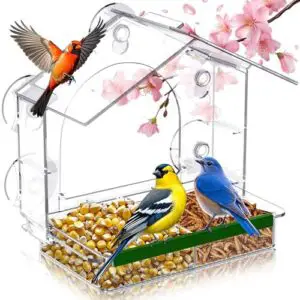
Weather-beaten window bird feeders outdoor thrive under rain, wind, and sun when built from UV-stabilized polycarbonate that holds 90% transparency for a full year. Strong suction cups rated above 10 kg anchor your window mounting through storms, while drainage holes slash seed spoilage by 34%—a bird feeder safety win that keeps mold at bay.
You’ll catch cardinals and chickadees up close during outdoor birding sessions, and clever roof designs shield feed so your urban wildlife conservation efforts stay effective across seasons.
Pair these window feeder designs with nearby shrubs, and you’ll boost visits by 50%, turning every glance into a rewarding bird watching tips moment.
Best For: Birdwatching enthusiasts in apartments or homes who want close-up views of visiting birds while supporting urban wildlife through all seasons.
- Heavy-duty suction cups (10 kg capacity) keep the feeder secure through rain and wind, with a 99% success rate for long-term attachment
- Clear polycarbonate material maintains 90% transparency after a year of sun exposure, giving you unobstructed views of 3–7 bird species weekly
- Built-in drainage holes cut seed spoilage by 34%, keeping feed fresh and reducing mold while the removable tray makes cleaning quick
- Some users report the perch rod can detach with frequent use or heavier birds
- Occasional quality control issues—one customer received a unit missing suction cups (though replacement was provided)
- May not handle very large bird species or extremely heavy traffic without wear over time
6. Clear View Window Bird Feeder
 View On Amazon
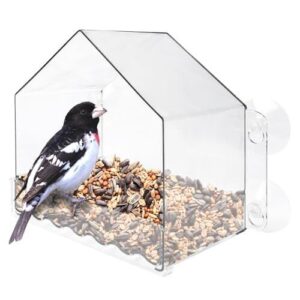
Nature’s Way delivers Bird Visibility and Easy Cleaning through a 2-cup capacity design that holds up to 1 lb of seed—perfect for Apartment Birdwatching without daily refills. Four side-mounted Suction Cups grip your glass while the removable tray slides out in seconds, slashing Window Bird Feeder Maintenance time by half.
UV-stabilized plastic ensures Feeder Durability across seasons, and that 360-degree perch invites finches, chickadees, and cardinals for remarkable Bird Variety. You’ll catch grosbeak feeding behaviors through crystal-Clear View walls, transforming your living space into an Urban Wildlife observatory.
Channeled drainage keeps seed dry, protecting your feathered visitors while Window Bird Feeders turn routine mornings into front-row wildlife encounters.
Best For: Apartment dwellers who want close-up bird watching without the hassle of constant refills or difficult cleaning routines.
- Clear acrylic walls give you an unobstructed front-row view of feeding birds, making identification and observation incredibly easy from inside your home.
- Removable seed tray and simple design mean you can refill and clean the entire feeder in under a minute—no tools or complicated disassembly required.
- Four strong suction cups keep it firmly attached to your window while the 2-cup capacity reduces how often you need to trek outside for refills.
- Suction cups can lose grip in extreme heat or cold, occasionally requiring repositioning to maintain a secure hold on the glass.
- Seed can spill onto your windowsill when birds land or take off, creating a bit of mess that you’ll need to sweep up regularly.
- Squirrels and mice might discover your feeder, turning your bird sanctuary into an all-you-can-eat buffet for unwanted guests.
7. Clear Window Bird Feeders Kit
 View On Amazon
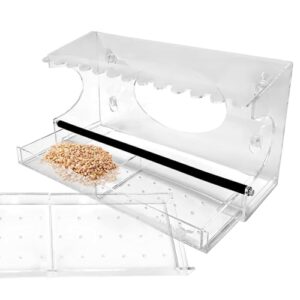
You’ll find everything you need to start Bird Watching Equipment ventures in Clear Window Bird Feeders Kit bundles—acrylic panels, reinforced suction cups, removable seed trays, and cleaning brushes that simplify Feeder Maintenance from day one.
These Bird Feeder Kits average under $27 and install in under 10 minutes with no tools, making Urban Birding accessible even in tight Apartment Gardening spaces. Window Mounting systems rated for 3–5 lbs deliver secure attachment, while drainage-equipped trays accommodate 4 cups of mixed seed to draw chickadees, finches, and cardinals right to your glass.
Follow Bird Watching Tips like placing feeders 10 feet from vegetation, and you’ll transform routine Window Bird Feeders into daily wildlife encounters that educate and inspire.
Best For: Apartment dwellers and urban birdwatchers who want an easy, up-close view of backyard birds without needing a yard or complicated setup.
- Sets up in under 10 minutes with no tools—just clean your window, press the suction cups on, and fill the tray with seed.
- Clear acrylic gives you an unobstructed view of chickadees, cardinals, and finches feeding just inches from your face.
- Removable trays with drainage holes make cleaning simple and prevent seed from getting moldy or waterlogged.
- The tray can pop out if larger birds tap it hard or if squirrels decide to investigate.
- Suction cups need occasional reattaching to stay secure, especially after temperature swings or rain.
- Won’t accommodate very large birds, and you’ll need to clean it regularly to keep seed fresh and prevent buildup.
8. Clear Window Bird Feeders House
 View On Amazon
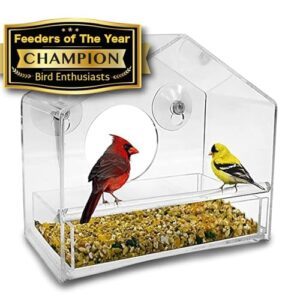
Clear Window Bird Feeders House models transform Apartment Birdwatching with house-shaped acrylic shells that hold up to 1.5 pounds of seed—enough to support 5–8 songbird species through multiple cycles.
UV-stabilized panels and 3–5 reinforced suction cups guarantee Bird Feeder Safety and secure Window Bird Feeder Installation, while removable trays cut Feeder Maintenance time in half.
Place your feeder within 3 feet of glass to minimize Window Collision risks, then watch chickadees and cardinals arrive as daily Urban Wildlife guests.
This Bird Watching Equipment delivers unobstructed 180-degree views and proven Bird Attraction for any apartment window.
Best For: Apartment dwellers and urban bird watchers who want close-up views of songbirds without needing a yard or balcony.
- Crystal-clear acrylic design lets you watch chickadees, cardinals, and sparrows from just inches away—perfect for kids, seniors, or anyone who loves nature
- Strong suction cups and weather-resistant materials mean it stays put through rain and wind while holding up to 1.5 pounds of seed
- Removable trays make cleaning quick (under 5 minutes), and you only need to do it every week or two to keep birds healthy
- Some users report the removable tray can fall out occasionally, which defeats the squirrel-resistant design
- Suction cups may need readjustment in extreme weather or on certain window surfaces
- Limited capacity means more frequent refills if you attract a lot of birds at once
9. Hummingbird Jewel Box Window Feeder
 View On Amazon
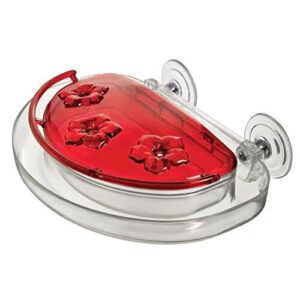
If you’ve been watching cardinals and finches, the Hummingbird Jewel Box Window Feeder brings a faster pulse to your Window Bird Feeders setup. Its bright red cover and 8 oz. polycarbonate reservoir attract Hummingbird Attraction with pinpoint accuracy, while the HighView perch facilitates close observation of Urban Wildlife behaviors.
Suction Cups anchor this Window Mount Hummingbird Feeders model within three feet of glass—minimizing Bird Collision risks when territorial birds dart between blooms.
Regular Feeder Hygiene matters: change nectar every 2–3 days to maintain Nectar Quality and prevent bacterial blooms that harm delicate digestive systems. Optional ant moats complete the picture, keeping crawling pests away from your jewel-toned guests.
Best For: Hummingbird enthusiasts who want an up-close window view and don’t mind frequent refills and cleaning every 2–3 days.
- Bright red cover and HighView perch attract hummingbirds right to your window for close observation
- Easy-refill top and sturdy polycarbonate construction make maintenance straightforward
- Optional ant moat and suction-cup mount minimize pests and collision risks
- Small 8 oz. capacity requires refilling more often than larger feeders
- Higher price compared to other hummingbird feeder models
- Nectar can occasionally squirt from feeding ports, and frequent cleaning is essential to prevent bacterial growth
Key Features of Apartment Window Bird Feeders
Not all window feeders are created equal—especially when you’re working with limited apartment space and unpredictable weather. The best ones combine a few essential features that keep birds happy, seeds fresh, and your view crystal clear.
Here’s what separates the standout feeders from the ones that’ll disappoint you after the first rain.
Durable Materials & Weather Resistance
Your feeder won’t last a season if it can’t withstand what Mother Nature throws at it—rain, snow, scorching sun, and everything in between. Look for these durable, weatherproof features:
- UV-resistant acrylic or polycarbonate that won’t yellow or crack
- Rain guards to keep seed dry and prevent mold
- Frost-resistant materials that won’t splinter in cold snaps
- Nontoxic, weatherproof coatings safe for birds
Quality suction cups matter too—they’ll keep your feeder secure through storms.
Clear Designs for Unobstructed Viewing
The whole point of a window feeder is to watch birds up close, so crystal-clear visibility isn’t just a nice-to-have—it’s the reason you’re installing one in the first place. Optical quality matters when you’re after that closeup birdwatching experience.
Choose feeders made from crystal-clear acrylic or polycarbonate that won’t cloud over time. Proper window bird feeder placement—mounted snugly against the glass—eliminates visual gaps and maximizes your window clarity for superior bird watching.
Secure Suction Cups or Mounting Systems
Even the clearest feeder won’t do you much good if it crashes to the pavement mid-visit, so your mounting hardware needs to hold tight through wind, rain, and the occasional overeager cardinal. Look for industrial-grade suction cups—at least three per feeder—that create a vacuum seal strong enough to support the weight of seed and visiting birds.
Quality window adhesives and attachment methods make all the difference in bird feeder stability, especially during window bird feeder installation on high-rise apartments where weather resistance matters most.
Removable Trays for Easy Cleaning
Once your feeder’s locked in place, keeping it hygienic becomes the next hurdle—and that’s where removable trays turn a messy chore into a quick rinse-and-refill routine.
Look for tray designs that slide or snap out without tools, letting you dump old seed, scrub away mold, and practice proper feeder hygiene in minutes.
Easy maintenance means you’ll actually clean your window bird feeders regularly—preventing disease and keeping your feathered visitors healthy and coming back.
Squirrel-Proof and Pest-Resistant Options
A clean feeder matters little if squirrels and starlings treat it like an all-you-can-eat buffet, so you’ll want designs that keep uninvited guests at bay.
Look for squirrel-proof models with bird feeder guards, narrow feeding ports that exclude larger pests, or weather-resistant cages that let songbirds in while keeping rodents out.
Strong suction cups help window bird feeders stay secure during curious paws’ attempts at wildlife exclusion.
Factors to Consider Before Buying
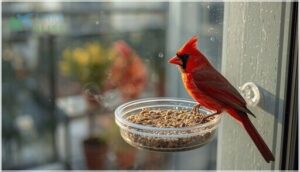
Before you commit to a window feeder, you’ll want to think through a few practical details that’ll make all the difference in your birdwatching experience.
The right feeder should match your apartment’s setup, attract the birds you’re hoping to see, and hold up to real-world use without becoming a maintenance headache.
Here’s what matters most when you’re shopping around.
Material Quality & Longevity
If you’ve ever watched a cheap window feeder crack after one winter or fall off mid-breakfast, you know that not all materials are created equal. Look for durable, weather-resistant options like UV-stabilized acrylic or powder-coated metal that can withstand sun, rain, and temperature swings.
Longevity studies show eco-friendly materials—like non-toxic polycarbonate—offer material testing advantages: they’re safe for birds and easy to clean without degrading quickly.
Attachment and Stability
Your feeder’s only as good as its grip—no bird wants to commit to a breakfast spot that wobbles, slides, or crashes to the pavement mid-meal. Strong suction cups are your best bet for window bird feeders—look for ones with adhesion tests proving they hold through rain, heat, and wind.
Some models include feeder brackets or adhesive hooks as backup stability systems, giving you peace of mind when chickadees land for their daily sunflower seeds.
Bird Species Compatibility
Not all birds play by the same rules regarding urban apartment birdwatching. Platform feeders welcome about 92.5% of eastern species, while tube designs work better for finches and chickadees—birds with real urban adaptation skills.
Hulled sunflower seeds attract nearly 89% of common feeder visitors, making food choice vital for bird species attraction and species diversity.
Consider your local bird behavior patterns: house sparrows and mourning doves dominate apartment settings, but proper feeder placement can boost bird species compatibility and even support bird conservation by increasing local species identification opportunities. Different feeder types attract different species, so consider using platform feeders to attract a wider range of birds.
Ease of Refilling and Maintenance
Think of maintenance like brushing your teeth—skip it for a week, and you’ll regret it. Window feeders demand regular attention, but smart design choices can slash your cleaning time from daily chores to quick weekly refreshes.
Look for removable seed trays that pop out without wrestling the entire unit off your window. These easy-to-clean designs let you sanitize the feeder quickly with mild soap—critical for bird feeder maintenance schedules that prevent mold. Easy-to-refill systems with wide openings mean you’re not fumbling seeds everywhere. Proper seed storage keeps your maintenance of bird feeders manageable, and regular feeder sanitizing protects your visiting flock from disease.
Visual Appeal and Apartment Décor
Your feeder shouldn’t clash with your carefully curated space—in fact, 58% of apartment residents in 2024 chose clear or neutral-colored feeders to blend seamlessly with their interiors. Visual appeal matters because your window bird feeder becomes part of your daily view, and the right choice improves both your connection to nature and your apartment decor.
Consider these design factors:
- Color schemes that attract your preferred birds (red for cardinals, blue for jays) while complementing your window styles and interior design
- Transparent acrylic models (65% of apartment sales) that minimize visual intrusion and work with modern urban aesthetics
- Compact, clean-lined designs favored on higher floors to avoid disrupting exterior building profiles
- Removable options that let renters adjust placement without permanent alterations or decor mismatches
- Concealed trays and minimal seams that maintain visual tidiness and blend with outdoor decor expectations
Bird friendly doesn’t mean sacrificing style—matching your feeder with indoor plants or choosing sleek geometries turns a functional item into a thoughtful accent piece. When selecting a window bird feeder, consider the benefits of smart bird feeders to elevate your bird watching experience.
Types and Designs of Window Bird Feeders
Window bird feeders come in surprisingly varied designs, each suited to different apartment setups and the birds you’re hoping to attract. From simple suction-cup models to specialty feeders for hummingbirds, understanding your options helps you choose what works best for your space and viewing preferences.
Let’s look at the main types you’ll encounter.
Suction Cup Feeders
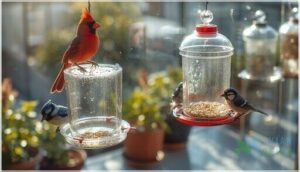
Suction cup feeders stick to your window like nature’s front-row seats, bringing wild birds close enough that you can see the tiny flick of a chickadee’s eyelid. These window bird feeders use strong suction cups that grip glass surfaces, though feeder stability depends on proper window placement and clean attachment points. Position them within three feet of your window to reduce bird collision risks—counterintuitively, that’s safer than mounting them 15-30 feet away.
| Feature | Why It Matters |
|---|---|
| Suction Cup Designs | Creates intimate connections with urban wildlife outside your apartment |
| Weather Resistance | Protects your investment and keeps birds fed through storms |
| Squirrel-Proof Options | Preserves seed for your feathered neighbors, not furry raiders |
| Window Bird Feeder Safety | Prevents tragic collisions while welcoming 50+ million birds annually |
Platform and Tube Feeders
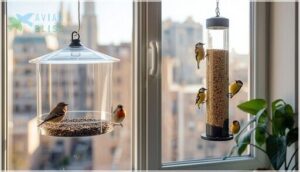
Platform feeders welcome larger songbirds like robins and sparrows that prefer open dining spaces, while tube feeders cater to finches and chickadees who don’t mind perching vertically for their meals. Your choice shapes which feathered friends become regulars.
Both styles use reliable suction technology, keeping bird seeds accessible and window bird feeders secure through seasonal weather shifts.
- Platform Window Feeders accommodate multiple birds simultaneously, turning your window into a bustling breakfast nook
- Tube Designs with Suction Cups optimize feeder capacity in tight apartment spaces while staying squirrel-proof
- Seed Types matter—black oil sunflower attracts the widest variety, nyjer brings goldfinches
- Feeder Placement within arm’s reach simplifies refilling without disturbing your bird attraction hotspot
Hummingbird Window Feeders
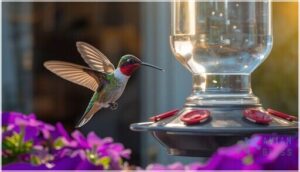
Hummingbirds transform apartment windows into front-row seats for nature’s aerial acrobats, hovering inches from the glass while sipping nectar from specialized feeders designed for their unique feeding style. These window-mount hummingbird feeders attach via suction cups and hold sugar water—mix four parts water to one part white sugar, no dye needed.
Proper feeder placement near flowering plants boosts hummingbird attraction while minimizing bird collision risks.
Nectar feeders require weekly cleaning to prevent mold, especially during peak migration seasons when ruby-throated and rufous hummingbirds seek urban refueling stations.
Metal, Acrylic, and Wooden Options
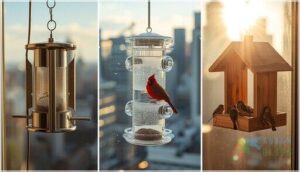
Material choice shapes both feeder durability and your bird-watching experience.
Metal feeders—accounting for roughly 27% of the market—deliver 5–10 years of pest resistance, especially important in apartment settings where squirrels climb fire escapes.
Acrylic dominates window-mounted designs at over 40%, offering crystal-clear views and 2–4 years of UV resistance.
Wooden options bring natural warmth but need resealing every 12–18 months. Choose based on your maintenance style and how close you want that unobstructed peek at visiting sparrows.
Weatherproof and Rain-Guarded Designs
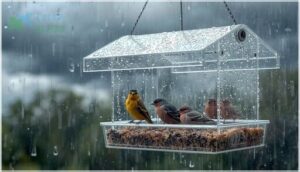
Rain and snow don’t ask permission before soaking your seed supply—weatherproof designs keep feed dry and birds coming back even when conditions turn nasty.
Look for rain guards that overhang drainage holes, weather seals around seed chambers, and waterproof materials like treated acrylic or powder-coated metal.
Durable coatings prevent rust while moisture control features stop mold before it starts—essential for weather-resistant outdoor bird feeders that stay functional through every season.
Safe Installation and Placement Tips
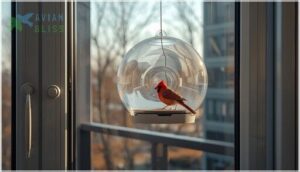
Getting your window bird feeder mounted correctly isn’t just about keeping it from crashing to the ground—it’s about keeping your feathered visitors safe and healthy. Where you place the feeder, how you secure it, and what obstacles you avoid all make a real difference in whether birds thrive or face unnecessary risks.
Let’s walk through the installation and placement strategies that’ll give both you and your birds the best experience.
Secure Mounting Techniques
Getting your feeder to stay put on the window isn’t just about pressing suction cups harder—it’s about understanding the physics of adhesion and taking a few smart steps to create a lasting bond.
Here’s how to mount window bird feeders securely:
- Clean the glass thoroughly – Wipe both the window and suction cups with rubbing alcohol to remove oils, dust, and film that weaken adhesive strength.
- Wet the suction cups slightly – A thin layer of water or petroleum jelly helps create an airtight seal and prevents air pockets from forming.
- Press firmly and wait – After attaching, press each suction cup for 15-30 seconds, then let the feeder sit undisturbed for several hours before adding seed.
Some mounting systems use adhesive hooks or brackets that attach to window frames instead of glass, offering stronger support for heavier feeders.
Optimal Window Height and Location
Where you place your feeder on the window can mean the difference between a bustling bird café and an empty perch that gathers dust. Aim for eye-level installation—around 4 to 6 feet—so you can enjoy close-up views without startling birds.
Choose windows facing trees or shrubs where birds naturally forage, and avoid high-traffic areas inside your apartment where sudden movement might spook visitors. Urban landscaping like nearby greenery improves bird visibility and makes your window bird feeder more inviting.
Minimizing Bird-Window Collisions
Collision prevention starts with understanding that window reflections fool birds into seeing sky or trees where glass exists. Window bird feeders placed directly on glass dramatically reduce bird collision rates—birds slow down as they approach, making impacts survivable.
Here’s how to protect your feathered visitors:
- Mount feeders within 3 feet of windows or farther than 30 feet to minimize collision risk
- Apply decals, screens, or UV-reflective tape to break up window reflections and improve bird species identification of barriers
- Choose wildlife friendly products with visible perches that signal solid surfaces to approaching birds
- Position feeders facing urban bird safety zones like parks or green spaces that offer natural flight paths for apartment bird watching
Avoiding Rodent and Squirrel Issues
Squirrels don’t read “birds only” signs—and once they discover your window feeder, they’ll treat it like an all-you-can-eat buffet that happens to come with free entertainment for your neighbors.
Choose squirrelproof designs with weight-sensitive perches or caged bird feeder guards that exclude larger pests while allowing songbirds access.
Keep bird seeds in rodent deterrents like sealed containers, clean seed tray spills immediately, and consider squirrel-resistant mounting systems that prevent climbing access to your wildlife exclusion zone.
Maintenance and Bird Safety Practices
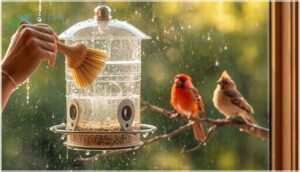
Keeping your window feeder clean and well-maintained isn’t just about aesthetics—it’s essential for the health and safety of the birds who visit. A little routine care goes a long way in preventing disease, ensuring seed quality, and keeping your feathered guests coming back safely throughout the year.
Here’s what you need to know to maintain a healthy feeding station.
Regular Cleaning Routines
Think of your window feeder as a neighborhood diner—if you don’t clean the tables regularly, you won’t attract the kind of customers you want. Bird health depends on feeder sanitizing that prevents disease transmission between visitors.
Aim for a weekly cleaning schedule using mild soap and warm water on your removable seed tray. Easy-to-clean window bird feeders with simple designs make this bird feeder maintenance quick—usually under five minutes—keeping your setup safe and inviting year-round.
Preventing Mold and Spoiled Seed
Seed moisture control is your frontline defense against fungal invaders like Aspergillus and Penicillium—especially when humidity climbs above 85%. Proper mold prevention tips include selecting quality sunflower and millet mixes, placing feeders where sunlight and airflow naturally dry surfaces, and tossing discolored seed immediately to avoid aflatoxin poisoning—because easy maintenance protects both your feathered guests and their long-term health.
Choose easy-to-clean feeders with removable seed trays that you can refill every 1-2 days during summer heat waves, and skip those cheap mixed blends containing up to 73% filler that birds ignore.
Inspecting Feeders for Damage
Even clean seeds can’t save you if cracked acrylic or rusted metal turns your feeder into a hazard—weekly inspections catch structural failures before they injure birds or send your setup crashing to the pavement below.
Focus your damage assessment on three critical zones:
- Suction cups and mounting hardware for weakened grip or brittleness
- Acrylic panels for hairline fractures that trap moisture
- Drain holes and metal edges for rust or sharp protrusions
Weatherproof materials last longer, but easy maintenance means checking window bird feeder durability regularly—swap out damaged parts immediately to keep bird safety your top priority.
Seasonal Adjustments and Bird Safety
Your feeder survives inspections, but winter storms, spring migrations, and summer heat each demand different strategies to keep birds safe and your setup functional year-round.
Switch to seasonal seeds—high-fat suet in winter, nyjer during migration patterns—and move feeders closer to windows (within three feet) to reduce bird collision risk in urban habitats.
Summer heat spoils seed faster, so refill less and clean more to support feather care while you enjoy apartment birdwatching that adapts with the seasons.
Frequently Asked Questions (FAQs)
What seed types attract most apartment-friendly birds?
Most apartment bird species thrive on black oil sunflower seeds, which attract cardinals, chickadees, and finches. Nyjer seed draws goldfinches, while safflower deters squirrels.
Urban habitats benefit from adaptable seed mixes supporting diverse bird diets and wildlife conservation efforts.
How often should window feeders be cleaned?
Most feeders need thorough cleaning every two weeks to prevent mold and seed spoilage that harm bird health.
During humid weather or heavy use, weekly feeder hygiene becomes essential for maintaining safe feeding stations and protecting visiting species.
Do window feeders work in shaded locations?
Yes, shaded locations work well for window bird feeders. Birds adapted to forest understories and shade-tolerant species like chickadees, wrens, and sparrows readily visit feeders in lower light conditions, making shaded windows excellent for apartment birdwatching.
Can feeders attract unwanted pests to apartments?
While many people worry feeders only bring birds, scattered seed does attract rodents, squirrels, and insects to your apartment building.
Choose squirrel-resistant designs with bee-ant deterrence features, and clean up spillage immediately to minimize pest control issues.
Are there noise concerns with window feeders?
Most birds produce minimal noise—soft chirping and wing flutter that blend into typical Urban Sounds. However, pecking on acrylic creates slight Feeder Vibration, and Window Acoustics can heighten Bird Songs during dawn chorus, potentially affecting light sleepers near your window bird feeder installation.
Conclusion
Like Noah gathering pairs before the flood, you’ve assembled your shortlist of window bird feeders for apartments—now it’s time to mount one and let the show begin.
The right feeder doesn’t just hold seed; it creates a living connection between your interior world and the wild rhythms outside. Choose a design with bombproof suction, weather-sealed construction, and clear sightlines that turn your morning routine into something worth waking up for.
Your chickadees are already circling.
- https://www.theatlantic.com/science/archive/2018/01/urban-birds-are-evolving-to-be-fed/551120/
- https://www.accio.com/business/top-selling-bird-feeders
- https://www.allaboutbirds.org/news/a-fifth-of-all-bird-species-occur-in-cities-could-urban-living-be-made-easier/
- https://www.lyricbirdfood.com/birding-hub/feeding-tips/try-a-window-feeder-for-up-close-birdwatching/
- https://birdswindows.biology.ualberta.ca/bird-feeders-and-their-effect-on-bird-window-collisions/