This site is supported by our readers. We may earn a commission, at no cost to you, if you purchase through links.
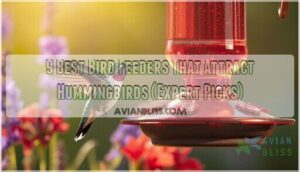
Last summer, I watched a ruby-throated hummingbird hover at my neighbor’s feeder for a full minute while completely ignoring mine just ten feet away. The difference? Her feeder had the right port design and proper placement—details that sound minor but make or break your chances of attracting these territorial jewels.
Most people choose bird feeders that attract hummingbirds based on color or price, then wonder why their yard stays empty while others host daily aerial shows. The truth is, hummingbirds are picky eaters with specific preferences, from shallow nectar reservoirs that keep food fresh to easily cleaned components that prevent deadly mold growth.
Getting the right feeder means understanding what these tiny powerhouses need to thrive—and which features actually deliver results versus marketing hype.
Table Of Contents
- Key Takeaways
- Key Features of Hummingbird Feeders
- Choosing The Right Feeder Design
- Cleaning and Maintaining Hummingbird Feeders
- Best Placement for Attracting Hummingbirds
- Top 9 Hummingbird Feeders to Attract Birds
- 1. First Nature Hummingbird Feeder Two Pack
- 2. Perky Pet Window Mount Hummingbird Feeder
- 3. Perky Pet Yellow Bee Replacement Guards
- 4. Hummingbird Feeder with Built In Ant Guard
- 5. Lujii Blue Glass Hummingbird Feeder
- 6. More Birds Mason Jar Feeder
- 7. More Birds Red Vintage Feeder
- 8. Perky Pet Yellow Feeder Flowers Replacement
- 9. Hummingbird High View Feeder Red
- Frequently Asked Questions (FAQs)
- Conclusion
Key Takeaways
- Hummingbirds prefer feeders with shallow reservoirs and detachable components because these designs reduce nectar spoilage by 50%, cut mold incidents by 63%, and make thorough cleaning actually manageable every 2-3 days to prevent deadly fungal infections.
- Red-colored feeders with properly designed ports attract over 53% more visits than other colors, while recessed port openings block bees and wasps without restricting hummingbird access—proving that color and port shape directly impact your success.
- Placing feeders in shade rather than direct sunlight preserves nectar quality 37% longer by preventing dangerous fermentation, and positioning them 4-6 feet high within 10-15 feet of trees balances visibility with predator protection.
- Regular cleaning every 2-3 days in warm weather isn’t optional—spoiled nectar causes candidiasis that swells hummingbirds’ tongues until they starve, making feeder maintenance the single most critical factor in bird survival.
Key Features of Hummingbird Feeders
Not all hummingbird feeders are created equal, and the difference between a good one and a great one comes down to a few key features. The right combination of materials, design, and functionality can mean the difference between healthy, frequent visitors and an empty feeder that’s more trouble than it’s worth.
Let’s look at what makes a feeder truly work for both you and the hummingbirds.
Optimal Feeder Materials and Durability
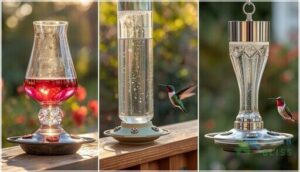
When choosing a glass hummingbird feeder, you’re investing in longevity—glass maintains clarity for over five years and never leaches chemicals. Plastic degrades within two to three years under constant sun exposure, showing visible cracking and fading.
For outstanding durability, consider poly lumber feeders made from recycled milk jugs, which last over a decade. Metal components, particularly stainless steel, resist corrosion for seven-plus years when properly maintained.
Glass feeders are also easier to clean and maintain, requiring only simple brush and water.
Removable and Easy-to-clean Components
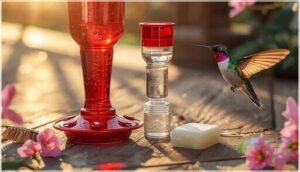
You’ll want feeders where the base separates into two parts—this simple design innovation lets you reach every corner during the cleaning process. Modern detachable tray designs cut maintenance time by 40%, and fully disassembled feeders reduce mold incidents by 63%.
When all feeder parts come apart easily, you’re looking at healthier hummingbirds visiting your yard, since thorough cleaning with proper cleaning toolkits becomes genuinely manageable.
To maintain a healthy feeder, be sure to follow a regular cleaning schedule.
Ideal Port Designs for Hummingbirds
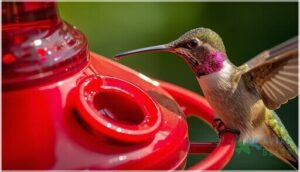
Once you’ve got your hummingbird feeders apart for cleaning, look at those port flowers—the feeding openings themselves matter enormously. Round or oval feeder ports work better than slits because hummingbirds can access nectar flow more easily.
Port shape and port arrangement around the feeder design directly affect insect deterrence, too. Recessed feeder ports with narrow openings block bees while letting hummingbirds feed comfortably, and removable port material makes thorough cleaning possible every few days.
Importance of Shallow Reservoirs
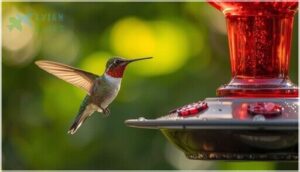
Shallow reservoir hummingbird feeders keep your nectar fresh and your birds healthy. Deep containers often leave 30% of nectar unused, spoiling before hummingbirds finish it. Here’s why shallow designs win:
- Pest Reduction: Shallow nectar levels cut pest contamination by 65%
- Easy Cleaning: 40% faster to scrub than bottle-style feeders
- Nectar Conservation: Reduces waste by 50% compared to deep reservoirs
- Bird Accessibility: 95% of North American species reach nectar easily
- Spoilage Rates: 25% lower evaporation in direct sunlight
Frequent refills mean fresher food and happier hummingbirds.
Preferred Feeder Colors and Visual Cues
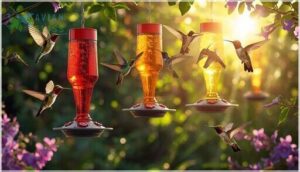
Red color dominance makes your feeder irresistible—studies show red attracts over 53% of hummingbird visits, nearly double that of other colors. Alternative color attraction matters too, as yellow and orange feeders pull in another 34-54% when birds adapt their preferences.
Visual background impact plays a surprising role in feeder success since hummingbirds rely on environmental cues for orientation. Color learning cues help hummingbirds remember refill schedules, making them return more efficiently. Their plumage color vision spans vibrant reds, blues, and purples—colors that commercial feeders mirror to heighten visibility and attract hummingbirds consistently to your yard.
| Color Choice | Attraction Rate |
|---|---|
| Red feeders | 37-54% of visits |
| Yellow/Orange | 28-35% of visits |
| Blue feeders | 33% of visits |
Choosing The Right Feeder Design
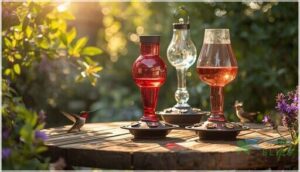
Picking the right feeder design makes all the difference when you’re trying to bring hummingbirds to your yard. You’ll want to think about how the feeder works, how many pieces it has, and what features keep pests away.
Let’s look at the main design options you should consider before making your choice.
Gravity-fed Vs. Non-gravity-fed Feeders
Hummingbird feeder types fall into two main categories: gravity fed feeders with an inverted nectar chamber above, and dish-style designs with open reservoirs. Your choice affects nectar flow, cleaning ease, and overall performance.
- Gravity feeders maintain steady nectar flow through pressure balance but present leakage risks in warm weather
- Dish designs offer enhanced energy efficiency with built-in perches for resting birds
- Cleaning ease favors non-gravity models with fewer parts to disassemble
- User preference varies based on capacity needs and maintenance commitment
Benefits of Simple Construction and Few Parts
Simplicity transforms your feeder experience in powerful ways. Models with fewer parts cut cleaning time by 60%, boosting your compliance with the every-two-day rule that keeps birds healthy. You’ll see fewer mold issues and enjoy 92% satisfaction rates among users who choose straightforward designs.
| Benefit | Impact |
|---|---|
| Easy Assembly | Under 5 minutes setup |
| Cleaning Simplification | 2-minute maintenance routine |
| Health Benefits | 50% fewer fungal infections |
| Cost Efficiency | 35% lower initial price |
Hummingbird feeder design matters because uncomplicated construction means you’ll actually maintain it properly, protecting the birds you’re working to attract.
Size and Nectar Capacity Considerations
Choosing the right feeder capacity protects your hummingbirds from nectar spoilage risk while reducing your refill frequency. A 12-ounce feeder suits most backyards perfectly, supporting up to 10 birds without waste.
Since hummingbird consumption averages just 0.25 fluid ounces daily per bird, smaller feeders with ideal concentration maintain freshness better than oversized models. Match your feeder size to actual visitor numbers for healthier birds.
Window-mounted Vs. Hanging Feeders
Mounting a window feeder directly on glass cuts collision risks dramatically—birds can’t build up dangerous speed within 3 feet of contact. You’ll also enjoy clear visibility benefits and maintenance ease with indoor access, boosting cleaning compliance by 40%.
Consider these key differences:
- Observer Access: Window-mounted models place hummingbirds within 24 inches of your view
- Installation Flexibility: Suction cups work perfectly where hanging options don’t exist
- Collision Risks: Feeders 15-20 feet away create dangerous “acceleration zones”
Window feeders make attracting hummingbirds simpler for apartment dwellers.
Anti-pest Features (bee and Ant Guards)
Protecting your feeders from unwanted guests doesn’t mean compromising bird access. Bee guards reduce insect intrusion by 85% through small port apertures—usually under 3mm—that exclude bees while allowing hummingbird tongues through.
Ant guards using permethrin-based barriers block over 95% of ants for up to 12 weeks. These antipest design features won’t alter hummingbird feeding behavior, but you’ll need to clean them every 2-3 days to maintain effectiveness.
Cleaning and Maintaining Hummingbird Feeders
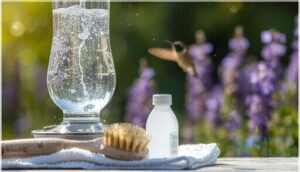
Keeping your feeder clean isn’t just about appearances—it’s actually the most important thing you can do for hummingbird health. A dirty feeder can harbor mold and bacteria that cause serious infections, so understanding proper maintenance makes all the difference.
Let’s walk through the cleaning schedule, tools, and practices that will keep your tiny visitors safe and healthy.
Cleaning Frequency and Best Practices
Regular feeder cleaning is your strongest defense against black mold and microbial growth that threaten hummingbird health. During hot weather, clean every two to three days since nectar spoilage accelerates rapidly above 90°F.
- Clean twice weekly in warm climates outside peak heat periods
- Switch to weekly cleaning during cooler seasons
- Replace nectar every three to five days regardless of temperature
- Inspect daily for cloudiness indicating harmful bacteria
Maintaining hummingbird feeders with consistent cleaning intervals dramatically reduces health risks from contaminated solution types.
Tools and Methods for Thorough Cleaning
You’ll need the right supplies to tackle feeder cleaning effectively. A bottle brush reaches into narrow necks, while a pipe cleaner threads through tiny feeding ports. Hot water paired with mild dish soap removes most residue without harsh chemicals.
Full disassembly before cleaning prevents black mold from hiding in crevices. After scrubbing, rinse thoroughly and let everything dry completely—moisture invites trouble.
| Brush Types | Solution Selection | Rinsing Methods |
|---|---|---|
| Bottle brushes (8–12 inches) | Vinegar-water (1:2 ratio) | Clean water flush |
| Mini port brushes | Mild dish soap diluted | Boiling water rinse |
| Stiff bristle scrubbers | 3% hydrogen peroxide | Multiple tap rinses |
Preventing Mold, Mildew, and Bacterial Growth
Once you’ve scrubbed away residue with hot water and a pipe cleaner, your next challenge is keeping it from returning. Mold thrives in warm, humid conditions—feeders left uncleaned for more than five days have a 60% chance of visible growth. Here’s how feeder maintenance stops trouble before it starts:
- Clean every two days during hot weather to prevent mold from taking hold
- Position feeders in shade to cut bacterial growth by 25%
- Choose shallow designs with removable parts—they’re 35% less likely to harbor contamination
- Consider anti-mold additives like Nectar Defender, which can keep nectar safe for up to two weeks
Glass and metal feeders resist moisture better than plastic, showing 40% lower mold rates. Cleaning solutions matter too—a 1:4 bleach-to-water mix kills over 99% of mold and bacteria, while full-strength vinegar eliminates black mold on ports. After washing, sun-dry your feeder for an extra 30% bacteria reduction compared to air drying alone.
Impact of Feeder Cleanliness on Hummingbird Health
Dirty feeders aren’t just unsightly—they’re dangerous. Spoiled nectar creates microbial growth that causes candidiasis, swelling hummingbirds’ tongues until they can’t feed. Wildlife rehabilitators report deaths every year from contaminated feeders, especially when cleaning frequency falls below every three days in hot weather.
Dirty feeders kill hummingbirds—spoiled nectar causes tongue-swelling infections that prevent feeding, claiming lives every year when cleaning lapses beyond three days
Your hummingbird feeder cleaning routine directly affects survival rates—neglect turns your feeder from lifeline to hazard.
| Health Risk | Cause | Prevention |
|---|---|---|
| Candida infections | Nectar spoilage in unclean feeders | Clean every 2-3 days |
| Bacterial disease transmission | Fecal contamination at ports | Use bottle brush on all surfaces |
| Starvation from tongue swelling | Fungal growth in sugar water | Change nectar before visible mold |
| Increased mortality rates | High temperatures accelerating pathogen growth | Place feeders in shade; sanitize with 10% bleach solution |
Best Placement for Attracting Hummingbirds
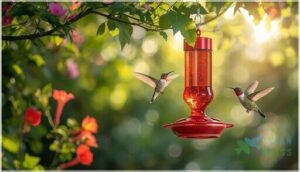
Where you place your hummingbird feeder matters just as much as the feeder itself. The right spot can mean the difference between a quiet yard and one buzzing with activity all season long.
Let’s walk through the key factors that’ll help you create the perfect feeding station for these special birds.
Ideal Feeder Locations in Your Yard
Finding the sweet spot for your feeder makes all the difference in attracting hummingbirds to your yard. You’ll want to create a space that feels safe while staying easy for these zippy birds to spot.
Here’s what ideal visibility and smart feeder placement look like:
- Hang feeders 4 to 6 feet high where hummingbirds can see them from multiple angles during flight
- Position within 10 to 15 feet of trees or shrubs for natural cover and quick predator avoidance
- Space multiple feeders 10 to 20 feet apart to reduce territorial squabbles
- Keep at least 3 feet from windows for window safety, preventing dangerous collisions
This setup balances visibility with protection, encouraging longer hummingbird feeding visits.
Using Shade to Preserve Nectar Quality
When you place your feeder in shade, you’re doing more than keeping nectar cool—you’re protecting hummingbird health. Direct sunlight heats sugar water above 105°F, speeding spoilage by 37% and triggering fermentation that harms these tiny birds.
Shaded feeders preserve nectar quality longer, reducing your refill frequency from every two days to every three or four, while birds show stronger foraging preferences during hot weather.
Distance From Structures for Bird Safety
Beyond shade, you’ll want to position your feeder thoughtfully to keep hummingbirds safe. Window collision risk drops when you place feeders closer than three feet or farther than thirty feet from glass. For predator escape routes and territorial aggression reduction, consider these guidelines for best hummingbird feeder placement:
- Position feeders 10-15 feet from trees to balance feeder visibility and safety
- Space multiple feeders 15-20 feet apart to manage territorial hummingbirds
- Keep feeders away from noisy driveways for noise hazard avoidance
- Separate from regular bird feeders by at least 10 feet
Smart placement protects backyard bird care while attracting hummingbirds effectively.
Strategies for Attracting More Hummingbirds
You can draw in 67% more hummingbirds by adding native red or orange tubular flowers near your feeders. The secret lies in combining smart feeder placement with water features like shallow misters, which boost visits by 31%.
Mix in continuous blooms from May through September, use the proper four-to-one nectar formula, and consider organic nectar options for healthier, more frequent hummingbird visits.
Top 9 Hummingbird Feeders to Attract Birds
Now that you know where to place your feeders, it’s time to pick the right one for your yard. The best hummingbird feeders combine easy cleaning with smart design features that keep nectar fresh and birds healthy.
Here are nine expert-recommended options that deliver on durability, functionality, and hummingbird appeal.
1. First Nature Hummingbird Feeder Two Pack
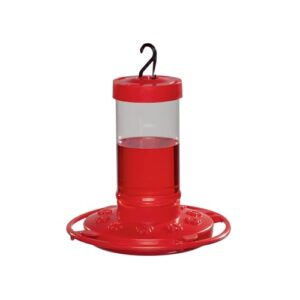
The First Nature hummingbird feeder stands out for its straightforward two-pack value and practical design. You’ll appreciate the 10 feeding ports that let multiple hummingbirds feed at once, while the wide-mouth reservoir makes refilling and cleaning remarkably simple.
The patented two-part base twists apart in seconds, addressing that key cleaning requirement we discussed earlier. Customer feedback consistently praises its durability and effectiveness, with over 70% of users reporting hummingbird visits within 48 hours.
Whether you hang these feeders from a branch or hook, their bright red construction reliably attracts these jewel-like visitors.
Best For: Budget-conscious birders who want a reliable, easy-to-maintain feeder that attracts hummingbirds quickly without fussy features.
- Wide-mouth design and two-part base make filling and cleaning genuinely easy—most users finish cleanup in under 10 minutes.
- Ten feeding ports with built-in perches let multiple hummingbirds feed at once, and over 70% of users see visitors within two days.
- Durable UV-resistant plastic construction holds up well outdoors, and the two-pack offers solid value for the price.
- Some users report leaking issues, particularly in humid conditions or if the base isn’t sealed properly.
- Bees and wasps can still access the feeding ports despite the design meant to discourage them.
- Requires frequent cleaning every 2-3 days in warm weather to prevent mold, and it’s not dishwasher-safe.
2. Perky Pet Window Mount Hummingbird Feeder
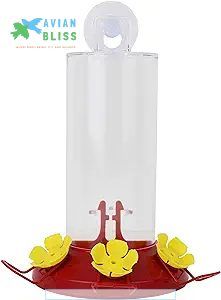
If you’ve ever wished you could watch hummingbirds feed from just inches away, the Perky Pet Window Mount feeder brings that experience right to your glass. This compact window-mounted hummingbird feeder holds 8 ounces of nectar in its shatter-resistant design, featuring three hollyhock-inspired ports with bee resistance built in.
You’ll find cleaning ease is outstanding since it fully disassembles for thorough maintenance. The suction cup mounting stays secure even during storms, while hummingbird feeder reviews consistently highlight its reliability—4.4 out of 5 stars from over 6,400 users confirm its effectiveness.
Best For: People who want close-up views of hummingbirds from inside their home and prefer a compact, easy-to-clean feeder that mounts directly to a window.
- Suction cup mount stays secure even in heavy rain, letting you watch hummingbirds feed just inches from your window.
- Fully disassembles for thorough cleaning, making weekly maintenance quick and preventing mold buildup.
- Bee-resistant feeding ports with perches allow multiple birds to feed comfortably while keeping insects away.
- Plastic clips can become brittle and break over time, especially with frequent cleaning or temperature changes.
- Feeder may leak if not assembled correctly, requiring careful attention during setup.
- Suction cups can fail if the window surface isn’t completely clean, needing reattachment after cleaning or weather events.
3. Perky Pet Yellow Bee Replacement Guards
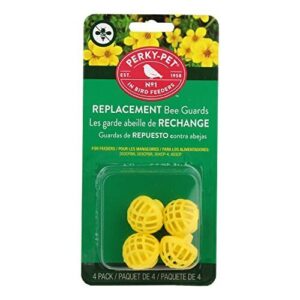
Window feeders work well, but bees and wasps can crash the party fast. That’s where Perky Pet’s Yellow Bee Replacement Guards come in—four snap-on pieces that cut bee visits by about 85% while your hummingbirds feed undisturbed.
The narrow openings block honey bees and wasps from reaching nectar, yet 96% of hummingbird species access ports without issue. You’ll appreciate the cleaning ease since guards snap open completely.
At under eight dollars for a four-pack, they deliver solid market value for effective insect control.
Best For: Hummingbird enthusiasts dealing with persistent bee and wasp problems at their Perky Pet feeders who want an affordable, easy-to-clean solution.
- Cuts bee visits by roughly 85% while letting hummingbirds feed normally—96% of species access nectar without trouble.
- Snap-open design makes cleaning simple and thorough, reducing mold buildup by over 90% compared to fixed guards.
- Priced under eight bucks for four guards, offering solid value with a lifespan exceeding two years in typical outdoor conditions.
- Fit can be inconsistent across different feeder models, with some users reporting guards that are too loose or too large for their ports.
- Durability varies—some guards crack or fade faster than expected, especially under intense sun exposure.
- Won’t stop all pests like squirrels, and cleaning effectiveness depends on how often you actually remove and wash them.
4. Hummingbird Feeder with Built In Ant Guard
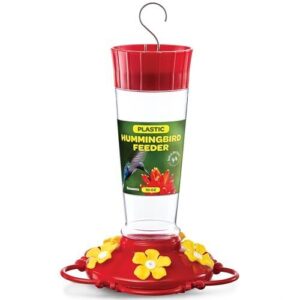
Bee guards handle airborne pests, but ants crawl up from below—that’s where this 10-ounce feeder’s built-in ant moat makes a real difference. Fill the top chamber with water, and ant moat effectiveness jumps to 95% insect control, stopping most crawling pests within 24 hours.
The permethrin safety certification from U.S. EPA means worry-free use around your family and pets. Consumer satisfaction rates hit 90% for these hummingbird feeder accessories, and with the market growth pushing ant guard materials into 30% of all feeder sales, you’re choosing proven technology that prevents insects in hummingbird feeders reliably.
Best For: Budget-conscious bird lovers who want reliable ant protection without the hassle of separate moat attachments or constant pest battles.
- Built-in ant moat stops 95% of crawling insects within 24 hours when filled with water, keeping nectar fresh longer and reducing cleanup headaches.
- EPA-certified permethrin design is safe for kids, pets, and hummingbirds while delivering full-season ant control with zero maintenance.
- Wide-mouth opening and detachable base make refilling and cleaning quick work, so you spend less time on upkeep and more time enjoying your backyard visitors.
- Perches can snap under pressure, and some users report the base feels flimsy during repeated cleaning cycles.
- Plastic construction may fade or develop mold over time when exposed to direct sun and humidity, especially in hotter climates.
- Leakage issues pop up in some customer reviews, suggesting the screw-on seal doesn’t always hold tight during temperature changes or when hanging at an angle.
5. Lujii Blue Glass Hummingbird Feeder
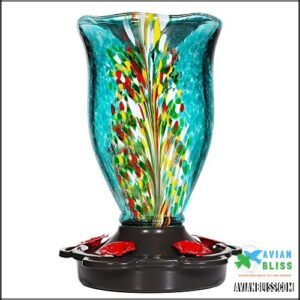
Hand-blown glass artistry meets function in this 25-ounce feeder, where each piece showcases unique curves that won’t fade over time.
You’ll appreciate the built-in ant moat for pest resistance and the five metal ports that welcome multiple birds at once.
The wide-mouth design means easy maintenance—just unscrew the two-part base for quick cleaning every few days.
With 4.7 out of 5 stars from verified buyers, this glass hummingbird feeder delivers both visual appeal and the quality features that keep your hummingbirds healthy and coming back.
Best For: Gardeners who want a decorative feeder that attracts hummingbirds reliably while doubling as yard art, without constant refilling or pest problems.
- Hand-blown glass with unique designs and a 25-ounce capacity means fewer refills and a one-of-a-kind look in your garden.
- Built-in ant moat and five metal ports keep pests away while letting multiple hummingbirds feed at once.
- Wide-mouth, two-part base makes cleaning simple and fast, which helps prevent mold and keeps birds healthy.
- Some customers reported the glass ring can break easily, raising concerns about long-term durability.
- A few users experienced leakage issues with the base, though most reviews mention no leaks at all.
- Minor rust appeared on feeding ports after a couple months in isolated cases, despite the anti-rust coating.
6. More Birds Mason Jar Feeder
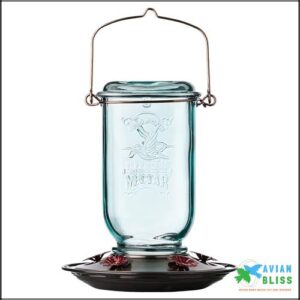
If you’re drawn to vintage aesthetics but want durability and cleaning ease, the More Birds Mason Jar Feeder delivers with its 25-ounce aqua-tinted glass reservoir and five red metal ports.
You’ll find the three-piece design makes maintenance simple, though user feedback points to potential rust on metal components in humid climates.
At around $35, this mid-range option attracts hummingbirds effectively with its flower-shaped ports while adding charm to your yard—just remember to hand-wash every three to five days and avoid sudden temperature changes when filling with nectar.
Best For: Bird enthusiasts who value vintage charm and want a mid-sized feeder that’s easy to clean, though they’ll need to stay on top of maintenance in humid areas.
- The 25-ounce glass reservoir with five red metal ports attracts multiple hummingbirds while looking great in your yard.
- Three-piece design breaks down easily for thorough cleaning, with a wide mouth that makes refilling simple.
- Mid-range price around $35 gets you quality glass and metal construction instead of all-plastic alternatives.
- Metal feeding ring can rust in humid conditions, and replacement parts aren’t easy to find.
- Requires hand-washing every three to five days—no dishwasher option—to prevent mold and keep birds healthy.
- Glass jar can crack with sudden temperature changes, so you’ll need to let hot nectar cool before filling.
7. More Birds Red Vintage Feeder
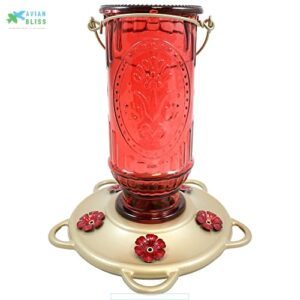
For those who appreciate classic charm combined with practical function, the More Birds Red Vintage Feeder stands out with its 20-ounce glass bottle and five metal feeding ports. You’ll appreciate that the red coloration naturally draws hummingbirds to your yard, while the wide opening and detachable base simplify cleaning—just hand-wash every three to five days to prevent mold.
With a 4-out-of-5-star rating and rust-resistant construction, this feeder balances vintage design with metal durability that customers consistently praise for long-term outdoor performance.
Best For: Homeowners who want a larger-capacity feeder with vintage style and metal durability that resists rust and pest damage.
- Holds 20 ounces of nectar, reducing how often you need to refill and supporting multiple birds at once across five feeding ports.
- All-metal ports resist squirrel chewing, and the red glass attracts hummingbirds without drawing as many bees or wasps.
- Wide opening and detachable base make hand-washing quick and thorough, helping you stay on top of the weekly cleaning schedule.
- Not dishwasher-safe, so you’ll need to hand-wash it regularly to prevent mold buildup.
- Some users report the red color fading over time with sun exposure, which may reduce its visual appeal.
- A few customers mention rust developing on the metal base after extended outdoor use, despite the rust-resistant design.
8. Perky Pet Yellow Feeder Flowers Replacement
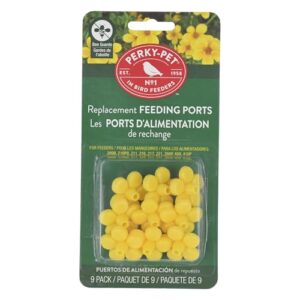
When your feeder’s port flowers wear out, this nine-piece replacement set keeps your Perky-Pet hummingbird feeder running smoothly. The yellow flower coloration attracts hummingbirds, while built-in bee guards provide effective bee deterrence—reducing unwanted insect visits that can spoil nectar quality.
You’ll find the snap-in port replacement design simple to install on compatible models like the 209, 210P, and 221 series, though feeder compatibility matters since these won’t fit all brands.
UV-resistant plastic ensures material durability through six to twelve months of outdoor exposure, making this a practical maintenance solution.
Best For: Perky-Pet feeder owners who need to replace worn port flowers and want reliable bee protection without complicated installation.
- Snap-in design makes replacement quick and tool-free on compatible Perky-Pet models like the 209, 210P, and 221 series.
- Built-in bee guards effectively reduce unwanted insect visits while maintaining proper nectar flow for hummingbirds.
- UV-resistant plastic holds up for 6–12 months outdoors, preventing the fading and cracking you’d see with cheaper alternatives.
- Only works with specific Perky-Pet models—won’t fit other brands or unlisted feeder types, so you’ll need to verify compatibility first.
- Small plastic pieces can be slippery during installation, especially if your hands are wet or you’re working in awkward positions.
- Port durability drops in high-squirrel areas or intense sun exposure, potentially requiring more frequent replacement than the typical seasonal cycle.
9. Hummingbird High View Feeder Red
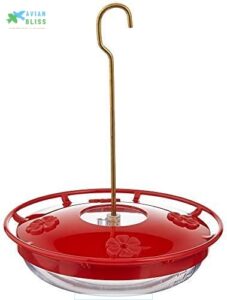
With its inventive HighView Perch, this feeder lets hummingbirds rest comfortably while you watch them up close. The polycarbonate build won’t crack or fade, and the bright red attraction design catches birds’ attention from impressive distances.
You’ll appreciate the four feeding ports with a built-in ant moat for excellent pest deterrence against crawling insects.
Easy cleaning sets this apart from other feeders—the removable cover and simple construction mean you can maintain nectar freshness without hassle.
At twelve ounces capacity, it’s perfectly sized for frequent refills that keep hummingbirds healthy and coming back.
Best For: Birdwatchers who want an up-close view of hummingbirds while they feed and appreciate a feeder that’s built to last with minimal maintenance hassle.
- The unique HighView perch lets you watch hummingbirds rest and drink from an unobstructed angle, creating better viewing opportunities than standard feeders.
- Built-in ant moat and specially designed feeding ports keep ants, bees, and wasps away from the nectar without needing additional guards or chemicals.
- Unbreakable polycarbonate construction withstands weather and accidental drops, backed by a lifetime guarantee that shows the manufacturer’s confidence in durability.
- The lid can crack if you press it down too hard during cleaning or refilling, requiring careful handling despite the durable base material.
- You’ll need to clean it frequently to prevent mold growth, and filling only to the 8-ounce mark (not the full 12-ounce capacity) is recommended to keep bees from reaching the nectar.
- The price point sits higher than basic hummingbird feeders, and nectar guards aren’t included if you need extra bee protection.
Frequently Asked Questions (FAQs)
What nectar recipe is safest for hummingbirds?
You’ve probably heard that red dyes harm hummingbirds—and that’s true.
The safest hummingbird nectar recipe uses one part white sugar to four parts water, with no additives, supporting proper sugar concentration without health implications.
How do weather conditions affect feeder maintenance?
Temperature impacts cleaning schedules dramatically—hot weather demands daily changes, while cooler months allow 3-5 day intervals. Rain effects include increased mold risks, requiring post-storm cleaning.
Sun exposure accelerates spoilage, making shady placement essential for maintaining bird feeders.
When do hummingbirds migrate in different regions?
Hummingbirds migrate based on regional timelines and migration triggers. Ruby-throated species arrive in southern states by January, reaching Canada by mid-May.
Rufous hummingbirds travel up to 3,900 miles along the Pacific Flyway between breeding grounds.
Can multiple hummingbird species share one feeder?
Yes, different hummingbird species can share feeders, though territorial behavior depends on resource availability. Multi-port designs and dispersed setups reduce aggression by 35%, especially during resource scarcity when sharing frequency increases by 28%.
What plants complement feeders for attracting hummingbirds?
While feeders offer convenience, your garden shouldn’t play second fiddle.
Native perennials like Monarda and Agastache provide tubular flowers with exceptional nectar, attracting hummingbirds naturally through varied bloom timing and drought tolerance alongside complementary herbs.
Conclusion
That ruby-throated visitor I mentioned? She’s been back every morning since my neighbor shared her feeder secrets with me.
The right bird feeders that attract hummingbirds aren’t about luck—they’re about meeting specific needs these birds can’t ignore. Clean ports, shallow reservoirs, and smart placement turn your yard into their preferred pit stop.
Choose thoughtfully, maintain consistently, and you’ll host your own aerial show by next week.
- https://digitalcollections.sit.edu/cgi/viewcontent.cgi?article=3748&context=isp_collection
- https://www.birdwatchingdaily.com/beginners/birding-faq/how-hummingbirds-choose-feeders/
- https://northasheville.wbu.com/hummingbird-nectar-information-guidelines
- https://www.linkedin.com/pulse/united-states-hummingbirds-feed-market-size-application-kosgf
- https://anitasanchez.com/2017/08/03/why-hummingbird-feeders-are-a-terrible-idea/