This site is supported by our readers. We may earn a commission, at no cost to you, if you purchase through links.

Spilling birdseed across your deck while refilling feeders wastes money and attracts unwanted pests. Studies show that backyard birders lose up to 82% of seed during messy refills—that’s nearly a full bag scattered on the ground instead of feeding your feathered friends.
Filler tubes solve this frustrating problem by directing seed straight into your feeders without the chaos. These simple tools transform a tedious chore into a quick, clean task that takes half the time.
Whether you’re maintaining tube feeders or hopper-style designs, the right filler tube protects your investment in quality seed while keeping your feeding station tidy and welcoming for birds.
Table Of Contents
Key Takeaways
- Filler tubes cut birdseed waste by up to 82% during refills by directing seed straight into feeders, which saves you money and keeps your deck clean.
- You’ll want to match your tube’s diameter to your feeder’s opening and look for durable materials like stainless steel or recycled plastic that resist weather damage.
- Regular cleaning every two to four weeks with a diluted bleach solution prevents disease transmission and keeps your backyard birds healthy.
- Proper tube storage in cool, dry locations away from sunlight extends their lifespan significantly—plastic lasts 1-2 years while metal options work for 5-10 years.
What Are Filler Tubes for Bird Feeders?
If you’ve ever spilled birdseed all over your deck while trying to refill a feeder, you know how frustrating it can be. Filler tubes are simple tools designed to make this job easier and cleaner.
Let’s look at what they do, which feeders work best with them, and what features matter most when you’re choosing one.
Purpose and Functionality of Filler Tubes
Filler tubes transform how you maintain your bird feeders, making refills faster and cleaner. These precision tools use smart tube material selection and seed flow control to simplify feeder maintenance. Here’s what they do:
- Guide seed directly into tube feeders without spillage
- Speed up refill efficiency by 40–60% compared to scooping
- Support bird attraction methods by keeping fresh bird seed flowing
Think of them as funnels designed specifically for tube feeders. Efficient loading systems, like those using seed fill tubes, can also improve the overall process.
Types of Bird Feeders That Use Filler Tubes
You’ll find filler tubes work best with tube feeders—those slim, vertical seed dispensers that attract finches and chickadees. They also fit hopper feeders and certain platform feeders with narrow openings. Nectar feeders and suet feeders usually don’t need them due to different filling mechanisms.
The key is matching your tube’s diameter to your feeder’s opening for smooth, spill-free refills every time. Understanding the right bird feeder types is essential for attracting the desired bird species.
Key Features to Look for in Filler Tubes
Once you’ve matched your filler tube to your feeder style, focus on what makes it work smoothly. Look for durable tube materials like recycled plastic—they last five times longer than wood and resist rot. Check that filler designs include funnel features to cut spillage by up to 82%. Transparent tubes let you monitor seed flow, and here’s what else matters:
- Wide openings for quick refills without jamming
- Clip hangers for easy storage between uses
- Measurement marks to control portions and reduce waste
These features support bird safety by keeping seed fresh and your bird feeder clean.
Top Filler Tube Products Reviewed
Choosing the right filler tube can make your bird feeding routine smoother and less messy. We’ve reviewed some of the best products available to help you find what works for your setup.
Here’s what stood out in our testing.
1. Hummingbird Feeder Replacement Tubes Set
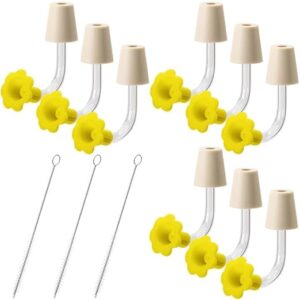
If you’re looking to keep your nectar feeder in top shape, this replacement tube set offers a practical solution. The 9-pack includes yellow and beige plastic tubes measuring 2.76 x 1 x 0.63 inches, plus three cleaning brushes. The tapered stopper design aims to prevent leaks, though some users report mixed results.
These tubes work well for DIY projects and routine tube replacement tips. The yellow flower tips boost hummingbird attraction while the included brushes make maintenance easier. They’re budget-friendly options for maintaining your bird feeder setup year-round.
Best For: Bird lovers looking for affordable replacement tubes to refresh worn-out hummingbird feeders or build their own DIY setups.
- Comes with 9 tubes and 3 cleaning brushes, giving you plenty of spares and easy maintenance tools in one package.
- Yellow flower tips are designed to attract hummingbirds, and the tapered stopper aims to reduce leaks.
- Budget-friendly option for routine feeder maintenance or creating custom nectar feeders.
- Several users have reported leakage problems despite the tapered stopper design.
- Fit can be inconsistent—you may need to measure your feeder’s stopper size before ordering to avoid compatibility issues.
- Plastic construction may not last as long as metal or silicone alternatives, leading to more frequent replacements.
How to Choose The Right Filler Tube
Picking the right filler tube makes refilling your feeders easier and keeps things tidy. You’ll want to think about what it’s made from, whether it fits your feeder, and how simple it’s to use.
Let’s walk through the key factors that’ll help you find the best match for your setup.
Material Quality and Durability
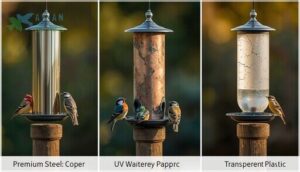
When choosing tube feeders, material selection directly impacts tube longevity and your investment. Metal options like stainless steel provide weather resistance for 5-10 years, while plastic tubes often crack within 1-3 years under UV exposure. Copper offers lifetime durability with natural protection against animal damage.
For eco-friendly choices, consider recycled materials or powder-coated metals that resist weather while supporting sustainable bird feeding tips through reduced replacement needs.
Compatibility With Different Feeder Styles
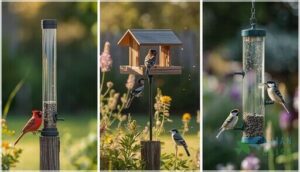
By choosing filler tubes that match your feeder style options, you’ll see better results with bird species support. Modern tube feeders feature standardized connectors in over 50% of models, letting you switch between seed variety and tube compatibility easily.
Hopper feeders need wider filler tube designs, while finch-specific tubes use narrower openings. Match your seed selection to tube diameter for ideal feeder placement and bird attraction success.
Ease of Use and Mess Prevention
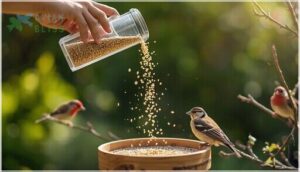
You’ll want filler tubes with detachable bases and clear walls that make refill convenience easy. Seed containment features like catcher trays cut spillage by 70%, while narrow ports improve spill prevention across bird feeding setups.
These mess reduction tools work with everything from suet feeders to the adaptable Feeder Filler Scoop, giving you better user experience through smart seed selection and strategic feeder placement.
Eco-Friendly and Sustainable Options
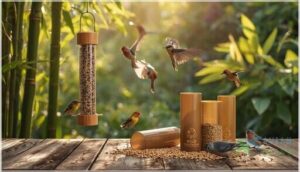
You can make a real difference by choosing filler tubes made from recycled materials—these divert millions of pounds of plastic from landfills while lasting five times longer than wood. Look for biodegradable options like bamboo that regrow in just three years.
EcoClean feeders use environmentally friendly technology that aids wildlife conservation. Check for eco labeling to verify sustainable designs aligned with green initiatives.
Benefits of Using Filler Tubes for Bird Feeders
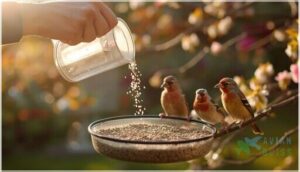
Using a filler tube makes your bird feeding routine easier and more efficient. You’ll save time, reduce mess, and help keep your feathered visitors healthy.
Here’s how the right filler tube can improve your backyard setup.
Time and Effort Savings for Refilling
Filler tubes transform your refill routine by cutting down the time you spend handling seed. With tube bird feeders equipped with filler attachments, you’ll refill every 2–3 days instead of daily—that’s a 45% drop in refilling frequency.
A feeder filler scoop paired with smart refill optimization means you’re spending less time pouring and more time enjoying your backyard birds.
Minimizing Seed Waste and Spillage
You’ll notice less seed scattered beneath your tube bird feeders when you use filler tubes—spillage reduction can reach up to 50% compared to platform styles. That’s seed conservation in action.
With controlled port designs and a feeder filler scoop, you’re practicing smart waste management. Your bird seed lasts longer, feeder efficiency climbs, and you’re supporting bird health by keeping feeding areas cleaner with better seed selection guide practices.
Supporting Bird Health With Clean Refills
Clean refills do more than prevent waste—they’re your frontline defense in disease prevention and bird hygiene. Daily feeder sanitation with diluted bleach cuts infection rates in finches, especially in rural areas.
Following proper refill schedules (weekly in winter, biweekly in summer) keeps seed quality high and bolsters bird health.
Your bird feeder becomes a safe haven, not a hazard, transforming bird watching into responsible stewardship with the right seed selection guide practices.
Enhancing Backyard Bird Feeding Experience
Beyond keeping feeders clean, you’re creating a thriving bird habitat that deepens your connection to backyard birds. Smart feeder placement and seed variety attract diverse species—over 57 million U.S. households now enjoy bird watching this way. Your efforts support wildlife conservation while enriching daily life:
- Observe fascinating bird behavior up close
- Track seasonal migration patterns
- Discover new species visiting your yard
- Share nature’s beauty with family
Quality bird feeding products transform ordinary mornings into memorable encounters.
Maintenance Tips for Filler Tubes and Feeders

Taking care of your filler tubes and feeders doesn’t have to be complicated. A little regular attention keeps your tools working well and your birds healthy.
Here’s what you need to know to maintain your equipment the right way.
Cleaning and Sanitizing Filler Tubes
Keeping your filler tubes spotless protects the birds you’re caring for. Sanitizing methods include soaking tubes in a bleach solution (one part bleach to nine parts water) for 15-20 minutes, then scrubbing with a specialized brush.
Clean your seed tube feeder every two to four weeks—more often in wet weather. Thorough rinsing removes residue, preventing bird health risks like salmonella while maintaining filler tube hygiene for your bird feeders.
Proper Storage and Longevity Care
After sanitizing, how you store your filler tubes matters just as much. Keep them in a cool, dry spot away from direct sunlight—UV rays can make plastic brittle and prone to cracking. Proper storage conditions protect your feeding equipment and extend tube durability for years.
- Store tubes in rodent-proof containers with tight lids for pest control
- Avoid stacking heavy items on top to prevent physical damage
- Empty and clean tubes before winter storage to prevent freeze damage
Troubleshooting Common Filler Tube Issues
When your filler tube clogs or seed won’t flow, you’re not alone—about 70% of tube bird feeders face this issue. Try filling your feeder completely and shaking it gently to break up air pockets.
For leak repair, replace worn stoppers and keep your feeding equipment shaded. These refill strategies prevent tube damage and keep your bird seed flowing smoothly.
Frequently Asked Questions (FAQs)
Can filler tubes attract specific bird species?
Yes, the seed selection you pour through filler tubes matters more than the tube itself. Nyjer seeds attract goldfinches, while black oil sunflower seeds draw chickadees and cardinals to your feeder.
Do filler tubes work in winter weather?
Like a winter coat for your backyard setup, filler tubes shield bird seed from snow and ice. Polycarbonate designs won’t crack in freezing solutions, while protective covers prevent blockage—ensuring your bird feeders stay functional through cold weather.
How often should filler tubes be replaced?
You’ll want to replace plastic tubes every 12 to 24 months, especially if they’re outside in the sun.
Metal versions can last up to five years with proper bird feeder maintenance and regular tube cleaning schedules.
Are there squirrel-proof filler tube options available?
Squirrel proofing your bird feeder starts with weight activated mechanisms and chew-resistant filler materials. Tube designs with cage protection and squirrel baffle features keep seed protection strong while welcoming birds.
What capacity filler tube size is best?
Most bird feeders work best with filler tubes holding two to three pounds of seed. This capacity balances refill frequency with seed freshness, supporting healthy birds while saving you time on maintenance.
Conclusion
Like a steady hand guiding seed exactly where it belongs, filler tubes for bird feeders transform chaos into confidence at your feeding station. You’ve discovered how these simple tools prevent waste, protect your investment, and create cleaner refills that keep birds healthy and happy.
Choose a tube that matches your feeder style and maintenance habits. Your deck stays tidy, your feeders stay full, and the birds you care for get every seed they deserve.
- https://www.factmr.com/report/bird-feeder-market
- https://www.futuremarketinsights.com/reports/bird-feeding-and-watering-suppliers-market
- https://avianreport.com/tube-bird-feeders-beginners/
- https://www.thegoodboutique.com/inspiration/the-environmental-impact-of-conventional-bird-feeders
- https://pmc.ncbi.nlm.nih.gov/articles/PMC4778448/