This site is supported by our readers. We may earn a commission, at no cost to you, if you purchase through links.
Most backyard feeders waste more seed than birds ever eat. Hulls pile up beneath the feeder, millet goes untouched, and cracked corn sits until rain turns it to mush.
For small birds—finches, chickadees, nuthatches—that leftover mess isn’t neutral. It breeds mold, attracts pests, and signals that your mix isn’t matched to the birds visiting your yard.
Shell-free blends solve this at the source by offering only what small birds can actually use: hulled sunflower kernels, peanut pieces, nyjer, and nutrient-dense nuts.
The right no waste birdseed mix for small birds cuts cleanup, stretches your budget further per edible pound, and keeps your feeder active with the species worth watching.
Table Of Contents
- Key Takeaways
- Top 10 No-Waste Mixes and Feeders
- 1. Lyric No Waste Bird Seed Mix
- 2. Aspects Quick Clean Seed Feeder
- 3. Woodlink Absolute II Squirrel Resistant Feeder
- 4. Lyric Delite No Waste Bird Seed
- 5. Woodlink Cedar Platform Bird Feeder
- 6. Droll Yankees Dorothy Domed Bird Feeder
- 7. Kaytee Nut and Fruit Birdseed
- 8. Wild Delight No Waste Bird Food
- 9. Wagner Waste Free Gourmet Bird Food
- 10. Wagners Gourmet Nut Fruit Bird Food
- What Small Birds Need Most
- Best Ingredients in No-Waste Mixes
- Choosing Feeders for Less Spillage
- Comparing Value, Cleanliness, and Freshness
- Frequently Asked Questions (FAQs)
- What bird seed has the least waste?
- How to feed birds without poop?
- Why put a potato in your bird feeder?
- How often should I refill no waste feeders?
- Can no waste birdseed spoil or go bad?
- Do squirrels eat no waste birdseed mixes?
- Is no waste birdseed safe for baby birds?
- What weather conditions affect no waste seed quality?
- Can DIY blends match commercial no-waste quality?
- Do no-waste mixes prevent unwanted weed growth?
- Conclusion
Key Takeaways
- Shell-free blends like hulled sunflower kernels, peanut pieces, and nyjer eliminate hull waste entirely, meaning every pound you buy actually feeds birds instead of composting on your lawn.
- Matching seed size to species matters more than most people realize — finches need 1–2 mm seeds like nyjer, while nuthatches can handle up to 6 mm, so a one-size-fits-all mix often misses the mark.
- Your feeder design is half the equation: tube feeders with quick-detach bases and weight-activated squirrel guards protect your investment and keep shell-free blends clean, dry, and accessible to the birds you actually want.
- No-waste seed costs more per bag but delivers better value per edible pound — once you stop paying for milo, wheat, and hulls that birds ignore, the math flips quickly in your favor.
Top 10 No-Waste Mixes and Feeders
Finding the right no-waste mix or feeder doesn’t have to be complicated. The ten options below cover a solid range of blends and feeder styles suited for small backyard birds.
For a deeper dive into what small birds actually thrive on, best bird food for finches breaks down the top seed blends worth adding to your feeder rotation.
Each one was chosen with cleanliness, nutrition, and practical use in mind.
1. Lyric No Waste Bird Seed Mix
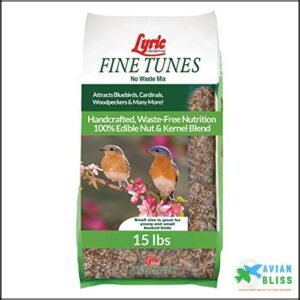
The Lyric No Waste Bird Seed Mix earns its spot at the top for one simple reason: nothing hits the ground but seeds birds actually eat.
The 15 lb bag ($39.04) packs peanut pieces, sunflower kernels, almonds, pistachios, hulled millet, pecans, and pumpkin seeds — all shell‑free.
That nutrient‑dense combination covers energy needs year‑round, especially during winter and nesting season. It works in tube, hopper, and platform feeders, making it a genuinely adaptable pick for your backyard setup.
| Best For | Backyard bird enthusiasts who want a clean, mess-free feeding experience and want to attract a wide variety of species without dealing with shells or wasted seed. |
|---|---|
| Product Type | Birdseed Mix |
| No-Waste Design | Yes – shell-free blend |
| Bird Species Attracted | Bluebirds, cardinals, finches, chickadees, woodpeckers |
| Price | $39.04 |
| Feeder Compatibility | Tube, hopper, platform feeders |
| All Life Stages | Yes |
| Additional Features |
|
- Truly no-waste formula — every ingredient is edible, so you’re not paying for filler that ends up on the ground
- Attracts a solid range of birds (cardinals, chickadees, woodpeckers, finches, and more) with one mix
- Shell-free and nutrient-dense, making it great for smaller birds and a natural fit for any feeder type
- At $39.04 for 15 lbs, it’s pricier than most standard blends — and a busy feeder can burn through it in a week or two
- Some batches have had quality issues, including the occasional moldy nut or stray shell fragment
- Local birds might take a little time to warm up to it, especially if they’re used to a different seed mix
2. Aspects Quick Clean Seed Feeder
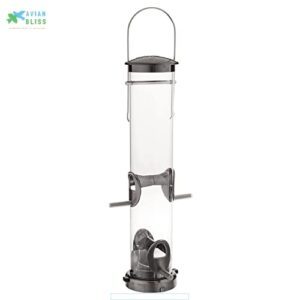
Once you’ve got the right seed, the feeder matters just as much.
The Aspects Quick Clean Seed Tube Feeder (Model 392, $54.71) is built to work with shell-free blends without trapping debris or growing mold. Its die-cast metal caps and UV-stabilized polycarbonate tube handle year-round weather without warping.
The built-in seed deflector keeps waste minimal, and the removable base clicks off in seconds for a full rinse. Four feeding ports let chickadees, finches, and cardinals eat side by side comfortably.
| Best For | Bird lovers and backyard watchers who want a low-maintenance, durable feeder that holds up through every season. |
|---|---|
| Product Type | Tube Feeder |
| No-Waste Design | N/A – feeder only |
| Bird Species Attracted | Chickadees, cardinals, woodpeckers |
| Price | $54.71 |
| Feeder Compatibility | Standalone tube feeder |
| All Life Stages | N/A – feeder |
| Additional Features |
|
- The removable base clicks off fast, making cleaning genuinely easy instead of a chore you put off
- Die-cast metal parts and a UV-stabilized tube mean it won’t warp, rust, or fall apart after a rough winter
- Four feeding ports let multiple birds eat at once, so you get more action at the feeder without the fighting
- Bigger, bolder birds like grackles can still muscle their way in and hog the feed
- Heavy rain or wind can sneak moisture into the seed tray if you don’t have a wide dome overhead
- Raccoons and squirrels can stress the ports or bottom plug enough to crack them over time
3. Woodlink Absolute II Squirrel Resistant Feeder
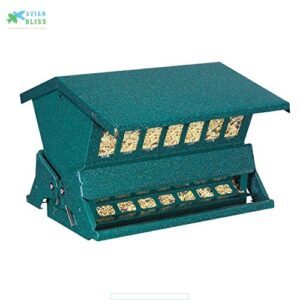
If squirrels keep raiding your feeder before birds get a chance, the Woodlink Absolute II ($84.14) solves that problem mechanically. Its spring-activated perches snap shut under squirrel weight, cutting off seed access instantly.
You can adjust the trigger for three weight thresholds, so larger birds like jays stay excluded while chickadees and finches feed freely.
The steel body resists chewing and weather, and the 12-pound capacity means fewer refills.
A seed-saving baffle keeps shell-free blends clean and off the ground.
| Best For | Backyard bird lovers who are tired of squirrels emptying their feeder and want a set-it-and-forget-it solution that holds a ton of seed. |
|---|---|
| Product Type | Hopper Feeder |
| No-Waste Design | N/A – feeder only |
| Bird Species Attracted | Songbirds, excludes squirrels/crows |
| Price | $84.14 |
| Feeder Compatibility | Standalone hopper feeder |
| All Life Stages | N/A – feeder |
| Additional Features |
|
- Spring-activated perches physically block squirrels and larger pests the moment they land — no guesswork, no bait
- Holds up to 12 lbs of seed, so you’re not out there refilling every other day
- All-steel, weather-resistant build means it’ll hold up through rain, wind, and whatever else the seasons throw at it
- Determined raccoons or bears won’t be stopped — this is squirrel-resistant, not critter-proof
- The pole connections aren’t threaded, so they can wobble without some extra hardware or drilling
- Weight settings may accidentally shut out bigger backyard favorites like Blue Jays if you’re not careful with the adjustment
4. Lyric Delite No Waste Bird Seed
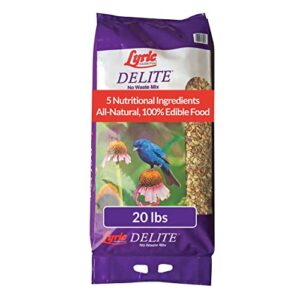
Once your feeder is squirrel-proof, what goes inside matters just as much. Lyric Delite No Waste Bird Seed earns its name — every ingredient is pre‑shelled and 100% edible.
The 20 lb bag combines sunflower kernels, shelled peanuts, pistachios, pecans, and pumpkin seeds into a high‑fat, high‑protein blend that chickadees, finches, woodpeckers, and nuthatches actually eat.
No hulls hit the ground. No filler seeds are ignored. You’re feeding birds, not composting rejected milo.
| Best For | Backyard birders who want to attract a wide variety of species without dealing with messy hulls or wasted seed piling up under their feeders. |
|---|---|
| Product Type | Birdseed Mix |
| No-Waste Design | Yes – pre-hulled mix |
| Bird Species Attracted | Cardinals, chickadees, finches, jays, woodpeckers |
| Price | Varies (20 lb bag) |
| Feeder Compatibility | Tube, tray, wire-mesh, hopper feeders |
| All Life Stages | Yes |
| Additional Features |
|
- Pre-shelled mix means zero hull waste and no weeds sprouting beneath your feeder
- High-protein blend of nuts and seeds draws a solid range of birds — cardinals, woodpeckers, finches, and more
- Works with just about any feeder type you already own
- Pricier than your average birdseed mix, so it adds up fast
- Large peanut pieces can attract squirrels, rats, or other unwanted critters
- Smaller songbirds may skip the bigger chunks, leaving uneaten seed to sit and spoil
5. Woodlink Cedar Platform Bird Feeder
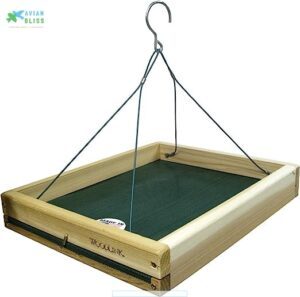
Sometimes the cleanest setup starts with the right surface.
The Woodlink Cedar Platform Bird Feeder gives you a 16.38 × 13.25-inch open tray built from kiln-dried inland red cedar — naturally rot-resistant and built to last outdoors.
The powder-coated sliding screen bottom drains quickly and pulls out for easy cleaning, which matters when you’re using no-waste seed near a patio.
If you’re also thinking about seed type, pairing this feeder with the right port size makes a real difference—finch feeder sizing guides for Nyjer and sunflower seeds can help you get it right from the start.
It holds up to 3 lb of mixed seed and mounts three ways: pole, post, or ground. Mounting hardware is sold separately.
| Best For | Backyard birders who want a roomy, natural-looking feeder that attracts a wide range of species and cleans up without a hassle. |
|---|---|
| Product Type | Platform Feeder |
| No-Waste Design | N/A – feeder only |
| Bird Species Attracted | Crows, woodpeckers, multiple species |
| Price | $37.53 |
| Feeder Compatibility | Pole, post, or ground mount |
| All Life Stages | N/A – feeder |
| Additional Features |
|
- Real kiln-dried cedar holds up in the elements and looks great doing it
- The sliding screen bottom makes cleaning quick — pull it out, rinse it off, done
- Three mounting options give you real flexibility whether you’re working with a pole, post, or open ground
- Mounting hardware isn’t included, so budget a little extra before you’re fully set up
- Open tray design means rain soaks right in — wet seed sticks and adds to your cleaning workload
- Squirrels will absolutely help themselves unless you add a baffle separately
6. Droll Yankees Dorothy Domed Bird Feeder
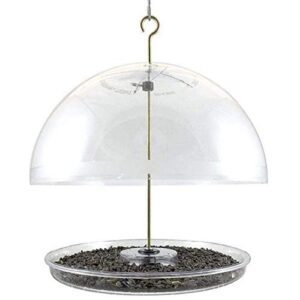
If you want birds close and seed dry, the Droll Yankees Dorothy Domed Feeder accommodates both well. Its 15-inch adjustable dome shields a 13-inch feeding platform from rain and snow, keeping no-waste blends fresh longer.
You can raise or lower the dome to control which birds get in — useful for favoring finches and chickadees over larger visitors.
The UV-stabilized polycarbonate stays clear through seasons, and the brass hanging rod resists corrosion.
Capacity runs about 1 to 1.5 pounds depending on your mix.
| Best For | Bird lovers who want a close-up window view of their feathered visitors while keeping seed dry and protected from the elements. |
|---|---|
| Product Type | Window Feeder |
| No-Waste Design | N/A – feeder only |
| Bird Species Attracted | Cardinals, bluebirds, juncos, woodpeckers |
| Price | Varies |
| Feeder Compatibility | Window suction-cup mount |
| All Life Stages | N/A – feeder |
| Additional Features |
|
- The adjustable dome does a solid job keeping rain and snow off the seed, so you’re not constantly refilling soggy messes.
- Crystal-clear polycarbonate means you get a front-row seat to cardinals, bluebirds, and woodpeckers right from your window.
- Works with a wide variety of food — seed, fruit, mealworms, suet — so you can attract a good mix of birds.
- The dome can slide down over time as the set-screw loosens, especially after birds bump into it.
- Small ~1 lb capacity means frequent refills if you get a lot of traffic.
- Squirrels aren’t fully deterred, and the tray can tip and spill if a bird lands on the edge wrong.
7. Kaytee Nut and Fruit Birdseed
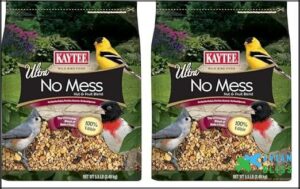
Kaytee’s Nut and Fruit Birdseed packs real nutritional value into an 11-pound two-bag set at $39.98.
Hulled sunflower seeds and peanuts form the protein-and-fat core, while dried cranberries, raisins, and cherries draw species like cardinals, chickadees, and finches that might otherwise pass your feeder by.
The resealable zip-top bags help keep moisture and insects out between fills.
One honest note: it’s not perfectly mess-free. Expect some dust and fine fragments, especially with heavy feeder traffic.
| Best For | Bird lovers who want to attract a wide variety of songbirds while keeping their yard cleaner than traditional seed mixes allow. |
|---|---|
| Product Type | Birdseed Mix |
| No-Waste Design | Yes – 0% waste claim |
| Bird Species Attracted | Finches, chickadees, cardinals, jays, bluebirds |
| Price | $39.98 |
| Feeder Compatibility | Tube, platform, ground scatter |
| All Life Stages | Yes |
| Additional Features |
|
- Shell-free blend means way less hull debris on your lawn, patio, or deck
- Draws a solid mix of birds — cardinals, finches, chickadees, woodpeckers, and more
- Resealable bags keep the seed fresh and pests out between fills
- Not truly mess-free — dust and fine fragments still end up on the ground
- Burns through fast; heavy feeders may go through a bag in a week, making the $39.98 price tag add up
- Contains peanuts and soy despite the "allergen-free" label, which could be misleading for some households
8. Wild Delight No Waste Bird Food
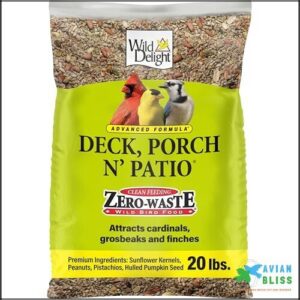
Wild Delight’s No Waste Bird Food earns its name — sunflower kernels, peanuts, pistachios, and hulled pumpkin seed form a shell-free blend with zero husk debris left behind.
The 20 lb bag runs $63.45, which is a real investment, but you’re getting BPA-free packaging and added vitamins and minerals rather than filler.
Cardinals, finches, nuthatches, and grosbeaks all respond well to this mix.
One caveat: it contains artificial pumpkin flavor, which some bird-watchers prefer to avoid.
| Best For | Backyard birders who want a clean feeding area and don’t mind paying a premium for a no-mess, all-in-one seed blend. |
|---|---|
| Product Type | Birdseed Mix |
| No-Waste Design | Yes – shell-free mix |
| Bird Species Attracted | Cardinals, grosbeaks, finches, jays, nuthatches |
| Price | $63.45 |
| Feeder Compatibility | Platform or tray feeders |
| All Life Stages | Yes |
| Additional Features |
|
- Zero shells or husks means no cleanup on your deck or patio
- Attracts a wide variety of songbirds — cardinals, finches, jays, nuthatches, and more
- Packed with vitamins and minerals, no fillers, BPA-free bag
- At $63.45 for 20 lbs, it’s pricier than your average bulk seed mix
- Only comes in one bag size, so it’s a lot to commit to if you’re a casual feeder
- Contains artificial pumpkin flavor, which purists may want to skip
9. Wagner Waste Free Gourmet Bird Food
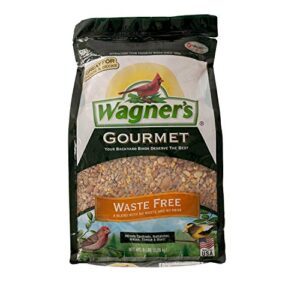
Wagner’s Waste Free Gourmet Bird Food keeps things simple — sunflower kernels, peanut pieces, cracked corn, and pumpkin seeds packed into a clean, shell-free 5 lb blend.
It pulls in cardinals, chickadees, jays, and finches without leaving a mess on your deck.
Crude protein runs around 17–30%, which helps year-round energy needs well.
One honest note: the cracked corn and larger peanut pieces may not suit every small species, so watch your visitors closely before committing to a full rotation.
| Best For | Backyard bird watchers who want a clean, no-shell mix that attracts a wide variety of songbirds without the mess. |
|---|---|
| Product Type | Birdseed Mix |
| No-Waste Design | Yes – no shells |
| Bird Species Attracted | Cardinals, chickadees, jays |
| Price | Varies (5 lb bag) |
| Feeder Compatibility | Various feeder types |
| All Life Stages | Yes |
| Additional Features |
|
- Pulls in a great mix of birds — cardinals, jays, chickadees, and finches all tend to show up
- No shells means no mess piling up under your feeder or on your deck
- High protein content keeps birds well-fed year-round, not just in winter
- Hard corn and large peanut pieces can turn away smaller birds like mourning doves
- A bit pricier than your average seed mix from the hardware store
- Some buyers say it’s not quite as mess-free as advertised, depending on the feeder
10. Wagners Gourmet Nut Fruit Bird Food
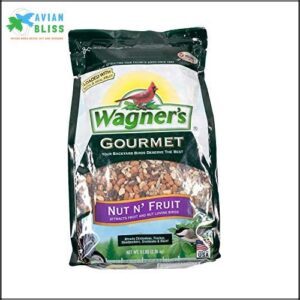
If you want to mix things up for your backyard visitors, this 5 lb blend from Wagner’s earns its spot. Peanuts, tree nuts, sunflower chips, raisins, and dried cherries come together in a shell-free formula that pulls in chickadees, finches, cardinals, woodpeckers, and even fruit‑loving species like waxwings.
No hulls mean no mess on your patio. At $13.98, it’s a smart pick — just expect squirrels to notice the nut content quickly.
| Best For | Backyard bird enthusiasts who want to attract a wide variety of species — including fruit-loving birds — without the mess of shells and hulls. |
|---|---|
| Product Type | Birdseed Mix |
| No-Waste Design | Yes – shell-free mix |
| Bird Species Attracted | Cardinals, chickadees, jays, woodpeckers, finches |
| Price | $13.98 |
| Feeder Compatibility | Feeder or ground scatter |
| All Life Stages | Yes |
| Additional Features |
|
- Shell-free mix means no cleanup on decks or patios
- Attracts a broad range of birds, including species that skip seed-only feeders
- All-natural ingredients with high protein and fat to keep birds energized
- Nut-heavy blend is a magnet for squirrels and other backyard mammals
- 5 lb bag goes fast for heavy feeders, and bulk sizes aren’t available
- Pricier per week than standard seed mixes
What Small Birds Need Most
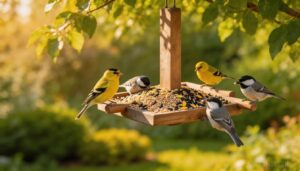
Small birds aren’t just picky eaters — they have real nutritional needs that most generic seed mixes completely miss. Getting the right blend means understanding what finches, chickadees, and nuthatches actually look for in a feeder.
Here’s what matters most when you’re choosing a no-waste mix for the small birds in your yard.
Best Seed Sizes for Finches, Chickadees, and Nuthatches
Seed size matters more than most people realize. Finch seed dimensions sit between 1 and 2 mm — nyjer being the top choice for finch blends.
Chickadee seed range tops out around 4 mm, while nuthatch seed size reaches 6 mm.
Matching best seed diameter to each species means you have no waste bird seed and shell‑free seed stays in beaks, not on the ground.
Choosing a regionally formulated blend can further reduce waste by targeting local bird species.
High-energy Nutrition Without Excess Filler
Once you’ve matched seed size to species, the next question is what’s actually inside that mix. Small birds burn energy fast — filler seeds like milo offer almost nothing in return.
Look for these in any no waste bird seed:
- Protein-dense seeds like hulled sunflower kernels and legume-based blends
- Calorie-rich nuts such as chopped peanuts for steady fuel
- Energy-dense dried fruit to round out a nutrient-dense seed mix
Why Shell-free Blends Suit Small Beaks
Think about what a chickadee faces on a freezing morning — it can’t waste time wrestling a hull. That’s where shell-free efficiency pays off.
On a freezing morning, a chickadee cannot afford to wrestle a hull — shell-free seed is survival, not convenience
Hulled sunflower kernels and chopped peanuts offer enhanced energy delivery, the moment a bird lands. The kernel size optimization in quality shell-free blends means beak compatibility is built in, reducing waste impact and supporting nutrient-dense seed consumption without effort.
Seasonal Feeding Needs for Backyard Songbirds
Seasonal feeding isn’t one-size-fits-all.
Winter Fat Boost matters most when birds burn 20–50% more calories just staying warm overnight.
Spring calls for a high-protein blend supporting fledgling growth.
Summer Hydration pairs with lighter, easy-to-digest seeds.
Fall Migration Prep means calorie-dense, no waste bird seed for building fat reserves.
Post-Migration Recovery shifts toward balanced nuts and nutrient-dense seed mix for colorful songbirds rebuilding condition.
Bird Species Most Likely to Use No-waste Mixes
Not every bird that visits your yard will benefit equally from a no-waste mix — but finches, chickadees, nuthatches, and downy woodpeckers consistently top the list.
Finch preference leans toward Nyjer and hulled sunflower. Chickadee attraction centers on peanut pieces and safflower.
Nuthatch feeding and downy woodpeckers favor nutrient-dense seeds with high fat.
Sparrow compatibility rounds out most finch and chickadee specific mixes through species-specific feeding balance.
Best Ingredients in No-Waste Mixes
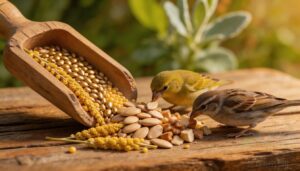
Not all seeds are created equal, and the ingredients in your blend make or break how clean and effective your feeder stays. The right mix keeps small birds coming back while cutting down on mess and waste.
Here’s what to look for.
Hulled Sunflower Kernels as a Base
Hulled sunflower kernels are the backbone of any solid no waste seed blend — and for good reason. Their fatty acid profile, rich in linoleic and oleic acids, delivers high-energy nutrition, small birds genuinely need.
Vitamin E levels and selenium content support immune health and feather condition. When you’re building batch mixing ratios, sunflower chip seed formulations boost nutrient density while keeping feeding stations spotless with true shellfree seed performance.
Safflower for Cleaner, Lower-waste Feeding
Safflower quietly does the heavy lifting in any shellfree blend. Its Kernel Size Consistency means birds pick cleanly, leaving almost nothing behind. Low Alkaloid Content keeps ground areas and water sources uncontaminated.
For messfree feeding that actually works, safflower delivers:
- Minimal Dust Production — less feeder grime
- Energy Dense Seed — high fat for cold-weather birds
- Shelf Life Preservation — stays fresh longer in storage
No waste bird seed doesn’t get tidier than this.
Peanut Pieces for Protein and Fat
Peanut pieces punch well above their weight in any shell-free blend. With roughly 26g of protein and 49g of fat per 100g, they deliver serious energy density for small birds burning calories fast. amino acid profile — rich in arginine and leucine — helps feather growth and tissue repair.
| Nutrient | Per 100g |
|---|---|
| Protein | ~26g |
| Total Fat | ~49g |
| Magnesium | ~168mg |
high-protein blend with peanut pieces is essential, no waste formula nutrition.
Nyjer and Fine Seeds for Small Birds
Nyjer is the quiet powerhouse of any no waste formula for small birds. These 2–3mm seeds offer serious Oil‑Rich Benefits, and their Fine Seed Texture flows cleanly through tube feeders with almost zero spillage.
Watch for these Foraging Patterns that confirm your shellfree blend is working:
- Goldfinches clinging sideways on mesh feeders
- House finches hovering at small ports
- Pine siskins feeding in tight clusters
Check Seed Freshness Indicators — fresh Nyjer has a mild, nutty scent. Rancid seed gets ignored quickly.
When Dried Fruit Helps Attract More Species
Dried fruit is a quiet asset for Fruit Species Appeal. Waxwings, thrushes, and orioles rarely visit seed-only feeders — but add unsulfured raisins or cranberries, and suddenly your yard gets interesting.
This Fruit Seed Synergy works because the Fruit Aroma Attraction signals ripe food to species wired for it.
Seasonal Fruit Benefits peak in late winter when natural sources vanish, giving your no-waste bird seed a real nutritional edge.
Fillers to Avoid in Small-bird Blends
Not every seed earns its place in a shell-free blend.
Milo Overuse, Wheat Inclusion, and Canary Seed Excess quietly drag down your seed mix for finches — birds ignore them, then scatter them as seed hull waste.
Flax Bulk, Oats, and Rice add weight without real calories.
A true No Fillers, high-protein blend skips all of it, keeping only what small beaks actually use.
Choosing Feeders for Less Spillage
The right feeder does as much work as the seed inside it. A poor fit between seed texture and feeder design sends more birdseed to the ground than to the birds.
Here’s what to look for before you fill up.
Tube Feeders for Small No-waste Seed
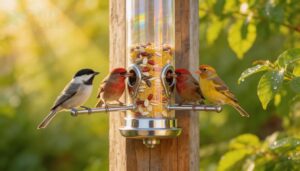
Tube feeders are your best friend when running a shell‑free blend through small, precise ports. Here’s what to look for:
- UV-Stabilized Tubes resist sun cracking and keep your low-mess seed blend visible
- Die-Cast Metal Fittings handle humidity without rusting
- Anti-Fungal Coatings block mold after rain
- Self-Aligning Ports reseal cleanly after every wash
- Quick-Access Base drops off for full cleaning without tools
Hopper Feeders for Larger Daily Volumes
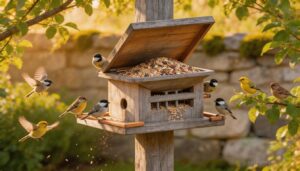
When tube feeders feel too small for your flock’s appetite, a hopper feeder manages the volume.
Wide-mouth tops enable quick top-loading, while anti-bridging baffles keep your low-mess seed blend flowing without clumps.
Durable construction manages harsh weather, and quick-release cleaning bottoms save real time.
Modular expansion lets you scale capacity up, and integrated weight monitoring tells you exactly when to refill.
Platform Feeders and Ground-feeding Tradeoffs
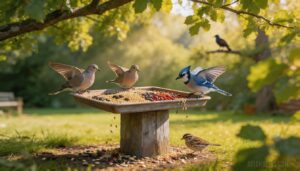
Platform feeders open up your feeding station to ground-foraging species like jays and doves, but ground predator risks rise when seed sits low and exposed. Seed containment efficiency drops without raised edges, and moisture accelerates mold.
For your low-mess seed blend, feeder placement strategies matter — position platforms in open sightlines with weather protection benefits overhead to keep your high-protein blend fresh longer.
Port Size and Perch Design
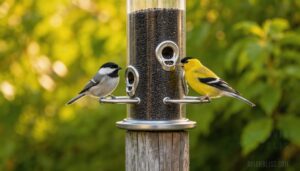
Getting port diameter ranges right is what separates a clean feeder from a messy one. Ports measuring 5–9mm work for Nyjer, while 1.5–2.5‑inch openings suit mixed blends. Adjustable port mechanisms let you match seed texture precisely.
Perch material benefits include smoother metal that reduces residue, and perch spacing optimization around 0.75–1.25 inches limits crowding.
Lip guard design and feeder compatibility directly cut spillage, simplifying feeder cleanup and feeder maintenance.
- Port Diameter Ranges: 5–9mm for Nyjer; 1.5–2.5 inches for mixed blends
- Adjustable Port Mechanisms: Fine‑tune flow to match your current seed texture
- Perch Material Benefits: Smooth metal or coated plastic resists seed buildup
- Perch Spacing Optimization: 0.75–1.25 inches apart discourages crowding
- Lip Guard Design: Raised 0.25–0.5‑inch lips funnel seeds back in, reducing ground litter
Squirrel-resistant Options That Reduce Loss
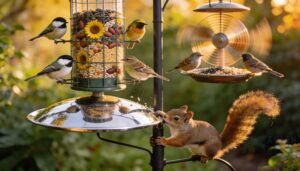
Squirrels can drain a feeder before breakfast, turning your zero waste formula into an expensive lesson.
Weight‑Activated Mechanisms close seed ports the instant a squirrel lands, while Caged Feeder Designs let small birds pass through freely.
Add Baffle Placement Strategies above or below the pole, and you’ve covered most angles.
Spinning Feeder Technology and Strategic Feeder Placement complete your squirrel deterrent toolkit, protecting every shell‑free blend you offer.
Matching Feeder Style to Seed Texture
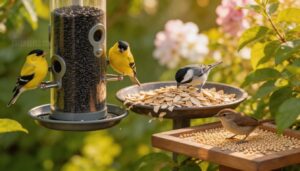
Think of your feeder as the delivery system — and seed texture is what determines whether it works smoothly or jams entirely.
Optimized flow depends on texture matching rules: fine seeds like Nyjer suit tube feeders with anti-clog baffles, while hulled sunflower chips need wider ports.
A high-protein, shell-free blend performs best when seed dispersion design, material compatibility, and feeder compatibility align with your specific seed composition and bird species attracted.
Comparing Value, Cleanliness, and Freshness
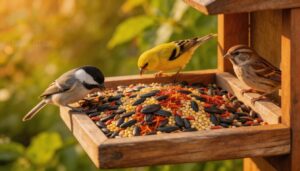
No-waste seed costs more upfront, but that price gap shrinks fast when you stop throwing away shells and soggy leftovers. Cleanliness and freshness matter just as much as what’s in the bag.
what to look at before you buy.
Cost Per Edible Pound Versus Regular Seed
No-waste seed looks pricier upfront, but the edible yield calculation changes everything. With a shell-free formula, you’re paying for 100% edible content — no husks inflating the packaging weight.
Regular seed might cost less per pound, but its price-to-yield ratio drops sharply once you subtract the waste. Shell-free cost efficiency means your dollars go further, especially with high-protein blends that attract the bird species you actually want.
How No-waste Blends Reduce Cleanup
Less debris around your feeder means less time on your knees with a broom.
A Shell-Free Formulation removes husks before the seed ever reaches your yard, cutting cleanup by up to 40 percent.
Dust-Resistant Coating keeps fine particles from scattering, while Spill-Collect Trays recapture fallen seed.
Quick-Detach Cleaning ports speed up maintenance.
The result — a genuinely clean feeding area with real seed waste reduction.
Preventing Mold, Pests, and Seed Spoilage
Shell-free seed spoils faster than you’d expect — no protective husk means moisture hits the kernel directly.
Three threats quietly degrade your supply:
- Mold thrives when humidity climbs above 60 percent, demanding consistent Moisture Monitoring.
- Insects multiply fast without Pheromone Traps and Seal Integrity checks on containers.
- Temperature swings cause condensation, breaking down seed freshness rapidly.
Batch Labeling helps you rotate stock before spoilage starts.
Storage Tips for Shell-free Birdseed
Good storage starts the moment you open the bag. Transfer your shell‑free formula into Airtight Containers — metal works best — and practice Moisture Monitoring with a small hygrometer nearby.
Temperature Control matters too: keep seeds between 50 and 70°F.
Labeling Rotation, and consistent Pest Prevention habits extend seed freshness considerably, making long‑term storage of bird seed far less complicated than most people expect.
Bag Size, Freshness, and Buying Strategy
Once your storage system is dialed in, buying smart is the next step.
Portion Sizing matters — small yards do fine with 5–10 lb bags, while active feeders benefit from 20–40 lb bulk options.
Seal Integrity and Packaging Freshness Technology like FreshLock technology keep shell-free seeds viable longer.
For cost-effective no waste seed options, always compare Price Per Pound, not bag price.
- Match bag size to your feeder’s weekly consumption
- Check pack dates before purchasing any high-protein blend
- Prioritize resealable bags with proven Seal Integrity
- Stock up during Seasonal Stocking windows for peak bird activity
- Follow Guidelines for selecting no waste bird seed by evaluating Container Materials before transferring seeds
How to Choose The Best Mix for Your Yard
Choosing the right mix starts with yard’s specific conditions — what works on a sheltered patio won’t suit an open lawn. Think about Microclimate Matching, Feeder Placement near natural cover, and Habitat Diversity when considering seed composition.
Mix Rotation across seasons keeps birds returning. Reducing waste in backyard bird feeding means picking shell-free blends that suit the species actually visiting you.
Frequently Asked Questions (FAQs)
What bird seed has the least waste?
Like a clean kitchen with no crumbs left behind, hulled sunflower kernels in a shell-free formula create the least waste — no mess, no hulls, just pure, edible seed every time.
How to feed birds without poop?
Keep feeders elevated and positioned away from sitting areas.
No waste bird seed with a shellfree formula cuts ground debris fast.
Clean feeding stations every two weeks to stay ahead of buildup.
Why put a potato in your bird feeder?
Oddly enough, a plain boiled potato belongs near your feeder in winter. Its digestible starch delivers cold weather fuel fast, giving birds carb benefits when nutrientdense seeds alone aren’t enough.
How often should I refill no waste feeders?
Check seed levels every morning during peak seasons.
In winter, refill every one to two days. Mild weather allows three to four days between fills.
Watch your feeder — it tells you everything.
Can no waste birdseed spoil or go bad?
Yes, it can. Even the cleanest shell-free blend goes stale.
Moisture, heat, and air break down fats fast — usually within 6–12 months unopened. Watch for rancidity signs: musty smell, clumping, or oily seeds.
Do squirrels eat no waste birdseed mixes?
Squirrels absolutely eat no waste birdseed mixes. Sunflower hearts and peanuts draw them in fast.
Capsaicin additives and weight-activated mechanisms help, but smart feeder placement tactics remain your strongest squirrel deterrent.
Is no waste birdseed safe for baby birds?
waste bird seed is safe for baby birds. Nestlings need insect protein alternatives, not seeds.
Nutritional gaps, choking risks, and digestive concerns make even shell‑free blends unsuitable until the fledgling stage.
What weather conditions affect no waste seed quality?
Humidity, heat, and rain all chip away at seed quality fast. Above 70% humidity, oils turn rancid. Direct sun degrades nutrients. Store in cool, dry, airtight containers to protect freshness year-round.
Can DIY blends match commercial no-waste quality?
DIY blends can absolutely match commercial quality.
With locally sourced hulled seeds, custom ratio tuning, and proper storage, you’ll cut packaging waste by up to 40% while boosting bird acceptance rates noticeably.
Do no-waste mixes prevent unwanted weed growth?
Yes — no waste bird seed uses dehulled or heat‑treated seeds, which means seed germination control is built right in.
Spilled seeds won’t sprout, making garden weed prevention with bird seed genuinely easy.
Conclusion
Seeding a better bird-watching experience starts with the right food. A no waste birdseed mix for small birds ensures every bite counts, reducing waste and attracting finches, chickadees, and nuthatches.
By choosing a shell-free blend, you’ll enjoy a cleaner feeder, healthier birds, and a more satisfying viewing experience. Make the switch to a high-quality mix and feeder today, and reap the rewards of a thriving backyard bird community, now and throughout the year.