This site is supported by our readers. We may earn a commission, at no cost to you, if you purchase through links.

A birdhouse pointed the wrong way can sit empty for years. Birds aren’t being smart. An overheated nest box kills eggs. A cold, drafty entrance drives parents away before chicks even hatch.
Something as simple as direction a birdhouse faces determines whether it becomes a thriving home or an expensive garden decoration. East and southeast orientations consistently outperform all others, giving nesting birds gentle morning warmth without the punishing afternoon heat.
Getting this right also changes by species, climate, and season—so the full picture is worth understanding before you mount that box.
Table Of Contents
- Key Takeaways
- Which Direction Should a Birdhouse Face?
- How Climate and Region Affect Birdhouse Direction
- Wind, Weather, and Predator Protection Through Orientation
- Species-Specific Birdhouse Direction Preferences
- Seasonal Adjustments and Birdhouse Maintenance Tips
- Frequently Asked Questions (FAQs)
- Which direction should a birdhouse face?
- What happens if a birdhouse faces the wrong direction?
- Should a bird house face away from prevailing winds?
- How do you set up a birdhouse?
- What color birdhouse attracts birds the most?
- Where not to put a birdhouse?
- What materials best resist rot and weathering?
- How high should a birdhouse be mounted?
- How far should birdhouses be spaced apart?
- How often should birdhouse interiors be sanitized?
- Conclusion
Key Takeaways
- Facing your birdhouse east or southeast gives nesting birds gentle morning warmth without the dangerous afternoon heat that can kill eggs and chicks.
- Your climate matters — northern regions do best with east or southeast placement, while hotter southern zones should lean north or northeast to prevent overheating.
- Direction isn’t just about the sun — an east-facing entrance naturally shields the nest from prevailing winds and gives parent birds clearer sightlines against predators.
- Different species have different preferences, so match your birdhouse direction to your target bird — bluebirds want east or southeast, while chickadees prefer north or northwest.
Which Direction Should a Birdhouse Face?
Where you place a birdhouse matters, but which way it faces can make or break whether birds actually move in. A few key directions work better than others, and knowing why helps you make a smarter choice.
For a deeper look at placement, orientation, and build quality, birdhouse plans and nesting box guides can help you get every detail right from the start.
Here’s what the research and field experience show.
The Best Direction: East or Southeast
East or southeast is your best bet for birdhouse orientation. These directions offer a natural sunrise heat balance — warming the nest at dawn without baking it by noon.
You get microclimate benefits like insect activity boost in early hours, better shade timing as the sun shifts, and steady nest temperature stability throughout the day.
Simple, effective sunlight and temperature control for birdhouses.
Why Morning Sun Matters for Nesting Birds
Morning sun does more than warm the nest — it promotes embryonic development by raising temperatures gently at first light. That steady thermal regulation reduces chilling risks for newly hatched chicks.
An east-facing birdhouse also aids mold prevention by drying overnight dampness.
Parents benefit too: parental vigilance improves at dawn, and vitamin D synthesis promotes healthy nestling growth through consistent, moderate sun exposure.
A preferred mounting height of 5–10 feet further reduces predator access.
Directions to Avoid and Why
Not every direction works in a birdhouse’s favor. West and south-facing entrances create serious problems — westward heat builds through afternoon hours, turning the cavity into an oven. Southwest overheating is a real threat to nestlings. Direct sunlight exposure from the south spikes interior temperatures. A northwind draft chills eggs during incubation. Poor predator sightlines increase nest vulnerability.
Directions to avoid:
- West – Intense westward heat in afternoons raises fatal temperatures inside the box.
- South – Direct sunlight exposure peaks in summer, drying nest materials and stressing chicks.
- Southwest – Southwest overheating combines heat and afternoon glare, reducing occupancy rates.
- North – A northwind draft disrupts incubation and chills newly hatched birds.
- Toward predator pathways – Weak predator protection through house direction invites nest robbing.
Stick with entrance south or southeast only in cooler northern zones. In warmer regions, entrance north or northeast keeps things safer.
How Climate and Region Affect Birdhouse Direction

Where you live changes everything about which way your birdhouse should face. A setup that works perfectly in Minnesota could leave a nest overheated in Georgia.
That’s why it’s worth checking out these bird house placement ideas by region before you mount anything permanently.
Your birdhouse direction depends on where you live — what works in Minnesota could overheat a nest in Georgia
Here’s how to match your direction to your climate and region.
Temperate Northern Climates Vs. Hot Southern Regions
Climate shapes everything about birdhouse placement. Temperature Extremes, Precipitation Patterns, and Wind Regime Differences vary sharply between Northern States and hot southern regions — and your birdhouse direction should reflect that.
| Factor | Temperate North | Hot South |
|---|---|---|
| Ideal Facing | East or southeast | North or northeast |
| Summer Risk | Cold snaps | Overheating above 35°C |
| Growing Season Length | 4–7 months | Year-round |
| Sunlight and temperature control for birdhouses | Boost morning warmth | Prioritize afternoon shade |
| Habitat Diversity | Migratory woodland species | Drought-adapted cavity nesters |
Regional climate considerations in birdhouse placement and seasonal orientation adjustments for birdhouses help birds nest safely wherever you live.
Regional Guidelines by U.S. Zone
Across the U.S., regional birdhouse direction guidelines shift depending on your zone.
Northeastern States do best with east or southeast entrances. Southeastern States benefit from north or northeast placement to limit heat. Midwestern States generally favor southeast or east.
Climate Zone Mapping, Local Species Checklists, and Regional Workshops — often supported through Interagency Coordination and Zone Funding Programs — help you dial in the right direction for your area.
Coastal, Urban, and Mountainous Placement Adjustments
Where you live shapes everything.
Coastal spots need salt spray resistance — corrosion-proof materials matter here, and eastfacing birdhouse placement near vegetation shielding helps block sea wind.
In urban environments, urban noise mitigation means tucking boxes into sheltered courtyards.
Mountain slope stability calls for adjustable tilt mechanisms on sturdy posts.
Regional variations in birdhouse orientation aren’t optional — they’re how you give nesting birds a real chance.
Wind, Weather, and Predator Protection Through Orientation
Direction does more than catch the morning sun — it shapes how safe and sheltered a nest stays all season long. The way your birdhouse faces can block harsh winds, reduce predator exposure, and create a more stable environment inside.
Here’s what to keep in mind when orientation becomes your first line of defense.
Positioning The Entrance Away From Prevailing Winds
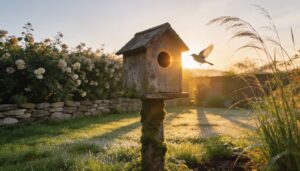
Wind hits harder than most people expect. Positioning your birdhouse entrance away from prevailing winds is one of the simplest protective steps you can take.
An east or southeast facing opening naturally facilitates wind direction shielding. Add a small entrance overhang and some shelter vegetation nearby for wind buffering.
That windbreak placement — a shrub, post, or wall — creates a protected orientation that keeps the interior calm.
How Facing Direction Reduces Predator Risk
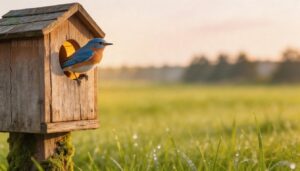
Direction does more than catch sunlight — it shapes predator protection too. Facing the entrance east or southeast removes hidden approach paths that ground hunters rely on.
Clear sightlines across open ground give parent birds a moment’s warning.
Avoid dense shrub placement right at the entrance angle. Keep low perches away.
Predator avoidance starts with simply choosing the right direction.
Combining Height, Baffles, and Orientation for Safety
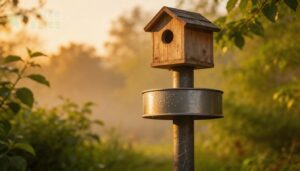
No single fix protects a nest — but stack height, baffles, and orientation together, and you’ve built real defense.
- Mount 5–10 ft high following birdhouse height guidelines
- Use chew-resistant baffle material around your pole
- Apply elevated baffle positioning to block climbing routes
- Set an entrance tilt angle downward to shed rain
- Face east or southeast with 12-inch clearance space requirements
Species-Specific Birdhouse Direction Preferences
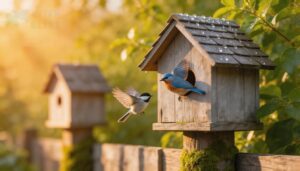
Not every bird reads from the same playbook with respect to choosing a home. Some species are particular about sun, shade, and wind in ways that might surprise you.
Here’s how the most common backyard cavity nesters stack up.
Bluebirds, Wrens, and Chickadees: What They Prefer
Not all birds read the same map. Bluebirds, wrens, and chickadees each have distinct preferences worth knowing.
| Species | Preferred Direction | Box Height |
|---|---|---|
| Bluebird | East or southeast | 4–10 ft |
| Wren | South or east | 4–8 ft |
| Chickadee | North or northwest | 5–8 ft |
Match entrance dimensions and predator guards to each species for best results.
Woodpeckers, Swallows, and Other Cavity Nesters
Woodpeckers and swallows take a different approach than bluebirds or wrens.
- Woodpeckers prefer south or southeast exposure — Thermal Regulation Features matter here, since warmth helps their longer Breeding Cycle Timing.
- Swallows accept west or southwest, needing open sunny placement near water.
- Other cavity nesters vary by Regional Species Distribution, so research your local species first.
Entrance Size Optimization and Material Durability always apply.
Matching Orientation to Your Target Species
Each bird has its own Species Light Preference. Eastern Bluebirds thrive with an entrance east or southeast, while chickadees lean northeast for cooler interiors.
Wrens want Shade Balance Strategy built in.
Matching Thermal Comfort Zones to your target species turns a good box into a great one.
Know your bird, then set your Birdhouse direction accordingly — Regional Species Fit matters.
Seasonal Adjustments and Birdhouse Maintenance Tips
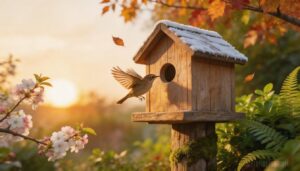
Even the best-placed birdhouse needs a little attention as the seasons shift. Small changes to orientation and upkeep can make a real difference in whether birds return year after year.
Here’s what to keep in mind throughout the seasons.
Summer Orientation: Keeping The Nest Cool
Summer heat can turn a nest box into an oven fast.
Start with three basics:
- Face the entrance east to catch gentle morning sun
- Add ventilation holes near the top for airflow, tilt, and heat escape
- Use reflective materials or a roof overhang with a shade canopy
These summer cooling methods protect chicks through afternoon heat prevention and steady temperature regulation.
Winter Orientation: Retaining Warmth for Early Nesters
Winter flips the script. Face your box south or southeast to increase solar heat capture during low-angle winter sun.
| Feature | Purpose | Benefit |
|---|---|---|
| Insulation Materials | Line floor with dry hay | Heat retaining bedding |
| Draft Reducing Entrance | Block prevailing winds | Thermal buffer zones |
| Southeast facing | Morning sun warmth | Temperature regulation |
Small adjustments. Real warmth for early nesters.
When and How to Install, Clean, and Inspect Your Birdhouse
Install your birdhouse in fall or winter — well before nesting season begins. Mount it at least 1.5 meters up, following basic Mounting Height Guidelines to keep ground predators away.
Inspection Checklist Items should cover drainage holes, loose hardware, and warped wood.
Clean interiors with a 10 percent bleach solution each late summer.
Simple, consistent care keeps the east-facing placement working year‑round.
Frequently Asked Questions (FAQs)
Which direction should a birdhouse face?
Face it east. Morning sun warms the cavity, dries dampness, and gives nesting birds a calm, predator-aware start.
Your entrance angle, roof overhang, and tree proximity fine‑tune that ideal orientation naturally.
What happens if a birdhouse faces the wrong direction?
Wrong orientation brings real risks. Overheating eggs, excessive moisture, predator access, and reduced occupancy all follow poor placement. Delayed fledging is common when chicks overheat or chill too often.
Should a bird house face away from prevailing winds?
Yes — keep entrance sheltered from prevailing winds. A windbreak placement protects nestlings from drafts, reduces heat loss, and maintains a stable microclimate wind environment.
East-facing boxes naturally offer this sheltered entrance with smart ventilation balance.
How do you set up a birdhouse?
Mount your birdhouse 5–10 ft high using a sturdy pole.
Choose cedar for durability, add ventilation holes, match entrance dimensions to your target species, and attach predator baffles.
Face the entrance east for ideal orientation.
What color birdhouse attracts birds the most?
Color matters, but not drastically. Natural wood and green camouflage blend into surroundings, helping wrens and chickadees feel safe.
Light blue and pastel contrasts attract bluebirds, while white heat reflection keeps interiors cooler on hot days.
Where not to put a birdhouse?
Keep boxes away from tree canopies, metal surfaces, high-traffic or noisy areas, and salt spray zones. Don’t face the entrance toward predator pathways.
Good sun exposure management and wind protection for birdhouses matter for local climate considerations.
What materials best resist rot and weathering?
Cedar and redwood are your best bets. Both naturally resist rot without chemicals. Stainless steel fasteners won’t rust over time.
Avoid cheap softwoods — they crack and decay fast, shortening your birdhouse’s life considerably.
How high should a birdhouse be mounted?
Think of height as your birdhouse’s first line of defense. Mount birdhouses five feet above ground — enough to deter predators and keep maintenance easy.
How far should birdhouses be spaced apart?
Space birdhouses at least 100 feet apart for bluebirds. Wrens and chickadees tolerate 20 to 30 feet. Territorial spacing guidelines vary by species, so match distance to the birds you want.
How often should birdhouse interiors be sanitized?
Clean birdhouses at least twice a year. Use a 1:9 bleach ratio, rinse well, and allow full drying time.
Regular cleaning helps parasite management and keeps your box safe for every new brood.
Conclusion
Like a compass guiding travelers, the right birdhouse direction points the way to a thriving sanctuary. Facing east or southeast, your birdhouse becomes a haven, gently warmed by morning sun.
When choosing which direction a birdhouse should face, consider the delicate balance between warmth and protection.
A well-placed birdhouse becomes a safe haven, nurturing life and bringing joy to your backyard.
Make the right turn, and watch your feathered friends flourish.