
This site is supported by our readers. We may earn a commission, at no cost to you, if you purchase through links.

An owl can swallow a mouse whole, but it needs a cavity nearly a foot deep to raise its young safely. That single fact trips up plenty of well-meaning shoppers who grab the first birdhouse-shaped box at the store, hang it up, and wonder why nothing moves in all spring.
Nesting boxes aren’t one-size-fits-all. A wren wants a snug 4-inch floor, while a bluebird needs an entrance hole measured in sixteenths of an inch to keep starlings out. Get the details wrong, and you’ve built a vacancy sign instead of a nursery.
The right nesting boxes for backyard bird enthusiasts come down to matching material, size, and placement to the species you hope to welcome. Here’s a closer look at five standout options, plus what separates a box birds actually use from one that just sits empty.
Table Of Contents
Key Takeaways
- Match nesting box dimensions and entrance hole size exactly to your target species, since even a fraction-inch difference in hole size can invite unwanted birds or block the ones you want.
- Choose cedar or untreated wood with proper ventilation, drainage holes, and a sloped overhanging roof to keep the nest dry, cool, and free of toxic fumes.
- Protect nesting birds with predator guards like stovepipe baffles and conical guards mounted on smooth metal poles, since raccoons and snakes can easily climb wooden posts or overhanging branches.
- Install boxes at species-appropriate heights and orientations in late winter to early spring, then clean them out promptly after nesting season to prevent parasites and disease.
Top 5 Backyard Nesting Boxes
Picking the right nesting box can feel tricky with so many styles out there. You want something sturdy, safe, and easy for birds to actually call home. Here are five options worth a closer look.
For a deeper dive into designs that balance ventilation, cleaning access, and predator-proofing, this guide to bird houses with nesting boxes breaks down what actually matters.
1. UUMENHA Carbonized Cedar Owl Box
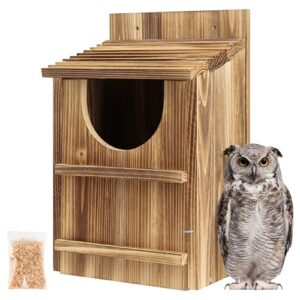
If you want screech owls to feel at home, this box delivers. Built from carbonized cedar, it resists rot without any paint or chemicals, and measures 14.5 x 9 x 7.5 inches.
The 3-inch entrance welcomes owls 9-11 inches tall, while top and bottom vents keep temperatures steady. Assembly is quick, with pre-drilled holes and included wood shavings for instant nesting comfort. Just grab a bigger screwdriver, some holes run tight.
| Best For | Backyard wildlife enthusiasts hoping to attract screech owls or similar cavity-nesting birds with an easy-to-install, natural shelter. |
|---|---|
| Material | Cedar wood |
| Assembly Type | Quick-assembly kit |
| Cleaning Access | Standard opening |
| Mounting Hardware | Included |
| Target Birds | Screech owls |
| Weight | 3.86 lb |
| Additional Features |
|
- Carbonized cedar construction resists moisture and decay without paint or chemicals
- Quick-assembly kit with pre-drilled holes, an installation guide, and included wood shavings for instant nesting comfort
- Top and bottom vents help regulate temperature inside the box
- Pre-drilled holes may not always align perfectly, so a larger screwdriver might be needed
- Cedar’s softness may limit durability beyond a single nesting season without extra reinforcement
- No guarantee of owl occupancy, since success depends on location, habitat, and local bird populations
2. Carbonized Cedar Owl Nesting Box
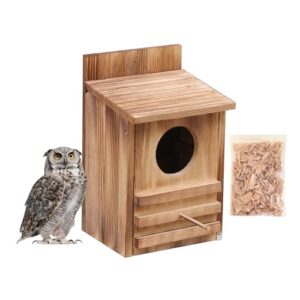
Another solid pick for owl enthusiasts, this box takes cedar durability up a notch. The carbonized cedar exterior shrugs off moisture and warping, while smooth interior walls keep feathers snag-free.
Inside, you’ll find a roomy 4-6 inch wide cavity with 9-11 inches of vertical space, giving owlets room to stretch and stand as they grow. Side vents paired with screened bottom drains keep air fresh and mold at bay.
A hinged panel makes yearly cleanup simple, no tools or guesswork required.
| Best For | This nesting box is best for birdwatchers, garden owners, and educational programs looking to attract barn owls, screech owls, and other cavity-nesting birds while supporting natural rodent control. |
|---|---|
| Material | Carbonized cedar |
| Assembly Type | Tool-free assembly |
| Cleaning Access | Hinged roof |
| Mounting Hardware | Included |
| Target Birds | Barn/screech owls |
| Weight | 5.91 lb |
| Additional Features |
|
- Deep-carbonized cedar construction resists rot, pests, and moisture for long-lasting outdoor use
- Tool-free assembly with pre-drilled holes and a hinged roof makes setup and cleaning simple
- Comes with complete mounting hardware and built-in ventilation and drainage for year-round comfort
- Assembly instructions aren’t included in the box and must be downloaded separately
- Some kits may arrive with missing or misaligned hardware, requiring extra tools or screws
- The carbonization process can leave a strong odor that needs airing out before placement
3. Cedar Weatherproof Owl Nesting Box
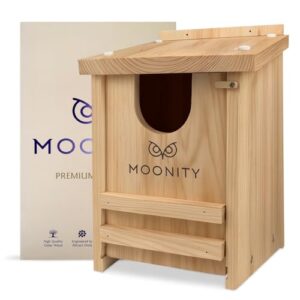
If you want something that leans harder into weatherproofing, this one delivers. The sloped roof sheds rain and snow fast, keeping the nest cavity dry through rough seasons.
Cedar’s natural oils fend off rot and pests, while a painted, non-toxic finish adds another layer of protection. Stainless steel hardware won’t rust, and a removable front panel makes cleaning painless.
An internal baffle guards nestlings from drafts and unwanted visitors, giving owl families a safer place to grow.
For step-by-step tips on positioning baffles and sizing entrance holes correctly, check out this bird house installation guide.
| Best For | Backyard birdwatchers, homeowners, and educators looking for an easy-to-assemble, weather-resistant nesting box that attracts small to medium owl species like Screech Owls, Elf Owls, or Kestrels. |
|---|---|
| Material | Fire-treated cedar |
| Assembly Type | Pre-drilled holes |
| Cleaning Access | Hinged lid |
| Mounting Hardware | Included brackets |
| Target Birds | Small-medium owls |
| Weight | Not specified |
| Additional Features |
|
- Fire-treated cedar construction with sealed joints stands up well to long-term outdoor exposure
- Asphalt shingle roof and predator-safe entrance help protect nesting owls from the elements and threats
- Comes ready to install, with mounting hardware, cedar shavings, and an assembly guide included
- Pre-drilled holes can be tricky to align during assembly, according to some users
- Door hinges and a printed mounting template aren’t included, so you may need extra hardware or careful measuring
- Entrance size is built for small to medium birds, so larger raptors or other species won’t be able to use it
4. Rypet Transparent Parakeet Nesting Box
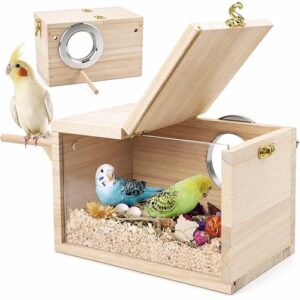
Owl boxes handle the outdoors, but small birds indoors need something else entirely. The Rypet Transparent Parakeet Nesting Box swaps cedar walls for a clear acrylic panel, letting you watch eggs and hatchlings without lifting the lid.
Paulownia and pine wood keep things insulated, while a stainless-steel entry hole resists scratches. Bolts and wing nuts mount it inside or outside your cage, and a perch ledge gives parents a spot to rest.
At 7.4 x 4.7 x 4.7 inches, it’s built for budgies, finches, and cockatiels.
| Best For | Owners of small indoor birds like budgies, finches, and cockatiels who want to observe nesting and hatching up close without disturbing the parents. |
|---|---|
| Material | Paulownia and pine |
| Assembly Type | Bolt and wing-nut |
| Cleaning Access | Hinged lid |
| Mounting Hardware | Included bolts/washers |
| Target Birds | Small cage birds |
| Weight | 15.2 oz |
| Additional Features |
|
- Clear acrylic front lets you watch breeding and hatching without opening the box
- Insulated paulownia and pine wood construction keeps the nest warm and cozy
- Hinged lid and included perch ledge make cleaning easy and give parent birds a place to rest
- Acrylic panel can scratch if cleaned with abrasive tools or handled roughly
- Assembly requires bolts and wing nuts, which can be fiddly for some users
- Only sized for small species and not built to withstand outdoor rain or humidity
5. Natural Wood Transparent Bird Nest Box
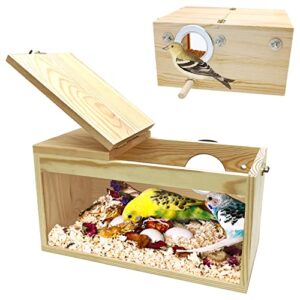
If you’d rather build than buy, this option gives you the same clear-view perk as the Rypet box, but in a simpler, natural wood frame. Untreated wood keeps the interior breathable and free of chemical odors, so eggs and chicks stay safe.
Side vents and small drainage holes fight off humidity and mold, while a hinged panel makes yearly cleaning quick. The entrance sits offset from the viewing panel, giving nesting birds a bit of privacy while you watch.
| Best For | Owners of small birds like budgies, parakeets, canaries, and lovebirds who want to encourage natural nesting while keeping an eye on eggs and chicks without disturbing them. |
|---|---|
| Material | Solid wood |
| Assembly Type | Bolt-on design |
| Cleaning Access | Top opening |
| Mounting Hardware | Included hardware |
| Target Birds | Small cage birds |
| Weight | 12.3 oz |
| Additional Features |
|
- Transparent acrylic panel lets you monitor breeding activity without opening the box
- Solid wood construction offers natural insulation and a cozy, warm feel for nesting birds
- Top-opening design makes cleaning and bedding changes fast and easy
- Acrylic panel can arrive cracked if shipping and packaging aren’t handled carefully
- Soft wood may get chewed through quickly by larger or more active birds
- No built-in egg depression, so you may need to add a false bottom for proper egg support
Choosing Species-Specific Nesting Boxes
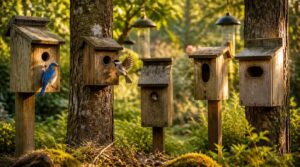
Not every bird wants the same front door, and that’s actually the whole trick to attracting them. Size, shape, and hole width all matter more than you’d think. Here’s what to look for with some of your yard’s most common visitors.
Bluebird Entrance Hole Sizes
A hole that’s just a fraction too big invites starlings; too small, and bluebirds can’t get in. Eastern bluebirds need 1 1/2 inches, Western and Mountain species 1 9/16 inches.
A fraction of an inch decides everything: too big invites starlings, too small locks bluebirds out
Oval openings (2 1/4" x 1 3/8") or slot designs work too, easing entry while still keeping rivals out.
Retrofitting? Match your species exactly, don’t just eyeball it. In regions where species overlap, use the optimal overlapping size of 1 ³⁄₈ inches.
Wren Box Dimensions
Ever notice how a wren house looks tiny compared to other nesting boxes? That’s on purpose. These small bird species need cozy quarters, not sprawling suites.
- Interior floor area: 4×4 inches
- Cavity depth: 6-8 inches
- Entrance hole diameter: 1 1/8-1 1/4 inches
- Ideal hole height: 6 inches above floor
Smooth interior walls and 3/4-inch wall thickness keep nestlings safe and boxes sturdy through seasons.
Chickadee Nesting Needs
Chickadees are small, but picky about their nurseries. They need an entrance hole around 1 1/8 to 1 1/4 inches, with cavity depth of 6 to 15 inches and interior volume near 4x4x8 inches.
Inside, they layer moss, bark fibers, and soft fur for warmth.
Eggs incubate 12-14 days, and chicks fledge within 16-22 days once fed.
Owl Box Requirements
Owls need room to work with, not a cozy nook. Ideal entrance diameter runs 5 to 6 inches, with interior chamber depth of 12 to 16 inches and nesting floor area near 0.2 to 0.4 square meters.
Wind direction orientation matters too, facing away from harsh winter gusts.
Predator guard installation on the pole keeps raccoons from raiding this owl house entirely.
Habitat Matching Tips
A nesting box that looks perfect on paper still fails if it doesn’t match its surroundings.
Aim for visual camouflage using bark-toned wood and native plantings within a couple meters, which boosts foraging hotspot proximity too. Match substrate texture to natural cavities, and track seasonal vegetation shifts.
Good habitat suitability assessment beats a fancy box every time.
Key Nest Box Features
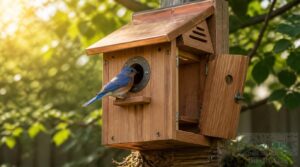
Not all nesting boxes are built the same, and the little details make a big difference for your feathered visitors. Some features protect eggs and chicks, while others just make your life easier come cleaning time. Here’s what to look for before you buy.
Cedar and Untreated Wood
Cedar wood makes the best material for a weatherproof nesting box, thanks to natural oils and tannins that fight rot without chemicals. Untreated wood keeps eggs and chicks safe from toxic fumes found in treated lumber.
Cedar also regulates moisture, absorbing and releasing humidity slowly. As a renewable resource, it lowers your project’s ecological footprint while lasting several seasons with basic care.
Ventilation and Drainage Holes
A sturdy frame means little without airflow. Ventilation vents near the roofline cool the interior and cut condensation, while drainage holes at the base clear rainwater fast.
Good birdhouse design guidelines follow simple ratios:
- Vents up top for airflow
- Drains down low for moisture control
- Clear holes during nest box monitoring each season
Sloped Overhanging Roofs
Rain doesn’t fall straight down, it angles in on windy days, and a flat roof invites trouble. A sloped overhang extending 2–4 inches past the front sends rainwater diversion away from the entrance and walls, protecting seams from moisture damage.
That slant also controls snow shedding and adds wind resistance, while shading the box from harsh afternoon sun, boosting overall birdhouse durability season after season.
Predator Guards and Baffles
Snakes and raccoons are climbers, so a good box needs more than a strong roof.
Stovepipe baffles below the box create a wobbly funnel predators can’t grip, while conical guards keep raccoons from reaching over the lip. Noel guards add one more layer, letting fledglings out while keeping intruders away.
Metal poles beat wooden posts since baffles slide on easily and offer no claw traction.
Easy-clean Hinged Panels
Once nesting season ends, you’ll want quick access inside without wrestling tools or screws. A hinged roof with tool-free disassembly makes cleaning simple.
Look for panels made from tempered glass or aluminum, since panel material durability affects rust resistance and cleaning surface efficiency over years of use.
Corrosion-resistant hinges keep closures smooth, so your nesting boxes stay functional and predator guards stay properly aligned season after season.
Placement and Seasonal Care
Buying the right box is only half the job. Where and how you set it up matters just as much for keeping birds safe and coming back each year. Here’s what you need to know about placement and upkeep.
Best Mounting Heights
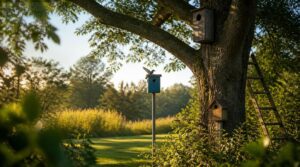
Height matters more than most folks realize for nest box success. Species-specific elevation is key: owl boxes go 10-15 feet up, bluebird houses sit at 4-6 feet, and wren boxes work best around 5-8 feet.
Higher placements between 10-15 feet stay cooler and drier, while 6-9 feet balances predator avoidance height with easy maintenance access for cleaning duties.
Safe Box Orientation
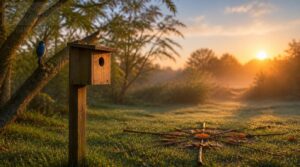
Which way your box faces matters as much as how high it sits. East or southeast-facing entrances catch morning light, drying out overnight moisture without cooking the nest in afternoon heat. Avoid south-facing walls, since afternoon sun warps wood and raises interior temps fast.
Wind direction counts too: point the entrance away from prevailing gusts to keep drafts and rain out.
Predator-safe Installation
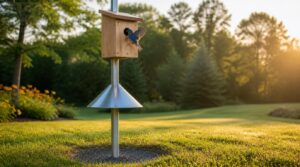
Raccoons can climb almost anything, so mount boxes on smooth metal poles, never wooden posts or tree trunks, and add a stovepipe baffle for real predator protection.
Skip overhanging branches that give snakes a launch pad. Bury an underbox apron 2 to 4 inches deep, extending 6 inches out, using hardware cloth. Secure everything with corrosion resistant screws so hardware holds up outdoors for years.
Cleaning After Nesting Season
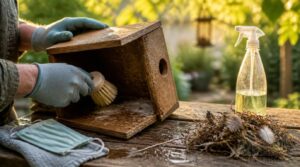
Once fledglings leave, don’t let the box sit dirty. Scoop out old nesting material right away to stop parasites from overwintering.
- Wear gloves and a mask
- Scrub with mild detergent or 1:10 bleach solution
- Rinse thoroughly
- Dry fully in sunlight to prevent mold
- Check for cracks
This quick maintenance schedule protects avian health for next season.
Weatherproofing for Longevity
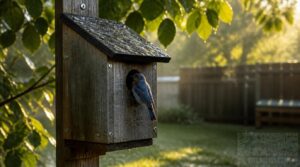
Rain and sun are hard on wood, so weather-resistant materials matter most for a long-lasting box.
Natural cedar wood naturally resists rot, but a breathable finish helps moisture escape after storms.
| Feature | Why It Matters |
|---|---|
| Corrosion resistant hardware | Stops rust stains |
| Roof pitch efficiency | Sheds rain fast |
| Seal integrity maintenance | Blocks leaks |
Check seals yearly, and keep maintenance access simple for lasting protection.
Frequently Asked Questions (FAQs)
How far apart should multiple nesting boxes be spaced?
Picture birds squabbling like grumpy neighbors over fence lines. Species spacing requirements vary: bluebirds need 100-300 feet, wrens 20-30 feet, chickadees 30-50 feet. Match spacing to species for peaceful territorial conflict mitigation and healthier backyard density limits.
Can one nesting box attract more than one species?
One box, one species is the norm, but pairing boxes with different hole sizes nearby lets bluebirds, wrens, and chickadees coexist without competing for the same cavity or territory.
What time of year should boxes be installed?
Studies show birds scout cavities weeks before nesting, so late winter through early spring installation works best. Aim for February through April, giving a 2–6 week settling period before breeding season begins in your region.
How do I know if a box is occupied?
Look for fresh nesting material near the entrance, parent birds visiting every 10–20 minutes, or droppings inside. Alarm calls when you approach and worn edges around the hole also confirm active use during breeding season.
Do nesting boxes need to be removed in winter?
Funny enough, the birds that toughed out your yard all summer often need shelter most when the cold sets in. Leave boxes up for winter roosting—they provide cold weather shelter, just check ventilation stays clear to avoid condensation problems.
Conclusion
Picture a Victorian gramophone crackling out a tune in a quiet cedar grove, and you’ve got the mismatch some boxes create.
The best nesting boxes for backyard bird enthusiasts speak the same language as their tenants: hole size, floor space, and roof pitch, all tuned to one species.
Get those details right, and you’re not just hanging wood. You’re opening a front door. Somewhere, a wren is already checking the address.
- https://www.audubon.org/news/how-build-bluebird-nest-box
- https://www.birds.cornell.edu/k12/educators-guide-to-nest-boxes
- https://nestwatch.org/learn/all-about-birdhouses/nest-box-placement
- https://georgiawildlife.com/out-my-backdoor-whats-best-bluebird-box-design
- https://nestboxtales.com/nest-box-materials