This site is supported by our readers. We may earn a commission, at no cost to you, if you purchase through links.
You fill the feeder on Monday. By Thursday, you spot a rat scaling the pole like it’s got a season pass. Sound familiar?
Here’s the thing nobody tells you: birdseed is basically an all-you-can-eat buffet for rats, and your feeder is the front door. Every spilled shell, every dusty pile under the pole, sends out a scent trail that says free food this way. Rats aren’t picky, and they’re patient.
The good news? Learning how to stop bird feeders from attracting rats doesn’t mean giving up on your backyard birds. It just means outsmarting the rodents with a few smart, simple changes.
Table Of Contents
- Key Takeaways
- Why Bird Feeders Attract Rats
- Stop Rats by Eliminating Accessible Birdseed
- Choose Rat-Resistant Feeders and Barriers
- Place Feeders Beyond Rats’ Reach
- Clean, Monitor, and Remove Attractants
- Frequently Asked Questions (FAQs)
- What repels rats immediately?
- Why should you sprinkle coffee grounds around your bird feeder?
- How do you repel rats but not birds?
- Why put a potato in the bird feeder?
- Do rat repellent sprays or scents actually work?
- What time of year are rats most active?
- Are certain bird feeder shapes safer than others?
- Should I stop feeding birds entirely if rats appear?
- Conclusion
Key Takeaways
- Rats aren’t after your feeder, they’re after the mess underneath it, so cleaning up spilled seed daily and storing extra seed in metal containers cuts off their food supply fast.
- Feed only what birds will finish by dusk (roughly 15-30 grams), and clear leftovers before dark since that’s exactly when rats start their shift.
- Rat-resistant gear like weight-activated ports, narrow perches, metal construction, and pole baffles let birds eat freely while locking rats out entirely.
- Placement matters just as much as equipment, so mount feeders around five feet high, away from fences, branches, and buildings, in open lawn areas with clear sightlines.
Why Bird Feeders Attract Rats

So your bird feeder isn’t the problem. It’s everything happening around it that rats can’t resist. Here’s what’s really rolling out the welcome mat for them.
Spilled seed, overflowing trays, and messy ground debris often matter more than the feeder itself, so choosing from the right types of bird feeders for gardens can cut down on what rats find appealing.
Spilled Seed and Shells
Watching birds toss seed like confetti is cute, until you notice what’s piling up underneath.
Those shells and husks aren’t harmless. They’re a rat buffet with a trail of breadcrumbs leading right to your feeder.
- Shell Accumulation Patterns build outward, guiding rats in
- Spilled seed dries into dusty scent trails
- Debris becomes bedding for nesting rats
Seed spill prevention starts with a proper seed catch tray. Switching to no-mess seed cylinders can eliminate shells and reduce ground spillage that attracts rats.
Uneaten Seed Overnight
So shells pile up by day, but what about seed nobody touches by nightfall? That’s its own problem.
Overnight seed spoilage sets in fast. Moisture induced clumping and temperature impact overnight both breed mold and odor, turning leftovers into a rat magnet by morning. Seed residue management isn’t optional, it’s bird feeder rat prevention 101.
| Condition | Effect |
|---|---|
| Warm night | Faster mold |
| Damp/dew | Clumping |
| Frost | Spread residue |
| Leftover seed | Attracts rats |
Low-Quality Seed Fillers
Bulk bird seed often hides cheap filler. Milo sorghum impact is real: birds ignore it, rats don’t. Millet bird preference varies, wheat and oats get ignored outright, and canary seed use plus ground hulls just add bulk, not nutrition. That’s seed waste reduction working against you.
Smarter birdseed spillage management starts with checking seed filler ingredients before you buy.
Nearby Shelter and Cover
Fixing seed quality won’t help if a hedge sits right next door. Hedge distance guidelines matter: keep cover 15-20 meters off. Privet and juniper allow shrub interior nesting.
Clear leaf piles (leaf pile management), and cut ivy on walls, since those act as vertical vine barriers. Watch crawl spaces near sheds, too, that’s structural crevice prevention.
Other Garden Food Sources
Your feeder isn’t the only draw. Fallen fruit management matters too—rotting apples spoil fast. Loose compost, unsecured pet food, and overflow trays all feed rats.
| Source | Fix |
|---|---|
| Fallen fruit | Collect daily |
| Compost | Secure bins |
| Pet food | Store indoors |
| Seed overflow | Add catch trays |
| Garden debris | Clear regularly |
Good rodent deterrent habits start with proper seed storage, not just feeders.
Keeping seed sealed in airtight containers overnight pairs well with choosing the right mix, like this guide to the best bird seed for finches, so nothing lingers to attract unwanted visitors.
Stop Rats by Eliminating Accessible Birdseed

Here’s the truth: rats don’t care about your feeder, they care about the buffet underneath it. So the fix isn’t fancy, it’s just cutting off their food supply. Here are five easy ways to make sure there’s nothing left for them to find.
Rats don’t care about your feeder, they care about the buffet underneath it, so cutting off their food supply is the real fix
Limit Daily Seed Portions
More birdseed than birds can eat in a day is basically a rat dinner bell.
Limit daily seed portions to what your flock clears by dusk, roughly 15–30 grams total, or a couple tablespoons of mixed seed.
Good seed portion management means less spilled seed, fewer shells, and way less temptation for hungry rats.
Remove Leftovers Before Dusk
Once the sun starts dipping, rats clock in for their shift. That’s just nocturnal rodent behavior, quiet, sneaky, hungry.
Your evening seed cleanup matters most here:
- Sweep spilled seed and shells
- Empty trays before dark
- Wipe oily residue off surfaces
- Seal leftovers in a container
Skip this ground sweep routine, and you’re basically ringing the dinner bell.
Install Seed Catch Trays
Think of a seed catch tray as your feeder’s safety net. It slides underneath, catching shells and spillage before rats ever get a sniff.
Go metal or heavy-duty plastic, and pick one that extends 6-8 inches past the ports. Slight drainage slopes stop mold, and removable trays make the emptying process a breeze.
Avoid Ground Feeding
Scattering seed straight on the grass is basically ringing a dinner bell for rats. Bird feeder placement should stay elevated, always.
- Rats follow scattered trails easily
- Ground seed invites mice, raccoons, skunks
- Wind scatters piles further
- Spilled grain shelters pests too
Stick to birdseed spill prevention through hanging or pole-mounted feeders, and skip ground trays entirely. Your lawn isn’t a buffet.
Pause Feeding When Necessary
Ever notice rats show up like clockwork during certain months? That’s rodent behaviour responding to seasonal food gaps. So pause feeding entirely during peak activity seasons, then resume with smaller portions.
Outdoor rodent prevention isn’t a one-and-done deal. Good bird feeding management means adjusting feeding times, watching consumption patterns, and knowing when less feeder action means fewer rats knocking at your fence line.
Choose Rat-Resistant Feeders and Barriers
So portion control only gets you so far, rats are patient little devils. The real fix is picking gear they simply can’t crack. Here’s what actually works.
Weight-Activated Feeding Ports
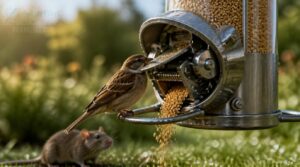
Picture a valve that only opens for the right dinner guest. That’s the magic behind a weight-activated system — springs calibrated so sparrows trigger seed release, but rats can’t budge it.
- Cam mechanism resists wear
- Stainless steel resists rust
- Sensitivity adjusts per species
- Fits standard tube feeders
- Blocks squirrels too
Weight calibration accuracy matters most. Get it right, and you’ve got a truly rat-resistant setup.
Narrow Perches
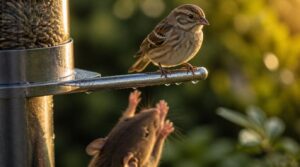
So that valve trick controls weight, but what about grip? Narrow Perch Design gives rats nothing to hold onto.
| Feature | Bird Benefit | Rat Deterrent |
|---|---|---|
| Narrow bar | Compact stance | No grip |
| Metal build | Durability | Chew-resistant |
| Angled tilt | Easy landing | Blocks underside |
| Rounded edge | Foot safety | N/A |
| Modular fit | Compatibility | N/A |
Metal Perch Durability beats splintery wood, hands down.
Metal Feeder Construction
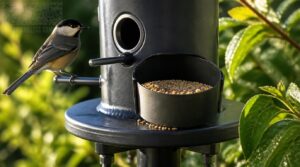
Good perches only help if the whole feeder can back them up. That’s why Heavy Gauge Steel matters, it laughs off gnawing that’d wreck plastic in a week.
Add Powder Coated Finishes for weather grip, Stainless Steel Linings on ports, and clean Welded Joint Design with no snag points. Rat-resistant, top to bottom, with Detachable Seed Cups for easy weekly scrubbing.
Protective Feeder Cages
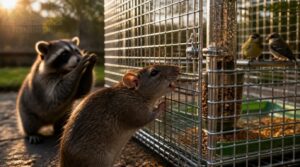
So your feeder’s tough now. But a Varmint Cage wrapped around it? That’s the real deadbolt.
- Rats gnawing helplessly at a wall they just can’t beat
- Raccoons pawing a locked door and giving up
- You, sleeping easy knowing seed’s actually safe
Look for Stainless Steel Mesh, Anti-Tamper Latches, and Adjustable Clamps for a snug, rat-resistant fit. Bonus: Collapsible Cage Design and UV Resistant Coating for storage and sun.
Pole and Hanging Baffles
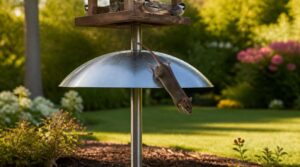
Since rats climb almost anything, a smooth metal pole beats wood every time. Add a Baffle Dome Design on top, 16 inches wide, and climbers just slide off.
Both Pole Mounting Options and Hanging Baffle Materials matter here. UV Resistant Plastics hold up outdoors, and a good Baffle Tilt Mechanism seals the deal for real bird feeder protection.
Place Feeders Beyond Rats’ Reach
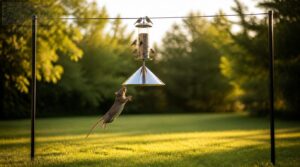
Rats are surprisingly good little acrobats, so a fancy feeder alone won’t save you. Where you put it matters just as much as what it’s made of. Here’s exactly where to hang it so rats hit a dead end every time.
Raise Feeders Five Feet
Rats can climb, but they can’t fly. So five feet up is your magic number.
That height puts feeders past most jumping rats, cuts ground scent trails, and boosts elevated visibility benefits for birds spotting hawks.
- Use a sturdy pole, powder-coated
- Anchor into concrete
- Check feeder stability monthly
- Adjust mounting height as needed
- Watch for wobble
Avoid Fences and Branches
Think of fences and branches as rat highways. A rat won’t jump five feet from open ground, but it’ll happily scurry along a rail or limb straight to your feeder.
Go with fence-free mounting and freestanding poles only. Keep clear sight lines by pruning branches within reach. This distance from cover boosts predator visibility and keeps your yard safer overall.
Choose Open Lawn Areas
Middle-of-the-lawn feeders aren’t lazy placement, they’re strategic exposure. Open sightlines mean hawks spot rats easier, and rats know it.
Aim for space with room to spare, not a cramped corner.
- Keep generous clearance on all sides
- Skip edges near cover
- Favor central, visible spots
- Leave wide access paths to the feeder
This isn’t just about looks, it’s survival math tipped in your birds’ favor.
Distance Feeders From Buildings
Rats travel walls like highways, so give buildings a wide berth. Keep a Five Foot Distance minimum, plus Building Corner Clearance of two meters, since corners hide rats best.
Mind the Eave Buffer Zone too. And don’t forget Foundation Clearance — that’s prime rat real estate. Good bird feeder distance from structures? At least 10 meters overall.
Clear Nearby Dense Vegetation
That hedge by your feeder? Rat cover, plain and simple. Trimming vegetation radius to six feet cuts hiding spots fast.
Remove ground cover, keep that one-meter buffer clear. Rats hate open ground, no sightlines means no safe approach.
Run a seasonal pruning schedule, especially before spring growth. Create an open buffer between cover and your bird feeder distance from cover — smart bird feeder placement tips in action.
Clean, Monitor, and Remove Attractants

So you’ve got the feeder placed right and rat-proofed with the right gear. But rats are opportunists, and even a well-placed feeder needs upkeep to stay off their radar. Here’s your routine for keeping things clean and catching trouble before it moves in.
Clean Feeders Weekly
Grime builds up fast, and a lazy feeder is a rat magnet. Stick to a weekly cleaning routine: hot soapy water, full scrub, thorough rinse. Don’t skip drying before refilling — damp seed molds quick. Wipe seed trays too.
This birdseed cleaning routine, paired with a simple maintenance checklist template, keeps rodent control easy and your feeder actually doing its job.
Sweep Beneath Feeders Daily
Weekly scrubbing takes care of the feeder. The yard beneath it needs daily attention too.
Spilled seeds pile up fast, 20 to 40 grams a day isn’t rare. Left alone, that’s up to 48 hours of easy rat food.
So grab a broom before dusk. A quick two-minute sweep, dustpan kept handy, cuts ground cover and rat deterrents into your regular cleaning habit.
Store Seed in Metal
Sweeping takes care of the yard. Your seed bag is a whole other rat magnet waiting to happen.
Bags left open are basically a dinner invitation. Switch to airtight metal containers instead. Rats can’t chew through steel, and moisture stays out too. If you’re shopping around, this guide to top-rated bird food storage containers breaks down features like Gamma Seal lids and galvanized steel bodies worth looking for.
- Keeps seed dry and fresh longer
- Blocks rats from gnawing their way in
- Adds real seed storage security to your routine
Metal feeders get the glory, but birdseed storage matters just as much.
Check Droppings and Gnawing
Metal storage controls seed access. Now check for rats themselves.
Grab a flashlight and identify fresh droppings near feeders, they’re dark, shiny, and smear when pressed. Older ones turn gray and crumble. Check for gnaw marks on wood, plastic, even wiring nearby.
Morning walks reveal nighttime signs best, since rats forage after dusk. Monitoring regularly catches rat habitat problems early, before they become full-blown infestations.
Secure Compost and Pet Food
Your feeder’s clean, but rats don’t quit just because the birdseed’s locked up. They’ll hit compost and pet bowls next.
- Secure compost bins with tight latches
- Metal food containers, not plastic
- Manage compost odor with dry leaves on top
- Rotate pet food, don’t let it go stale
- Set rodent trap placement near both, just in case
Frequently Asked Questions (FAQs)
What repels rats immediately?
Picture a rat sniffing around your patio tonight, then hitting a wall of scent it hates. That’s the move: soak cotton balls in peppermint oil, dab on cayenne or capsaicin spray, or set out a predator odor sachet near entry points.
Why should you sprinkle coffee grounds around your bird feeder?
Grounds work as a mild aroma deterrent effect, soak up moisture that draws bugs, and double as mulch. Like peppermint oil or cayenne pepper, it’s simple rat habitat modification that keeps your feeding zone drier and less inviting.
How do you repel rats but not birds?
Like a medieval moat, keep them out without keeping birds away: weight-activated ports, narrow perches, baffles, and scent deterrents like peppermint oil work together as a smart, bird feeder squirrel proof solution rats can’t crack.
Why put a potato in the bird feeder?
Folks use potato as a cheap soft food source and supplemental inexpensive option, plus an observation attractant use for photos. It draws insects too, feeding hungry birds naturally, but it’s not exactly a smart bird feeder deterrent against rats.
Do rat repellent sprays or scents actually work?
Bold on the label, weak in the yard. Capsaicin sprays sting on contact but fade fast. Peppermint oil? Nice smell, short spray efficacy limits, and rats simply get used to it — scent habituation beats most bottles.
What time of year are rats most active?
Fall Winter Activity peaks hardest, with Spring Breeding Surge close behind. Summer foraging patterns stay steadier, though temperature shelter impact and regional seasonal peaks mean rats seasonally adjust—so your bird feeder seasonal adjustments should follow suit, not lag behind them.
Are certain bird feeder shapes safer than others?
Shape is destiny here. Tube feeders with narrow ports beat open platforms hands-down, and cone designs shed rain while limiting scatter.
Hopper enclosures and mesh-guarded suet cages seal seed away, so pair any of them with weight-activated perches or a cone-shaped baffle.
Should I stop feeding birds entirely if rats appear?
Yes, pausing your feeding station helps. A complete feeding stop pushes birds toward alternative foraging options, restoring natural balance while you tackle pest management.
Once rats clear out, resume gradually — smaller portions first, especially during seasonal feeding adjustments in late summer.
Conclusion
A rat-free pole and a yard full of singing birds can exist side by side, but only if you make the rats work for nothing. That’s the whole trick behind how to stop bird feeders from attracting rats: deny access, deny comfort, deny leftovers.
Clean trays, smart placement, weekly upkeep, none of it’s glamorous, but it works. Skip a step, and rats notice fast. Stay consistent, and your feeder stays exactly what it should be: a bird buffet, not a rodent drive-thru.