
This site is supported by our readers. We may earn a commission, at no cost to you, if you purchase through links.
Most backyard birders obsess over which seed to buy—but forget it can go toxic sitting in a garage all summer. Seed oils oxidize within weeks at room temperature, and mold producing liver-damaging mycotoxins can take hold in as little as 48 hours under humid conditions.
Birds notice before you do: feeder visits quietly drop as the smell turns. Good seed selection means nothing if storage undoes it.
The right containers, temperature, and a simple rotation habit keep every batch fresh from bag to feeder—and your yard birds coming back for more.
Table Of Contents
- Key Takeaways
- Why Proper Bird Food Storage Matters
- Choosing The Right Containers for Bird Food
- Selecting The Best Storage Location
- Preventing Pests, Mold, and Seed Spoilage
- Managing Seed Quantity and Freshness Year-Round
- Frequently Asked Questions (FAQs)
- How do you store bird food?
- How long should bird food be stored?
- How do you store bird seed?
- How do you keep birds from eating your food?
- How to store avocados?
- How do I keep my bird food safe?
- How to choose a bird food storage container?
- Where should bird feed be stored?
- How do you store bird seeds?
- How long can bird seed stay in a feeder?
- Conclusion
Key Takeaways
- Moldy seed isn’t just wasted money — it produces liver-damaging toxins that can seriously harm the birds visiting your yard.
- Airtight metal or heavy-duty plastic containers, kept below 70°F with silica gel packets inside, are your best defense against spoilage.
- Label every container with its purchase date and always use the oldest seed first — this one habit prevents most waste and mold problems.
- Keep feeders only half-full and top them up at the quarter-full mark, so the seed never sits long enough to go rancid.
Why Proper Bird Food Storage Matters
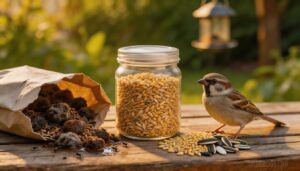
Bad seed doesn’t just go to waste — it can actually harm the birds you’re trying to feed. A few simple storage habits make a bigger difference than most people realize.
These bird food storage ideas and tips can help you avoid the most common mistakes that put backyard birds at risk.
Bad seed doesn’t just go to waste — it can harm the birds you’re trying to feed
Here’s why getting this right matters before anything else.
How Spoiled Seed Affects Bird Health and Nutrition
When seed sits too long, bird nutrition quietly takes a hit. Nutrient depletion kicks in as oils break down and vitamins fade — even when the seed looks fine.
Birds sense it first. Feeding behavior changes fast; they’ll skip your feeder entirely.
That avoidance means less energy intake, more immune stress, and real digestive upset over time. Fresh seed isn’t optional — it’s the whole point.
mold growth introduces toxins can damage birds’ liver and respiratory systems.
Risks of Mold, Bacteria, and Rancid Oils in Seed
Damp seed isn’t just unappetizing — it’s a health trap. Moisture-driven spoilage triggers bacterial contamination fast, and mold prevention becomes urgent once humidity creeps in.
Mold produces mycotoxin risks that leave toxin residues even after visible growth disappears.
Meanwhile, seed oil rancidity quietly develops, breaking fats into harmful byproducts.
Freshness impacts nutrition directly. Keeping seed dry and cool isn’t overthinking it — it’s basic bird care.
How Temperature and Humidity Accelerate Spoilage
Heat and humidity are basically spoilage’s best friends. When temperatures climb past 70°F, microbial growth kicks into overdrive — mold prevention becomes a race. Moisture uptake causes clumping, condensation effects wet seed surfaces overnight, and lipid oxidation quietly turns oils rancid. Enzyme activity never fully stops either; warmth just speeds everything up.
Keep these four conditions in check:
- Temperature — stay below 70°F for seed freshness
- Humidity — keep it under 50% for humidity control
- Condensation — avoid containers near windows or temperature swings
- Airflow — dry and cool storage slows enzyme activity down
Seasonal Considerations That Change Storage Needs
Every season throws a different challenge at your stash.
Spring humidity surge and Summer heat stress speed up mold and rancidity quickly.
Fall rodent peak means pests start hunting for warm hideouts — like your storage shed.
Winter insulation tactics help stabilize temps when cold weather storage gets tricky.
Layering burlap or foam around storage containers works surprisingly well, especially when paired with bird seed freshness and feeder pairing tips to keep seed smelling nutty and fresh all season.
Smart seasonal storage strategies and seasonal moisture control keep your seed fresh year-round.
Choosing The Right Containers for Bird Food
The container you pick can make or break how long your bird food stays fresh. Some options handle moisture and pests far better than others. Here’s what actually works.
Airtight Metal, Plastic, and Glass Container Options
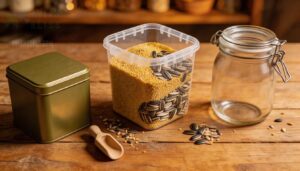
Your container choice makes or breaks freshness. Metal tins with powder coated durability resist rust and odors — genuinely tough.
BPA-free plastic storage bins offer stackable modular design, so you make the most of space while monitoring seed levels through clear walls.
Glass? Borosilicate thermal shock resistance keeps it crack‑free.
All three work best with silicone gasket seals for truly airtight containers that stay rodent and insect‑proof. Label your containers always.
Size and Shape Features That Deter Pests
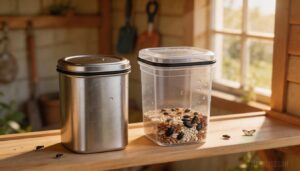
Shape and size matter more than you’d think. Cylindrical containers with smooth sides give pests nothing to grip.
Rounded corners eliminate hiding spots. Beveled rims shed moisture and block chewing access. Narrow mesh openings and tight lid gaskets — whether on metal storage containers or heavy gauge plastic containers — create a genuinely rodent and insectproof barrier.
Less edge, fewer gaps, fewer problems.
Using Silica Gel Packets to Control Moisture
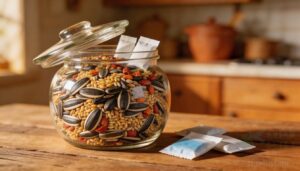
Toss a few silica gel packets into each container and you’ve got one of the best dry storage solutions around. These little moisture magnets absorb up to 40% of their weight — seriously impressive absorption capacity.
Go with food-grade safety options and place them near the top for placement optimization.
Indicating vs non-indicating types both work; indicating ones turn pink when spent.
Regeneration temperature runs around 120–130°C to reuse them.
Labeling Containers With Purchase Dates for Rotation
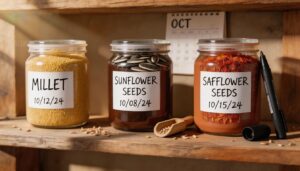
Label every container the day you buy it — no exceptions. Durable labels with waterproof ink stay legible for a year, even near minor spills.
Use the date field design (MM/DD/YYYY) to keep your rotation log honest. Smart label placement — side or lid — makes labeling and organizing birdseed containers easy.
Maintaining seed freshness through rotation starts with one simple habit: label with purchase date, use oldest first.
Selecting The Best Storage Location
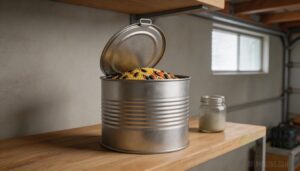
Where you keep your bird seed matters just as much as what you keep it in. The right spot can mean the difference between seed that stays fresh for months and seed you’re tossing out after two weeks.
Here’s what to look for when picking your storage location.
Keeping Seed Cool, Dry, and Away From Sunlight
Think of your seed stash like a tiny wine cellar — thermal insulation and a cool dark enclosure do more than you’d think.
Keep seed away from humidity and direct sunlight by using airtight containers with solid moisture barriers.
Aim for 40–60°F with ventilation management in mind. Light blocking matters too; UV breaks down fats fast. Cool dry place storage simply makes seed last longer.
Indoor Options: Garages, Sheds, and Basements
Each spot has its strengths.
A dry garage gives you hard floors, outlets, and easy access — just insulate the walls to cut temperature swings.
Sheds work great with adjustable shelving and ventilation strategies that keep air moving.
Basements? Excellent for cool, stable temps. Use basement storage bins with airtight containers, add floor moisture barriers, and keep seed away from humidity near pipes or damp walls.
Elevating Containers Off The Floor for Airflow
Once you’ve picked your spot, get those containers off the floor — no exceptions.
Floor contact traps moisture and invites rodents. A 6-inch gap changes everything.
- Use Raised Pallet Systems or metal racks for Rack Height Optimization and airflow underneath
- Maintain Ventilation Clearance on all sides to store off the ground properly
- Support Material Selection matters — powder-coated metal resists rust in damp spaces
Floor Gap Benefits are real. Cool and dry location, achieved.
Avoiding Heat Sources and Humidity-Prone Areas
Getting containers off the floor is a solid first step — but where you place them in the room matters just as much. Radiator Proximity is a real problem. Seed stored within 10 feet of a heater spoils up to 60% faster.
Practice Appliance Heat Avoidance too — ovens and kettles create sneaky hot spots.
Temperature‑Stable Nooks with Ventilated Shelving to avoid moisture and keep that cool and dry location working for you.
Preventing Pests, Mold, and Seed Spoilage
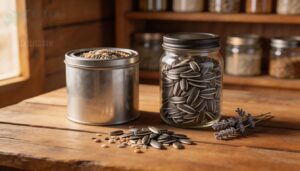
Even the best storage setup can get ambushed by mice, moths, or mold if you’re not paying attention.
The good news is that a few simple habits will keep your seed clean and safe for the birds you’re trying to feed.
Here’s what to watch for and what to do about it.
Rodent- and Insect-Proofing Your Bird Food Storage
Mice don’t need much — a gap as small as 0.25 mm is a welcome mat for pests. That’s why rodent proof storage starts with chew resistant materials like galvanized steel or heavy-duty plastic.
Pair those with gasketed lid seals for true insect proof entry blocking. Do regular seal integrity checks for cracks.
Rodent deterrent barriers plus airtight, insectproof containers give your bird feed serious rodent and insect protection.
Inspecting Seed for Odor, Clumping, and Webbing
Even airtight containers won’t save bad seed you didn’t notice. Quick inspection and quality control take thirty seconds.
Crush a few kernels — fresh seed releases a light nutty smell. That’s your aroma evaluation and volatile compound testing in one sniff.
Clump assessment is just as easy: loose seed is happy seed. Hard clumps mean moisture got in.
Fungal webbing detection means scanning for fuzzy grey or white threads — those spread fast.
Spot any moisture condensation signs inside the lid? That’s your cue to check for mold immediately.
Preventing mold and pests starts here, keeping your supply fresh and nutritious seed your birds can actually use.
Signs That Bird Food Has Gone Bad
Bad seed announces itself. Watch for fuzzy spots — white, black, or greenish patches that spread fast.
An oil sheen on the surface? That’s rancidity setting in.
Lumpy clumps and slimy texture both scream moisture damage. Spot egg clusters or tiny crawling bugs, and that’s a full infestation. Mold and rancid or foul-smelling seed should go straight in the trash — no second chances.
Cleaning Containers Between Refills to Prevent Buildup
Don’t skip the rinse-and-dry step between refills — old seed oils cling to container walls and go rancid fast. Wash with dish soap, rinse well, then let containers air dry two to four hours.
White vinegar works great for odor elimination. Check silica seals for cracks during each cleaning schedule round.
Consistent bird feeder maintenance keeps mold, pests, and spoilage from getting a foothold.
Managing Seed Quantity and Freshness Year-Round
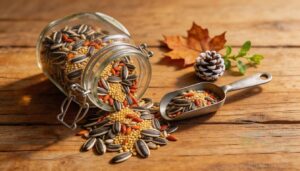
Storing the right amount of seed at the right time makes a real difference in freshness and waste. Seasons change, and your storage habits should too.
Here’s what you need to know to stay on top of it year‑round.
How Much Seed to Store by Season
Think of your seed supply like a seasonal budget.
Spring seed ratio sits at 20–40% of your yearly stock — enough to cover early gaps.
Summer stock targets climb to 25–35% during peak feeding.
Fall inventory percentages rise again to 25–40% for cool-season needs.
Winter reserve levels drop to 10–20%.
Smart seasonal seed management means you’re never over‑buying or scrambling empty‑handed.
First-In, First-Out Rotation to Reduce Waste
Old seed sitting forgotten in the back? That’s how mold wins.
Solid seed rotation keeps your flock safe and your stock fresh. Here’s how:
- Front Back Rotation — always pull oldest bags forward, newest go behind
- Batch Age Tracking — label every container with its purchase date
- Rotation Audit Schedule — check your stock weekly, no guessing
- Waste Log Monitoring — track what you toss to spot patterns fast
Labeling and rotation of seed stock isn’t optional — it’s your best defense against preventing mold and pests from quietly ruining your inventory.
Bulk Buying Strategies for Cost-Effective Stocking
Buying in bulk is smart — but only when you’ve got the right system behind it.
| Strategy | Why It Works |
|---|---|
| Budget Caps | Limits bulk spend to 25% of annual use |
| Supplier Bidding | Compare 3+ suppliers for best unit price |
| Price Trend Tracking | Spots real discounts vs. seasonal dips |
| Storage Space Allocation | Prevents overfill and keeps seed accessible |
| Waste Metrics Monitoring | Adjusts orders to cut seasonal spoilage |
Pair bulk buying with airtight containers and proper bird food storage practices — that’s your cost-effective strategy for stocking birdseed while preventing mold and pests year-round.
Keeping Feeder Fill Levels Fresh and Appropriate
Don’t overfill your feeders — it’s one of the easiest mistakes to fix. Keep feeders half-full so seed turns over before it spoils.
Refill timing matters: top up when levels hit one-quarter full. That built-in demand forecasting prevents overflow prevention problems and keeps bird food fresh.
Portion control, consistent seed turnover, and smart fill indicators are your feeder fill level best practices.
Frequently Asked Questions (FAQs)
How do you store bird food?
Use airtight containers, keep them cool and dry, and toss in silica gel packets to fight moisture.
Store bird seed off the floor with good airflow spacing — rodent-proof storage solutions make all the difference.
How long should bird food be stored?
Most dry bird food stays fresh for six to twelve months — that’s your freshness window.
Stick to a two-to-four week seasonal storage span and keep rotating stock to extend seed longevity.
How do you store bird seed?
Keep bird seed in a cool, dry spot below 70°F. Airtight metal or thick plastic containers work best.
Check regularly for mold, odd smells, or clumping — and always use older seed first.
How do you keep birds from eating your food?
Physical barriers, visual deterrents, and auditory deterrents work well.
Control food spillage, stick to set feeding times, and remove uneaten seed promptly.
Birds lose interest fast when there’s nothing easy to grab.
How to store avocados?
Ripe avocado? Refrigerate it fast. Cut surfaces need lemon juice plus an airtight wrap — Cold Storage Timing matters here.
Freezing Puree extends life 3–6 months.
Ripening Acceleration? Toss it in a bag with a banana.
How do I keep my bird food safe?
Store it in airtight containers, away from heat and moisture. Check seal integrity regularly, use humidity indicator cards, and rotate older seed first. Fresh seed means happy, healthy birds.
How to choose a bird food storage container?
Look for airtight containers with solid seal type and a wide mouth for ease of cleaning.
Metal storage containers and heavy plastic storage bins both work well — just make sure they’re rodentproof.
Where should bird feed be stored?
Think of your storage spot as a safe harbor. Cool, dry, and shaded — that’s the goal. Aim for under 70°F and humidity below 50% to keep seed fresh.
How do you store bird seeds?
Keep bird seeds in airtight containers — metal tins or heavy-duty plastic work great. Aim for cool, dry spots below 70°F.
Humidity control packs help a lot. Label everything with purchase dates.
How long can bird seed stay in a feeder?
Bird seed isn’t permanent. In normal conditions, feeder shelf life runs 1–2 weeks. But moisture exposure or heat cuts that to 3–5 days. Match your feeder refilling schedule to the weather.
Conclusion
Imagine your bird feeder as a time machine—what goes in comes out transformed. Stale seed turns into a toxic cocktail, while fresh seed becomes a nutritious feast.
Mastering how to store bird food properly keeps your yard’s ecosystem thriving. Store seed in airtight containers, rotate stock every 2-3 months, and keep it cool and dry.
Your feathered friends will thank you with every tweet and visit. Fresh seed means happy birds—simple as that.