This site is supported by our readers. We may earn a commission, at no cost to you, if you purchase through links.

Most people blame birds when a feeder sits untouched, but the problem often hangs in the feeder itself. Hummingbirds can be picky, and a design that leaks, grows mold fast, or invites ants won’t stay busy for long.
That’s why it helps to know the different types of hummingbird feeders before you buy one.
Some are easy to clean. Some give you a clear window view. Some hold more nectar for a yard with heavy traffic.
Once you see how shape, material, and placement change the whole setup, choosing the right feeder feels a lot less like guesswork altogether.
Table Of Contents
- Types of Hummingbird Feeders
- Saucer-Style Feeders Explained
- Tube and Bottle Feeder Designs
- Window-Mount Hummingbird Feeders
- Unique and Decorative Feeders
- Comparing Feeder Materials
- Key Features to Look For
- Top 8 Hummingbird Feeders
- 1. Aspects HummZinger HighView Hummingbird Feeder
- 2. Aspects HummZinger Excel Hanging Hummingbird Feeder
- 3. First Nature Red Hummingbird Feeder
- 4. Aspects Jewel Box Window Hummingbird Feeder
- 5. Leak Proof Window Hummingbird Feeder
- 6. Woodlink Window Glass Feeder Hanger
- 7. Nature Way Hand Blown Hummingbird Feeder
- 8. Grateful Gnome Hand Blown Glass Hummingbird Feeder
- Choosing The Best Feeder for Your Yard
- Frequently Asked Questions (FAQs)
- What type of hummingbird feeders work the best?
- How often do hummingbirds need to eat daily?
- Can hummingbirds feed at night or after dark?
- What homemade nectar recipe is safest for hummingbirds?
- Do hummingbirds prefer feeders over natural flowers?
- When should I take down feeders for winter?
- How do I attract hummingbirds if none visit?
- What should I do if feeder nectar freezes?
- How can I prevent mold growth in feeders?
- Are hummingbird feeders safe around pets and children?
- Conclusion
Types of Hummingbird Feeders
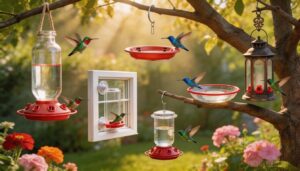
Not all hummingbird feeders are built the same, and that’s actually a good thing. The style you choose can affect how easy it is to clean, how many birds it attracts, and whether bugs become a problem.
For tips on picking the best design and features, check out this helpful guide to top-rated hummingbird feeders and what sets them apart.
Here are the six main types to know before you pick one.
Saucer (Dish) Feeders
A dish feeder keeps things refreshingly simple. The shallow tray sits above a few small feeding ports, so nectar stays cool — great for managing nectar temperature on hot days.
Seasonal placement in partial shade helps even more.
The simple dish design cuts down on hidden corners where mold loves to hide.
Most come with a built-in ant moat, and UV coatings add lasting durability.
The flat shallow reservoir design helps attract hummingbirds by resembling natural flowers.
Tube Feeders
Tube feeders take a vertical approach — nectar flows down through a vertical seed tube to ports resting at the bottom. A clear tube visibility window lets you check levels at a glance.
Look for models with:
- UV-stabilized acrylic body
- Metal base reinforcement
- Detachable tube sections for cleaning
- Built-in ant moat
- Bee guard tips per port
Bottle Feeders
Bottle feeders flip the script from tubes — nectar sits above the ports and gravity pulls it down as birds feed. Most offer solid nectar capacity, from 16 oz up to 32 oz.
Look for sturdy base weight stability so wind doesn’t topple them, a dependable ant moat, and port seal design that prevents overflow. Glass vs plastic? Glass stays cleaner longer, but plastic’s lighter and shatter-proof.
Platform Feeders
Platform feeders take a different approach entirely. Instead of a sealed reservoir, they offer a shallow open tray where hummingbirds land and feed freely.
An Elevated Base Design keeps nectar accessible while a built-in ant moat blocks crawling pests. Many feature Pole Mount Flexibility and a Weatherproof Coating built to handle sun and rain without fading.
Window-Mount Feeders
Want hummingbirds just inches away? A window-mount hummingbird feeder makes that happen.
Models like the Aspects 407 Window Hummingbird Feeder and Woodlink Window Feeder Hanger rely on suction grip durability to stay secure through seasonal changes.
Smart placement helps with feeder heat regulation, bird viewing perspective, and window light optimization.
Just watch for window reflection — it can confuse birds on first approach.
Decorative Glass Feeders
Some feeders do double duty — they feed the birds and decorate your yard.
Models like the Natures Way Blown Glass Feeder and Grateful Gnome Glass Hummingbird Feeder are unique and decorative hummingbird feeders that bring real artistry outdoors:
- Hand-blown glass creates vivid mosaic color patterns that shift with sunlight reflection
- UV protective coating keeps colors from fading season after season
- Crystal-clear bodies make nectar levels easy to monitor at a glance
- Glass temperature insulation slows nectar fermentation on warm days
- Thoughtful port spacing strategy lets multiple birds feed without crowding
When evaluating feeder durability and material — glass vs plastic feeders — glass wins on beauty and stain resistance every time.
Saucer-Style Feeders Explained
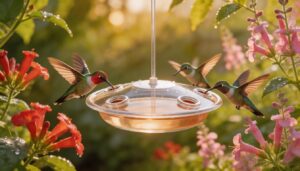
Saucer-style feeders have a loyal following for good reason — they’re simple, practical, and hummingbirds love them.
If you’ve ever dealt with a leaky or hard-to-clean feeder, this style might change your mind.
Here’s a closer look at what makes them work.
Core Design Features
The saucer-style feeder is basically a shallow dish with everything built right in. Evenly spaced ports rim the edge, so several birds can feed at once without squabbling.
The transparent nectar window lets you check levels at a glance.
You also get an integrated ant moat, a bee guard, and a tight weather seal — all in one simple dish design.
Advantages for Cleaning
Cleaning a saucer feeder is genuinely painless. Rapid disassembly means the whole thing comes apart in seconds — no tools, no fuss.
Smooth surfaces and wide mouth access let you flush residue out fast.
Some models even feature antimicrobial coatings and integrated drip trays to cut down on buildup.
A quick vinegar rinse or boiling water cycle and you’re done.
Ant Moat Integration
Most saucer feeders come with a built-in ant moat right at the top—and that’s a major advantage. This circular water barrier stops ants cold before they ever reach the nectar.
Moat materials range from plastic to copper, with metal versions lasting longer outdoors. Refill it every week or two, and your ant deterrent design stays effective all season.
Popular Saucer Models
A few best saucer-style feeders stand out from the crowd.
The Aspects HummZinger HighView Feeder features a transparent base, removable lid, and UV-stabilized plastic built to last through seasons. Its compact size fits any yard setup.
The Aspects Mini HummZinger is equally practical — simple, clean, and reliable. Both use a red port design that hummingbirds spot instantly.
Tube and Bottle Feeder Designs
Tube and bottle feeders are probably what most people picture when they think of hummingbird feeders — and for good reason. They’ve been around forever and come in more variations than you’d expect.
Here’s what sets them apart.
Nectar Placement and Flow

In a tube feeder, nectar sits above the ports and flows downward — controlled by air pressure, not gravity alone. That micro-flow rate keeps things drip‑free, so you won’t deal with a leaky nectar feeder pooling on your deck.
Three things shape how well it works:
- Sugar concentration (1:4 ratio) matches natural nectar viscosity.
- Flow direction pulls toward feeding ports cleanly.
- Temperature impact speeds spoilage in heat — shade helps.
Port Count and Arrangement
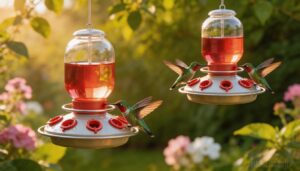
Port count matters more than you’d think. Most tube and bottle feeders offer 4 to 6 feeding ports, arranged in a circular port layout around the center — that spread reduces squabbling between birds.
tiered port distribution models use tiered port distribution, placing ports on two levels for multi-angle access.
Port size impact is real too: narrower openings cut drips, while wider ones suit feeding port variations for different bird sizes.
Ease of Refilling and Cleaning
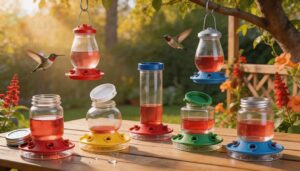
Refilling shouldn’t feel like a chore. Most tube and bottle feeders make it straightforward — wide-neck bottles and removable lid access let you rinse and refill in minutes.
Clear reservoir monitoring means you’ll spot spoilage before it becomes a problem.
Look for snap-fit assembly and magnetic port detachment for easy-to-clean, easy-to-fill maintenance.
A quick-drain base, plus vinegar or boiling water, keeps nectar fresh.
Common Materials Used
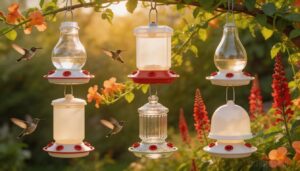
The material of the feeder matters more than you’d think. Glass feeders resist staining and stay cleaner longer, while plastic feeders — especially those made with Tritan copolyester or ABS plastic — are lighter and shatter-proof.
Look for UV-resistant coatings on glass vs plastic options to prevent sun damage.
Food-grade sealants and silicone gaskets keep joints leak-free, making both sustainable feeder materials worth considering.
Window-Mount Hummingbird Feeders
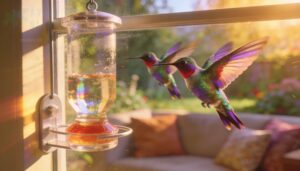
Window-mount feeders are a great pick if you want hummingbirds close enough to watch from your couch. They attach right to your window glass, so you get a front-row seat without stepping outside.
Here’s what to know before you choose one.
Suction Cup Options
The suction cups on your window hummingbird feeder matter more than you’d think. Silicone nitrile comparison comes down to this: silicone manages UV and outdoor aging better, while nitrile resists cleaning chemicals.
edge seal designs — beveled rims, lip seals — grip smooth glass tighter. Always mount on clean, dry surfaces.
temperature rated cups prevent failure in extreme heat or cold.
Hanging Hardware Choices
Beyond suction cups, the right hanging hardware keeps your feeder secure through wind and weather. Stainless steel screws and toggle bolts handle most window-adjacent installs.
For heavier hanging bottle feeders, a French cleat mount or cable suspension system distributes weight cleanly.
Always use weatherproof gaskets to protect your wall surface. Good feeder hanging hardware and installation tips make the difference between a stable setup and a daily headache.
Capacity and Port Designs
Window-mount feeders keep things compact by design — most hold between 10 and 24 ounces, which suits light-to-moderate bird traffic well. Capacity tiers matter here: a smaller reservoir means fresher nectar and less waste.
Port spacing and port geometry directly affect nectar flow rate and volume per port. Look for feeding ports sized for hummingbird beaks, not bees.
Choosing feeder capacity based on bird traffic keeps refills timely and nectar clean.
Placement Tips for Windows
Place your window hummingbird feeder 3–10 inches from the glass, giving birds a clear flight path while keeping the view wide open for you.
Go for a glare‑free position on a shaded wall — shade optimization slows nectar spoilage fast.
Stay at least 4 feet up for height above ground safety, and leave tool clearance space behind for easy cleanings.
Unique and Decorative Feeders
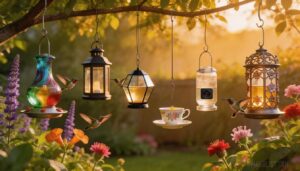
Not every feeder has to be purely practical — some are genuinely beautiful to look at. From hand-blown glass to feeders with built-in cameras, this category has a little something for every kind of backyard birder.
Here are a few unique and decorative options worth knowing about.
Hand-Blown Glass Feeders
Hand-blown glass feeders are genuinely in a category of their own.
Each one showcases artisan craftsmanship — with color swirl patterns formed during the blowing process, meaning no two look alike.
A silicone gasket sealing the join keeps nectar from dripping, while a weather resistant glaze protects those jewel tones for years.
Think collectible garden art that actually works.
Specialty Ring Feeders
Ring feeders are a quirky little niche — and the ZUMMR Hummingbird Ring Feeder put them on the map. When choosing the best hummingbird feeder for tight spaces, these compact perch ring feeders punch above their weight:
- Adjustable flow control reduces dripping
- Weighted base stability holds firm on windy days
- Port height variation invites multi-angle feeding
- UV reflective coating draws birds from a distance
Modular reservoir compatibility makes refills simple.
Vintage and Artistic Designs
From quirky rings to genuine artwork — some feeders are just pretty.
Models like the PerkyPet 81192 Antique Bottle and More Birds Vintage Antique Bottle lean hard into nostalgia, pairing swirl glass patterns with patina metal finishes.
The Grateful Gnome and PerkyPet 81312 Cranberry Vintage Glass Feeder add kiln-glazed ceramics, enamel botanical motifs, and carved wood details — beautiful feeders that still do the job.
Integrated Technology (Feeder Cameras)
Some feeders go beyond pretty — they think. The Birdfy Hummingbird Feeder Camera is a Wi‑Fi‑enabled bird camera that pairs live video streaming with AI species identification, so you know exactly who’s visiting.
Solar power integration keeps it running for months. Edge motion detection triggers clips instantly, and privacy controls let you manage footage on your terms.
Comparing Feeder Materials
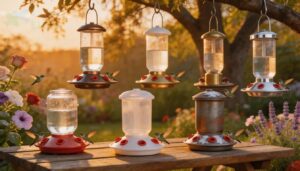
The material your feeder is made from affects everything — how long it lasts, how easy it is to clean, and how well it holds up through heat, rain, and freezing temperatures.
Glass, plastic, metal, and hybrid designs each have real trade-offs worth knowing before you buy.
Here’s how the most common materials stack up.
Glass Vs Plastic
Both materials have real trade-offs worth knowing before you buy.
- Visual Clarity — Glass stays crystal clear for years; plastic clouds with UV degradation over time, making nectar levels harder to read.
- Odor Absorption — Glass resists odors completely; plastic can hold faint smells after cleaning.
- Shipping Weight — Glass costs more to ship, but comparing glass vs plastic hummingbird feeders long-term, glass often wins on feeder durability.
Metal and Hybrid Options
Glass and plastic aren’t your only choices. Metal and hybrid designs bring something different to the yard.
| Metal Type | What It Offers |
|---|---|
| Stainless steel | Rust-free in humid climates, powder-coated for sun resistance |
| Copper alloy | Natural copper deterrence against insects, patinas beautifully over time |
| Zinc alloy | Lightweight strength, protects internal parts from corrosion |
Hybrid design pairs metal framing with plastic reservoirs — smart capacity and material selection for feeders where aluminum corrosion resistance keeps things light without sacrificing structure.
Durability and Weather Resistance
Weather hits feeders hard — sun, rain, and freezing temps all take a toll. Polycarbonate tubes built with impact-resistant polycarbonate shrug off hail and branches.
UV-resistant coatings keep plastic from yellowing after seasons in direct sun. Stainless steel hardware won’t rust through humid summers, while weatherproof sealing gaskets and temperature-stable silicone keep nectar locked in through downpours and cold snaps.
Cleaning and Maintenance Differences
Cleaning routines really do vary by material.
Glass wipes clean easily and won’t hold stains, but handle it gently.
Plastic needs regular port brush techniques to clear residue from narrow openings.
Don’t skip suction cup inspection every few weeks — a weak grip means spills.
Ant moat rinsing prevents buildup, and seasonal deep cleans stop nectar fermentation from becoming a bigger problem.
Key Features to Look For
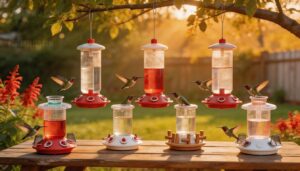
Not all feeders are created equal, and a few smart features can make a real difference in how much you enjoy the whole experience. Before you buy, it’s worth knowing what to look for so you’re not stuck with something that leaks, attracts ants, or takes 20 minutes to clean.
Here are the key features that separate a good feeder from a great one.
Built-in Ant Moats
A built-in ant moat is your feeder’s first line of defense. It creates a small water barrier that ants simply can’t cross. Keep the moat water level at about a quarter to half inch deep — any less, and it loses effectiveness.
Three things to keep in mind:
- Moat material choices matter — UV-resistant plastic or stainless steel last the longest outdoors
- Moat installation tips are simple — most slide right onto your hanging hook, with no tools needed
- Moat maintenance frequency is low — refresh water every one to four weeks, and more often in heat
For moat evaporation control, shade placement helps. Clean it gently to prevent algae buildup that could deter hummingbirds.
Bee Guards
Bees love your feeder as much as hummingbirds do — and they’re far less welcome guests. Bee guards work by shrinking the port opening, a classic Entrance Size Reduction approach that keeps bees out while letting hummingbird beaks in. They are your frontline against Robber Bee Deterrence without blocking airflow, thanks to smart Ventilation Gap Design.
| Feature | Benefit |
|---|---|
| Reduced port opening | Blocks bees, fits hummingbird beaks |
| Ventilation gap | Maintains airflow, prevents overheating |
Pair them with a built-in ant moat for full ant and bee protection features for feeders. Most guards offer solid Material Durability and Installation Compatibility across standard feeder styles — no tools needed.
Perches and Feeding Ports
Ever noticed how a well-placed perch can turn a feeder into a hummingbird hangout? Smart perch design and feeding ports matter.
Look for:
- Port Cap Sealing to cut nectar spoilage
- Perch Material Choice for easy cleaning
- Port Spacing Geometry so birds don’t crowd
- Port Drainage Mechanism keeps ants away
- Perch Angle Alignment for comfy feeding
Wide Mouth Openings
Wide mouths on saucer feeders are a real breakthrough—think Brush-Friendly Opening and Nectar Spill Prevention all in one. The Reinforced Lip Design stands up to sun and scrubbing, while Wide Rim Perches let birds feed comfortably.
Bottle feeders with wide mouths make temperature regulation easier, and more feeding ports spread out the crowd.
Tube feeders benefit too, simplifying refills and reducing spills.
Easy-to-Clean Designs
That wide mouth you love? It’s just the start. An easy-to-clean feeder saves you time and keeps birds healthy. Look for:
- Snap‑On Ports that pop apart for scrubbing
- Detachable Reservoir for rinsing under the tap
- Dishwasher Safe Components for deep cleaning
- Quick Release Mount for fast removal
Clear Visibility Reservoirs help spot mold early—maintenance tips for hummingbird feeders matter.
Top 8 Hummingbird Feeders
There are so many hummingbird feeders out there, but a few really stand out for their smart design and reliability. If you’re wondering which ones are worth your time, you’re in the right place.
Here’s a look at eight feeders that gardeners and bird lovers trust year after year.
1. Aspects HummZinger HighView Hummingbird Feeder
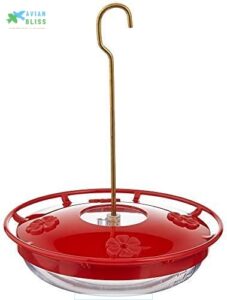
If you want a feeder that’s easy to clean and genuinely attracts hummingbirds, the Aspects HummZinger HighView stands out.
Its bright red cover pulls birds in from a distance, while the raised perch lets them rest and linger.
The built-in ant moat keeps insects out, and the clear bowl means you’ll spot nectar levels and mold right away.
With four feeding ports and sturdy polycarbonate construction, it’s tough enough for outdoor use and simple to refill—perfect for both beginners and seasoned birdwatchers.
| Best For | Birdwatchers and homeowners who want an easy-to-clean feeder that reliably attracts hummingbirds and keeps insects out. |
|---|---|
| Material | Polycarbonate plastic |
| Dimensions | 7.75 x 7.75 x 1.75 in |
| Color | Red |
| Capacity | 12 oz nectar |
| Mounting | Hanging hook |
| Price | USD 31.95 |
| Additional Features |
|
- Bright red cover and perch encourage longer bird visits.
- Built-in ant moat and clear bowl make maintenance simple.
- Durable, unbreakable polycarbonate is perfect for outdoor use.
- Large capacity can lead to wasted nectar if not refilled often.
- Higher price compared to basic feeders.
- Only four feeding ports may limit bird activity in busy areas.
2. Aspects HummZinger Excel Hanging Hummingbird Feeder
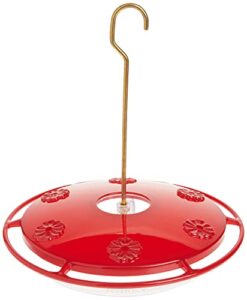
If you’re looking for something bigger, the Aspects HummZinger Excel Hanging Feeder might fit the bill. This model holds 16 ounces of nectar and offers six feeding ports—great for yards with lots of hummingbirds.
The wrap-around perch invites birds to settle in, while the integrated ant moat keeps pests at bay. Its sturdy polycarbonate build and tool‑free assembly make cleaning a breeze.
Plus, the bright red lid draws birds from afar, and you’ll always see when it’s time to refill.
| Best For | People with busy hummingbird feeders who want something sturdy, easy to clean, and pest-resistant. |
|---|---|
| Material | Polycarbonate plastic |
| Dimensions | 9 x 9 x 2 in |
| Color | Beige |
| Capacity | 16 oz nectar |
| Mounting | Hanging post |
| Price | USD 38.49 |
| Additional Features |
|
- Large 16 oz capacity and six feeding ports attract multiple birds at once.
- Tool-free disassembly makes refilling and cleaning quick and simple.
- Integrated ant moat and weather-resistant design help keep pests and leaks away.
- Ant moat can dry out fast in hot climates, reducing effectiveness.
- Higher price than basic feeders, with no clear warranty or return policy.
- May need refilling every day or two in areas with lots of hummingbirds.
3. First Nature Red Hummingbird Feeder
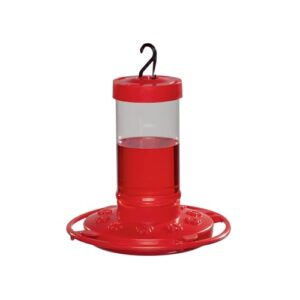
If you need a feeder that can handle a crowd, the First Nature Red Hummingbird Feeder stands out.
Its bright red base and ten feeding ports pull in birds fast, while the wide-mouth reservoir makes filling and cleaning simple.
You can hang it from a hook or set it on a porch—either way, the sturdy plastic construction holds up well outdoors. Plus, the clear reservoir lets you check nectar levels at a glance, so you won’t miss a refill when birds are buzzing.
| Best For | Gardeners who want a feeder that attracts lots of hummingbirds and is easy to clean and refill. |
|---|---|
| Material | High-impact plastic |
| Dimensions | 12 x 7 x 4 in |
| Color | Red/Clear |
| Capacity | 2 x 16 oz nectar |
| Mounting | S-hook or surface |
| Price | Not specified |
| Additional Features |
|
- Wide-mouth reservoir and dishwasher-safe top make cleaning quick.
- Ten feeding ports let multiple birds feed at once.
- Durable plastic resists cracking from wildlife and weather.
- Circular feeding holes allow bees and insects to access nectar.
- Bottom section can be tricky to clean thoroughly.
- Plastic may scratch or discolor over time.
4. Aspects Jewel Box Window Hummingbird Feeder
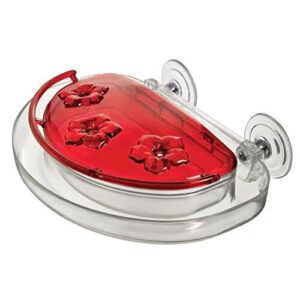
Even if you’re short on yard space, the Aspects Jewel Box Window Hummingbird Feeder brings the show right to your window. Its bright red cover and HighView perch give you a front-row seat, letting birds rest as they feed.
With three flower-shaped ports and a sturdy ant moat, you won’t have to worry much about bugs sneaking in.
The 8-ounce reservoir slides out for easy cleaning, and the suction cups hold tight—just clean your glass first for the best grip.
| Best For | Folks who want to watch hummingbirds up close from their window, especially if outdoor space is limited. |
|---|---|
| Material | High-impact plastic |
| Dimensions | 7.13 x 7.13 x 7.38 in |
| Color | Red |
| Capacity | 16 oz nectar |
| Mounting | Snap-in S-hook |
| Price | USD 14.40 |
| Additional Features |
|
- Easy window mounting lets you enjoy birds right from inside.
- Built-in ant moat and red design help keep bugs away.
- Removable reservoir and sturdy polycarbonate make cleaning simple.
- Small 8 oz capacity means frequent refills, especially in warm weather.
- Suction cups need a spotless glass surface for a secure hold.
- Higher price compared to basic hummingbird feeders.
5. Leak Proof Window Hummingbird Feeder
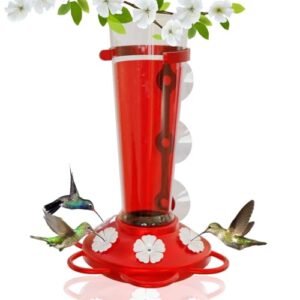
leak proof window hummingbird feeder is a real treat for close-up bird watching. You get a clear view right from inside, thanks to the sturdy suction cups and a gasketed reservoir that keeps spills off your windows.
The interchangeable flower inserts—red, white, or yellow—let you attract more birds while deterring bees and wasps.
Large looping perches invite hummingbirds to settle in for a meal.
Quick disassembly makes cleaning simple, and the lifetime warranty means you’re covered if anything breaks.
| Best For | Backyard bird watchers and gardeners who want an easy, up-close view of hummingbirds from their window. |
|---|---|
| Material | UV-resistant plastic |
| Dimensions | 11 x 10 x 7 in |
| Color | Red |
| Capacity | 2 x 32 oz nectar |
| Mounting | Hang or surface |
| Price | Not specified |
| Additional Features |
|
- Leak-proof design keeps windows and surfaces clean.
- Interchangeable flowers attract hummingbirds and deter insects.
- Easy to clean and refill with quick disassembly.
- Occasional leaks if gasket or silicone band is missing or damaged.
- Perches may crack in extreme summer heat.
- Needs frequent cleaning to prevent mold or bacteria.
6. Woodlink Window Glass Feeder Hanger
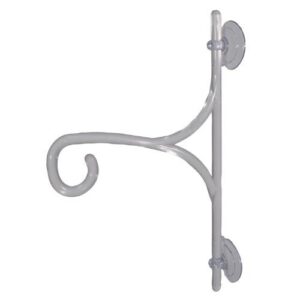
Woodlink Window Glass Feeder Hanger is a clever little tool for bringing birds right to your window.
With two sturdy suction cups and a clear plastic hook, you can hang most small feeders—seed, nectar, or suet—just outside your glass.
It holds up to four pounds, so it’s solid for hummingbird feeders up to twelve ounces.
Installation’s simple: clean the glass, press the cups, and you’re set.
It’s a great option if you want close views without fuss.
| Best For | People who want an easy way to watch birds up close from inside their home, using small to medium feeders. |
|---|---|
| Material | Polycarbonate |
| Dimensions | 8.5 x 6 x 2.2 in |
| Color | Tinted red |
| Capacity | 8 oz nectar |
| Mounting | Window suction cups |
| Price | USD 34.72 |
| Additional Features |
|
- Simple setup—just clean the glass and press the suction cups.
- Works with a variety of feeder types, including seed, hummingbird, and suet.
- Lets you enjoy birds without worrying about mess or weather exposure.
- Suction cups may lose grip over time, especially in hot conditions.
- Not suitable for heavy or oversized feeders above four pounds.
- Needs a clean, dry glass surface for best results; dirty windows reduce effectiveness.
7. Nature Way Hand Blown Hummingbird Feeder
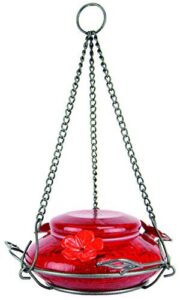
Looking for a feeder that’s as much art as utility? The Nature Way Hand Blown Hummingbird Feeder checks that box.
Its thick, hand-blown glass bowl shines in vivid, fade-resistant colors, while the wide top-fill opening makes refills a breeze.
You’ll appreciate the silicone gaskets and die-cast aluminum ports—no leaks, no rust.
Birds get sturdy perches, and you get easy cleaning since all parts are dishwasher safe.
It’s heavier than plastic, but it stands up to weather and keeps its beauty season after season.
| Best For | Anyone who wants a beautiful, durable hummingbird feeder that’s easy to clean and looks great in the garden. |
|---|---|
| Material | Metal and plastic |
| Dimensions | 9 x 7 x 21 in |
| Color | Red/Clear |
| Capacity | Not specified |
| Mounting | Window suction cups |
| Price | USD 29.90 |
| Additional Features |
|
- Stunning, hand-blown glass bowl with fade-resistant color.
- Leak-free and rust-proof design with dishwasher-safe parts.
- Strong metal hanging basket survives tough weather.
- Glass bowl can break if dropped, so it needs careful handling.
- Smaller 16 oz capacity means more frequent refills.
- Higher price than basic plastic feeders.
8. Grateful Gnome Hand Blown Glass Hummingbird Feeder
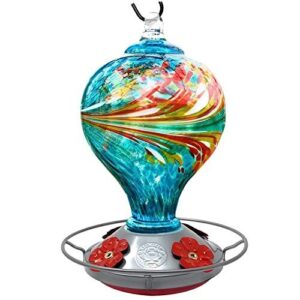
Ever seen a feeder that doubles as backyard art? The Grateful Gnome Hand Blown Glass Hummingbird Feeder does just that.
Its vibrant, hand-blown glass globe catches sunlight and hummingbird eyes alike.
You get four flower-shaped ports, a circular perch, and a leak-proof rubber seal—so no sticky mess underfoot.
The wide mouth makes refilling simple, while the included ant moat keeps pests at bay.
It’s sturdy, easy to clean, and each piece feels one-of-a-kind, perfect for anyone wanting beauty and function.
| Best For | Anyone who wants a hummingbird feeder that’s both eye-catching and practical for gardens, patios, or decks. |
|---|---|
| Material | Plastic |
| Dimensions | 7.13 x 1.63 x 11 in |
| Color | Clear |
| Capacity | 4 lb load |
| Mounting | Window suction cups |
| Price | USD 14.95 |
| Additional Features |
|
- Stunning hand-blown glass design doubles as garden art
- Leak-proof seal and ant moat keep mess and pests away
- Easy to refill and comes with cleaning accessories
- Glass globe can shatter if dropped on hard surfaces
- Narrow neck makes deep cleaning tricky
- Metal parts may discolor or chip over time with outdoor exposure
Choosing The Best Feeder for Your Yard
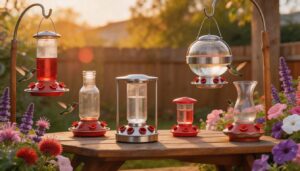
Picking the right hummingbird feeder isn’t just about style—it’s about what works best for your space and the birds you want to attract. There are a few key things you’ll want to think about before making your choice.
Let’s walk through what matters most so you can find a feeder that fits your yard perfectly.
Feeder Size and Capacity
How many hummingbirds can your feeder handle at once? That’s where Port-to-Volume Ratio comes in.
For busy yards, Seasonal Capacity Planning matters—choose feeder capacity based on bird density and Refill Frequency Guidelines.
Eight to sixteen ounces is typical, but larger feeders risk Nectar Spoilage Timing.
Types of hummingbird feeders vary, so capacity selection should match your local bird traffic.
Placement and Visibility
Feeder placement for ideal visibility matters as much as size. If you want hummingbirds right outside your window, consider:
- Window sightlines and pedestrian viewing distance (3–10 feet works well)
- Eye-level height for easy observation
- Contrast coloring against foliage for feeder visibility strategies
- Seasonal rotation to keep feeders visible year-round
That’s how you make every visit count.
Pest Prevention Features
Visibility’s great—until ants and bees join the party.
You’ll want pestproof features like ant moats (don’t forget the Moat Water Refill), bee guards, and Port Cap Seals.
Suction Cup Grip matters for window feeders, while Weatherproof Sealants and Pest Barrier Materials keep sneaky insects out.
ant guard or deterrent makes your nectar station a safe haven for birds, not bugs.
Color and Design Preferences
Once pests are handled, color and design step in. Bright Red Attraction tops the list for feeder color influence on hummingbirds. Here’s what matters:
- Contrast with Flora—stand out against garden greens.
- Seasonal Color Shifts—match changing blooms.
- Material Color Retention—glass keeps hues vivid.
- Minimalist Two-Tone—less clutter, more appeal.
- Design aesthetics—choose what fits your yard’s vibe.
Multi-Feeder Strategies
Once feeder colors pop, think about setting up multiple feeders to reduce territorial aggression.
Synchronization Timing helps you refill them evenly, while Redundancy Planning keeps nectar flowing if one breaks.
Flow Balancing lets you match feeder capacity to bird traffic. Modular Expansion makes adding more feeders easy.
Monitoring Dashboards—even simple ones—help you track nectar levels and improve feeder placement for best visibility.
Frequently Asked Questions (FAQs)
What type of hummingbird feeders work the best?
Picture a bright red saucer feeder catching sunlight—hummingbirds dart in, nectar stays fresh, ants and bees stay out.
Saucer styles win for easy cleaning, built-in ant moats, and weatherproof design, making them the best hummingbird feeder overall.
How often do hummingbirds need to eat daily?
Hummingbirds feed every 10 to 15 minutes all day, thanks to their high Metabolic Rate. Their Daily Nectar Intake and Energy Budget demand constant refueling.
Seasonal Feeding Patterns may shift, but their hummingbirds’ dietary needs and metabolism never slow down.
Can hummingbirds feed at night or after dark?
Night’s natural hush usually signals sleepy roosts, not nighttime feeding behavior.
Still, artificial light attraction can tempt a hungry hummer after dark, but it’s rare—energy reserves management and roosting site selection take priority, especially during seasonal migration impacts.
What homemade nectar recipe is safest for hummingbirds?
For making homemade hummingbird nectar, use a sugar water solution with a Sugar Ratio of 1 part sugar to 4 parts Boiling Water.
No Dye needed.
Store at cool Storage Temperature, clean feeders often, and watch for mold prevention techniques.
Do hummingbirds prefer feeders over natural flowers?
hummingbird attraction swings with the seasons—flowers offer richer nectar energy density, and insects, but feeders shine during migration feeding patterns, or scarce blooms.
Territorial competition and predator exposure shape their choices, so understanding hummingbird feeding behavior helps your pollinator garden thrive.
When should I take down feeders for winter?
Take down feeders for winter when Bear Activity Timing peaks, or as natural food returns—usually March to May, depending on Regional Climate Windows.
Watch Disease Risk Periods, follow Winter Nectar Management, and use Storage Preparation Steps for seasonal care.
How do I attract hummingbirds if none visit?
If hummingbirds aren’t showing up, try Native Planting for blooms, add a water feature, and use a Feeder Rotation Schedule.
Place feeders in a Shade Microclimate, use red accents, and adjust nectar seasonally for attracting hummingbirds to your garden.
What should I do if feeder nectar freezes?
If your nectar freezes, try quick Thawing Strategies like moving feeders to sunlight or swapping in warm nectar. Use Insulation Techniques and Heated Feeder Options for weather resistance.
Sugar Ratio Adjustments help, but Port Ice Removal is key for seasonal care.
How can I prevent mold growth in feeders?
Keep mold at bay by storing seed dry, sterilizing feeders often, monitoring moisture, inspecting seals, and installing weather shields.
Clean with vinegar or boiling water.
Use frequent refills and the right nectar concentration ratio to prevent spoilage.
Are hummingbird feeders safe around pets and children?
You might think feeders are harmless, but bird feeder safety hinges on smart choices.
Closed Reservoir Design, Spill-Resistant Lids, Non-Toxic Materials, and Height Placement Guidelines help keep pets and kids safe—especially with ant and bee protection, easy-to-clean surfaces.
Conclusion
It’s surprising how often the solution to a quiet hummingbird feeder lies not in the birds, but in the feeder itself. With so many different types of hummingbird feeders available, choosing the right one can make all the difference.
By considering factors like ease of cleaning, nectar capacity, and pest prevention, you can create a welcoming haven for these tiny visitors.
A well-chosen feeder is an invitation to a world of wonder, right in your own backyard, every day.
- https://jcswildlife.com/first-nature-10-port-hummingbird-feeder-3051-16-oz-1-2-4-or-6-pack/?ref=hVhUWmk6vKk1IL
- https://pmc.ncbi.nlm.nih.gov/articles/PMC5033656/
- https://babycompany.ph/blogs/news/a-guide-to-choosing-the-right-baby-feeding-bottle-nipple
- https://www.nuk-usa.com/bottles/types-of-bottles/anti-colic-bottles/
- https://1ststep.com/blogs/news/types-of-feeding-bottles-and-advantages-of-bottle-feeding-your-baby