
This site is supported by our readers. We may earn a commission, at no cost to you, if you purchase through links.

That flash of red at your feeder isn’t luck—it’s chemistry. Cardinals are drawn to specific fats, seed coats, and even bitter compounds that most other backyard birds ignore. Get the food right, and a male cardinal will bring his mate. Get it wrong, and you’ll feed every squirrel in the neighborhood while cardinals watch from a branch fifty feet away.
Black-oil sunflower seeds are the cornerstone of any serious cardinal setup, packing 40–45% fat into a thin shell, a cardinal can crack in seconds.
But the right bird food for attracting cardinals goes beyond just one seed—feeder design, placement, and seasonal shifts all play a role. Here’s exactly what works.
Table Of Contents
- Key Takeaways
- Best Bird Foods for Attracting Cardinals
- Top 10 Products for Cardinal Attraction
- 1. Wagners Safflower Bird Seed
- 2. Lyric Wild Bird Peanut Seed
- 3. Woodlink Absolute II Squirrel Resistant Bird Feeder
- 4. Woodlink Platform Bird Feeder
- 5. Woodlink Audubon Dome Bird Feeder
- 6. Cedar Wood Bird Feeder
- 7. Cast Iron Pedestal Bird Bath
- 8. Mami And Babi Outdoor Cat Enclosure Tent
- 9. Birdfy Solar Powered Bird House Camera
- 10. Wagners Cardinal Wild Bird Food
- Choosing The Right Feeders for Cardinals
- Where to Place Cardinal Feeders
- Creating a Cardinal-Friendly Habitat
- Providing Water Sources for Cardinals
- Seasonal Cardinal Feeding Tips
- Preventing Squirrels and Unwanted Pests
- Frequently Asked Questions (FAQs)
- What to feed to attract cardinals?
- How to attract cardinals to your bird house?
- Why are cardinals not coming to my feeder?
- What time of day do cardinals eat most?
- How long does it take to attract cardinals?
- Do cardinals migrate or stay year-round?
- What colors attract cardinals to your yard?
- Can cardinals recognize individual humans who feed them?
- Do cardinals prefer feeding alone or in groups?
- What time of day are cardinals most active?
- Conclusion
Key Takeaways
- Black-oil sunflower seeds and safflower are your two best cardinal foods — sunflower delivers dense fat and protein, while safflower’s bitter taste quietly drives off squirrels without chasing away the birds you want.
- Feeder design matters as much as seed choice — cardinals strongly prefer wide platform or hopper feeders with roomy perches, visiting up to 20% more often when they can land comfortably.
- Placement is half the battle — position feeders 10–15 feet from dense shrubs, 5–6 feet off the ground, and well away from high-traffic areas so cardinals feel safe enough to actually commit to a meal.
- Cardinals shift their nutritional needs by season — lean into mealworms and fresh fruit in spring and summer to support nesting, then switch to high-fat seed blends and suet through fall and winter to fuel warmth.
Best Bird Foods for Attracting Cardinals
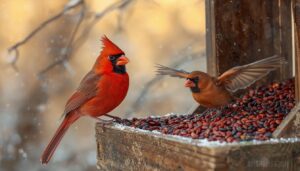
Cardinals aren’t picky eaters, but they do have clear favorites. Getting the right foods in your feeder makes a real difference in how often — and how many — you’ll see them.
Sunflower seeds and safflower are top picks, and this guide on attracting cardinals to your feeders breaks down exactly which foods bring them back day after day.
Here’s what actually works.
Sunflower Seeds (Black Oil & Striped)
Black-oil sunflower seeds are the top choice for cardinals. Their high energy density — around 40–45% fat — and favorable kernel ratio mean birds get more edible meat with less effort.
Striped seeds work too, though their thicker shells and lower oil content reduce appeal slightly.
Both offer solid antioxidant content and fit well into a cardinal-focused blend, but black-oil is your best starting point.
The higher oil content of black‑oil seeds gives birds extra energy.
Safflower Seeds
Safflower seeds are one of the best foods for Northern Cardinals — and a clever second act to sunflower. Their high oil content benefits birds with quick, cold-weather energy, while the bitter taste naturally discourages squirrels and grackles. Cardinals crack the thick shells effortlessly with their strong beaks.
When managing shelf life, store bags in a cool, dry spot to preserve nutrient density. Mixed into seed blend ratios with sunflower, safflower rounds out a feeder that cardinals genuinely prefer.
Shelled Peanuts
While safflower addresses the squirrel problem, shelled peanuts solve a different one — raw energy. Cardinals love them, and it’s easy to see why. Each small kernel packs roughly 7 grams of protein and 14 grams of fat per ounce, making them a serious protein supplement for birds during nesting or cold snaps.
Here’s how to add them smartly to your birdseed blends:
- Choose unsalted only — sodium harms cardinal nutrition long-term
- Store in a cool, airtight container — proper storage tips prevent rancidity quickly
- Use platform feeders — open trays match seed preferences for cardinals perfectly
Cracked Corn
Peanuts give cardinals a protein punch, but cracked corn offers something different — quick, cheap energy.
Thanks to the cracking process, those coarse pieces are easy to peck and digest. Texture benefits matter here: cardinals pick it right off the tray or ground feeders.
Keep storage moisture low to prevent mold, mix it into your seed mix in modest ratios, and you’ve got solid cost efficiency without inviting extra rodents.
Fruit and Mealworms
When cardinals hit breeding season, fresh fruits and mealworms become their secret weapon — and yours.
Mealworms bring serious Mealworm Protein Balance, packing 20–24% protein to fuel molting and nestling growth. Pair them with Fresh Fruit Rotation — apples, grapes, berries — for natural Fruit Moisture Benefits that keep birds energized.
- Set up dedicated Feeding Stations with shallow dishes for fruit and separate mealworm trays
- Practice Mold Prevention Practices by swapping fresh fruits daily
- Rotate apples, grapes, and berries weekly to sustain cardinal interest
Top 10 Products for Cardinal Attraction
Finding the right products can make all the difference between occasional cardinal sightings and a yard full of them. The picks below cover everything from seed blends and feeders to bird baths and cameras — chosen with cardinals specifically in mind.
Here’s what’s worth your attention.
1. Wagners Safflower Bird Seed
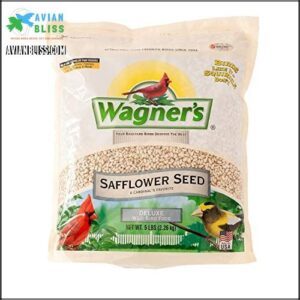
If you’ve been losing seed to squirrels and grackles, Wagner’s Safflower Bird Seed might be the quiet fix you’ve been looking for. Safflower’s naturally bitter taste sends most squirrels and feeder-hogging birds packing — leaving the buffet open for cardinals, chickadees, titmice, and nuthatches.
Wagner’s sources these seeds domestically, and the mild, nutty flavor is exactly what birds with strong, thick beaks go for. Cardinals especially love it. Use it alone in a hopper or platform feeder, or blend it gradually with your existing mix so birds discover it faster.
At $11.98, it’s genuinely affordable for what you get. The resealable bag keeps things fresh between fills, too. Place it near shrubs for cover, and you’ll notice cardinals showing up with real consistency.
| Best For | Bird lovers who want to attract cardinals, chickadees, and nuthatches while keeping squirrels and feeder hogs like grackles away. |
|---|---|
| Product Type | Bird Seed |
| Price | $11.98 |
| Cardinal Friendly | Yes |
| Weather Resistant | Resealable bag |
| Squirrel Deterrent | Natural deterrent |
| Ease of Use | Mix or solo use |
| Additional Features |
|
- Naturally deters squirrels and most nuisance birds without any extra effort
- High fat content gives backyard birds a real energy boost, especially in winter
- Resealable bag keeps seed fresh, and the mild nutty flavor draws in a solid variety of songbirds
- Pricier per pound than standard sunflower seed, so many people mix it rather than use it solo
- High fat content can go rancid over time — you’ll want to refrigerate or freeze it for long-term storage
- Doesn’t deter every pest bird; some grackles and blackbirds will still show up at the feeder
2. Lyric Wild Bird Peanut Seed
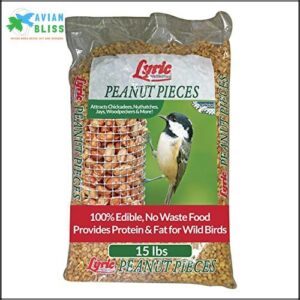
Few foods work as hard as shelled peanuts when you’re trying to bring cardinals in close. Lyric’s 15-lb bag is 100% edible — no shells, no filler, no mess — just dense, high-fat nutrition that cardinals genuinely need, especially when temperatures drop and calories matter most.
Their strong, thick beaks handle whole and broken peanut pieces effortlessly. That’s why you’ll often see them returning multiple times a day once they discover the feeder. Pair Lyric with safflower seed on a platform or hopper feeder, and you’ve built a seriously attractive feeding station.
One thing to watch: keep the feeder dry. Peanuts can go rancid fast when wet. Check after rain, rotate stock regularly, and store the bag sealed in a cool spot. At $32.99, it’s solid value for consistent, year-round feeding.
| Best For | Backyard bird enthusiasts who want to attract a wide variety of songbirds and don’t mind the occasional squirrel stopping by. |
|---|---|
| Product Type | Bird Seed |
| Price | $32.99 |
| Cardinal Friendly | Yes |
| Weather Resistant | Sealed bag |
| Squirrel Deterrent | No |
| Ease of Use | Any feeder type |
| Additional Features |
|
- Pure, shelled peanuts with zero filler — less mess and less waste at the feeder
- High fat and protein content gives birds real energy, especially through winter and nesting season
- Works with most feeder types and draws a solid mix of species, from woodpeckers to chickadees
- Peanuts can mold quickly after rain, so you’ll need to check the feeder regularly
- Whole peanuts won’t fit in finch tubes or feeders with small openings
- Squirrels love these just as much as the birds do, so a deterrent might be worth the investment
3. Woodlink Absolute II Squirrel Resistant Bird Feeder
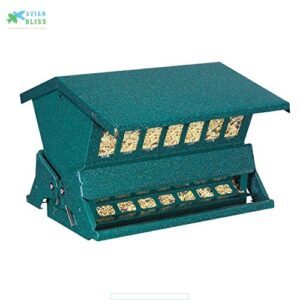
Squirrels treating your cardinal feeder like a free buffet? The Woodlink Absolute II ends that fast. Its weight-activated perches are the real trick here — the moment a squirrel lands, a metal shield snaps over the seed tray. Cardinals, weighing just around 1.5 oz, trigger nothing. They perch, eat, and leave happy.
The hopper holds up to 12 pounds of seed — safflower, sunflower, you name it — so you’re not refilling every other day. Powder-coated steel construction means it withstands rain, wind, and the occasional determined rodent without rusting or cracking. The dual-sided design lets multiple cardinals feed at once, and the clear seed-level window tells you exactly when it’s time to refill. At $84.14, it’s a worthwhile investment for a genuinely squirrel-resistant setup.
| Best For | Backyard bird lovers who want a low-maintenance, squirrel-resistant feeder that keeps smaller songbirds like cardinals well-fed without constant refilling. |
|---|---|
| Product Type | Bird Feeder |
| Price | $84.14 |
| Cardinal Friendly | Yes |
| Weather Resistant | Powder-coated steel |
| Squirrel Deterrent | Weight-activated |
| Ease of Use | Clear refill window |
| Additional Features |
|
- Weight-activated perches shut out squirrels and larger birds automatically — no guesswork, no fiddling.
- Holds up to 12 lbs of seed, so you’re not out there refilling every few days.
- All-metal build handles the elements well and holds up to everyday wear.
- Raccoons and larger critters can still get into it — it’s squirrel-resistant, not critter-proof.
- Some users have found squirrels chewing through the polycarbonate windows over time.
- The hanging handle can bend under a full load, and the pole kit may need extra hardware to fit securely.
4. Woodlink Platform Bird Feeder
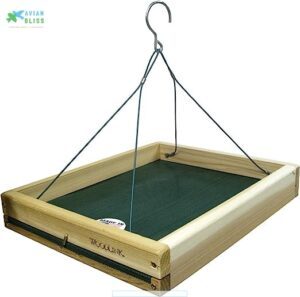
Think of this feeder as a welcome mat — wide, open, and impossible to miss. The Woodlink Platform Bird Feeder measures 16.38" × 13.25", giving cardinals exactly the broad landing space they prefer over cramped tube designs. Studies back this up: platform feeders get roughly 68% more cardinal visits than tube-style options.
It’s built from kiln-dried red cedar, which naturally resists rot without chemicals. The powder-coated metal screen bottom drains rainwater quickly, so seeds don’t clump or mold. Cleaning takes minutes — just slide out the tray, rinse, done.
You’ve got three mounting options: hang it from a branch, mount it on a pole, or set it directly on the ground for ground-feeding pairs. It holds 3 lbs of seed and runs $37.53 — solid value for a feeder cardinals will actually use.
| Best For | Backyard birders who want to attract a wide variety of birds — especially cardinals and larger species — and prefer a low-maintenance, natural-looking feeder that can be mounted multiple ways. |
|---|---|
| Product Type | Bird Feeder |
| Price | $37.53 |
| Cardinal Friendly | Yes |
| Weather Resistant | Kiln-dried cedar |
| Squirrel Deterrent | No |
| Ease of Use | 3 mount options |
| Additional Features |
|
- Built from kiln-dried red cedar that naturally resists rot, so it holds up outdoors season after season
- Removable screen tray makes cleaning quick and easy, which helps keep birds healthy
- Works as a hanging, pole-mounted, or ground feeder — flexible enough to fit almost any yard setup
- Mounting hardware isn’t included, so you’ll need to buy the pole or post bracket separately
- Open platform means rain can soak the seed, leading to clumping and more frequent cleaning after wet weather
- Squirrels can access it freely unless you add a baffle, which is an extra cost on top of the $37.53 price tag
5. Woodlink Audubon Dome Bird Feeder
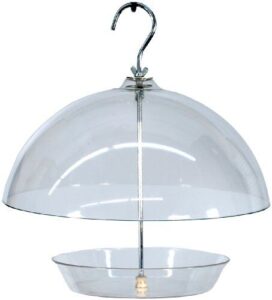
Rain shouldn’t mean empty feeders — and with the Woodlink Audubon Dome Bird Feeder, it won’t. The clear 11.75" polycarbonate dome keeps seed dry through downpours while giving you an unobstructed view of every cardinal that drops in. That’s a rare combination.
The 7¾" tray is wider than it looks, comfortably holding sunflower seeds, safflower, mealworms, or dried fruit — basically everything a cardinal finds irresistible. The dome height is adjustable, so you can block jays and grackles without shutting out your target visitors.
UV-resistant materials mean it won’t yellow or crack after a summer in full sun. One practical note: tighten the wing nut occasionally to keep the dome stable in wind. Small habit, big payoff.
| Best For | All-weather cardinal watching while keeping larger birds out |
| Brand | Woodlink |
| Material | Alloy Steel / Polycarbonate |
| Dome Size | 11.75" diameter |
| Weather Resistance | UV-resistant |
| Price Point | Mid-range |
| Standout Feature | Adjustable dome height, multi-food compatible |
Best For: Backyard birders who want to attract bluebirds and small songbirds year-round without losing food to rain or bigger bully birds.
| Product Type | Bird Feeder |
|---|---|
| Price | Mid-range |
| Cardinal Friendly | Yes |
| Weather Resistant | UV-resistant dome |
| Squirrel Deterrent | Adjustable dome |
| Ease of Use | Quick-release hook |
| Additional Features |
|
- The clear polycarbonate dome keeps seed and mealworms dry through rain and snow, so you’re not constantly refilling a soggy tray.
- Adjustable dome height lets you dial in access — small birds welcome, jays and grackles not so much.
- Hooks off easily for cleaning and refilling, which makes regular upkeep way less of a chore.
- The plastic tray and threaded collar are known to crack within a year or two, especially if wind or birds put repeated stress on them.
- Metal parts like the post and wing nuts can rust fast in wet climates unless you add some protective washers.
- The dome can work itself loose over time, so you’ll need to check and tighten the wing nut every now and then to keep things stable.
6. Cedar Wood Bird Feeder
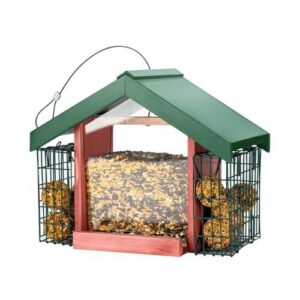
If the Audubon Dome manages the weather, the Cedar Alpha GB2094 manages everything else. Built from solid red cedar — a wood naturally resistant to moisture, insects, and decay — this feeder is made to last through seasons of heavy use.
The sloped roof keeps seed dry, and the center compartment holds sunflower or safflower seeds with room to spare. The side slots fit suet blocks, so you’re offering cardinals both fat and protein in one spot. Cardinals also tend to linger on the extended perches, which suit their broader feet well.
At 11.8 x 6.7 x 9.85 inches, it’s compact but functional. Hanging it takes minutes with the included cable wire.
One honest heads-up: it’s not squirrel-proof. Placement near a baffle pole or away from jumping distances makes a real difference here.
| Best For | Backyard birders wanting a natural, adaptable feeder |
| Brand | Cedar Alpha |
| Material | Red Cedar Wood |
| Size | 11.8 x 6.7 x 9.85" |
| Weather Resistance | Natural cedar durability |
| Price Point | Budget-friendly |
| Standout Feature | Dual suet slots + seed compartment |
Best For: Backyard birders who want a natural-looking wood feeder that handles both seed and suet without a lot of fuss.
| Product Type | Bird Feeder |
|---|---|
| Price | Budget-friendly |
| Cardinal Friendly | Yes |
| Weather Resistant | Natural cedar |
| Squirrel Deterrent | No |
| Ease of Use | Includes cable wire |
| Additional Features |
|
- Built from solid red cedar, so it naturally holds up against moisture, insects, and decay over time.
- Feeds multiple birds at once with a center seed compartment plus side suet slots — great for attracting a variety of species.
- Super easy to hang with the included cable wire — just find a branch or hook and you’re done.
- The hanging wire and metal parts have been known to fail pretty quickly, especially with heavier birds or squirrels pulling on it.
- Not squirrel-proof at all — they can dig into the side slots or knock the whole thing over.
- The wood roof and frame can crack under pressure, so it may not hold up long without some extra reinforcement.
7. Cast Iron Pedestal Bird Bath
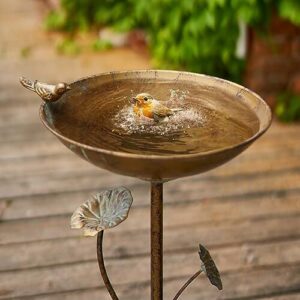
Cardinals don’t just need food — they need water, too. And this cast iron pedestal bath delivers both style and function without breaking the bank.
At 28.5 inches tall with a 13-inch basin, it sits at a comfortable height for birds to spot and access. The 2.76‑inch depth is right in the sweet spot — shallow enough to feel safe, deep enough for a proper splash. A multi‑layer powder coating keeps rust at bay, and the cast iron base adds real weight where it counts.
That said, it can tip in strong wind, so anchoring it firmly matters. Place it 10–15 feet from dense shrubs so cardinals have a quick escape route nearby. Clean the basin weekly with warm soapy water, and keep it filled with just 1–2 inches of fresh water — cardinals drink daily, rain or shine.
| Best For | Backyard birders wanting a decorative, functional water source |
| Material | Cast Iron / Powder‑Coated Metal |
| Size | 13" diameter × 28.5" tall |
| Basin Depth | 2.76 inches |
| Price Point | Budget‑friendly (~$45.99) |
| Standout Feature | Lotus leaf motif + rust‑resistant finish |
Best For: Backyard gardeners and bird lovers who want an attractive, affordable water source that pulls double duty as a garden accent.
| Product Type | Bird Bath |
|---|---|
| Price | $45.99 |
| Cardinal Friendly | Yes |
| Weather Resistant | Powder-coated metal |
| Squirrel Deterrent | No |
| Ease of Use | Simple assembly |
| Additional Features |
|
- Multi-layer powder coating resists rust and makes the basin easy to wipe clean between refills.
- Dual-purpose design works as a bird bath, seed feeder, or decorative accent — solid value for $45.99.
- Lightweight enough to move around seasonally, but the cast iron base gives it enough heft to feel sturdy on calm days.
- Top-heavy build can tip in wind or storms, and the included stakes may not be enough to keep it grounded.
- The shallow 2.76-inch basin suits smaller birds like cardinals but won’t satisfy larger species that prefer a deeper soak.
- Powder coat wears over time, so without occasional maintenance or an extra clear coat, rust can creep in.
8. Mami And Babi Outdoor Cat Enclosure Tent
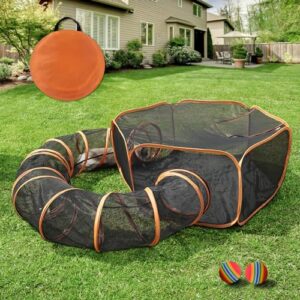
If water keeps cardinals coming back, the right boundaries keep them safe — especially if you share your yard with a cat.
The Mami & Babi Outdoor Cat Enclosure Tent is a smart fix for cat owners who love backyard birds. It gives your cat fresh air and sunlight through breathable mesh walls while keeping curious paws away from visiting cardinals. The tent expands to 47.2" × 18.1" and connects to a 122" tunnel, giving your pet over 15 square feet to roam — contained and supervised.
Setup takes about a minute. It folds down to almost nothing and weighs just 100 grams, so it travels easily. For outdoor use, stake it down — the lightweight frame can shift in the wind. A practical win for wildlife‑conscious cat owners.
| Best For | Cat owners protecting local birds |
| Size | 47.2″ tent + 122″ tunnel |
| Activity Space | 15+ sq ft |
| Weight | 100 g |
| Setup Time | ~1 minute |
| Price Point | Budget-friendly |
| Standout Feature | Foldable mesh design with dual-zip entry |
Best For: Cat owners who want to let their pet enjoy the outdoors without giving local birds (or anything else) a reason to worry.
| Product Type | Cat Enclosure |
|---|---|
| Price | Budget-friendly |
| Cardinal Friendly | Indirect |
| Weather Resistant | Breathable mesh |
| Squirrel Deterrent | No |
| Ease of Use | 1-minute setup |
| Additional Features |
|
- Sets up in about a minute and packs down to nearly nothing — easy to grab for a backyard session or a camping trip
- Over 15 square feet of roaming space between the tent and tunnel keeps cats active and entertained
- Breathable mesh walls let in fresh air and sunlight while keeping your cat safely contained
- The lightweight frame can tip or shift in the wind, so you’ll want to stake it down outside
- Packing it back into the carry case takes some patience — the zipper connections can be a bit fussy
- Larger cats may find the tunnel a tight squeeze, so it’s better suited for average-sized pets
9. Birdfy Solar Powered Bird House Camera
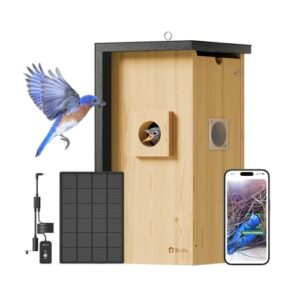
Once your yard is safe for birds, why not get a front-row seat to everything happening inside the nest?
The Birdfy Solar Powered Bird House Camera turns passive birdwatching into something personal. The built-in 1080p HD camera streams directly to the Birdfy app, where AI automatically identifies visiting species and sends you real-time alerts. Miss a nighttime visit? Infrared night vision has you covered.
The 3W solar panel and 5200mAh battery keep things running without you touching a single wire. Natural fir wood construction and IP65 weather resistance mean it holds up through rain, humidity, and summer heat. The 1.5" entrance hole welcomes cardinals, wrens, and bluebirds alike.
| Best For | Bird enthusiasts wanting hands-free, 24/7 nest monitoring |
| Resolution | 1080p HD with infrared night vision |
| Power | 3W solar + 5200mAh battery |
| Weather Resistance | IP65 rated |
| Material | Fir wood with metal hardware |
| Size | 7.09″ × 6.3″ × 12.6″ |
| Price Point | Premium |
| Standout Feature | AI species ID + real-time app alerts |
Best For: Bird lovers who want a hands-free, around-the-clock look at nesting activity without constantly checking on the box in person.
| Product Type | Bird House Camera |
|---|---|
| Price | Premium |
| Cardinal Friendly | Yes |
| Weather Resistant | IP65 rated |
| Squirrel Deterrent | No |
| Ease of Use | App-controlled |
| Additional Features |
|
- The 1080p camera with night vision and AI species ID means you catch everything — day or night — without ever disturbing the birds.
- Solar-powered with a solid 5200mAh backup battery, so it mostly takes care of itself once it’s up and running.
- The remote control box lets you adjust settings or restart the camera without opening the house and stressing out whatever’s nesting inside.
- The untreated fir wood looks great at first, but it can start showing wear, mold, or weathering after a season or two outside.
- Only works on 2.4 GHz Wi-Fi, so if your router runs 5 GHz only, you’ll hit a wall before you ever see a bird.
- No mounting bracket or pole hardware included — if you want it somewhere other than a tree branch or hook, you’re sourcing that yourself.
10. Wagners Cardinal Wild Bird Food
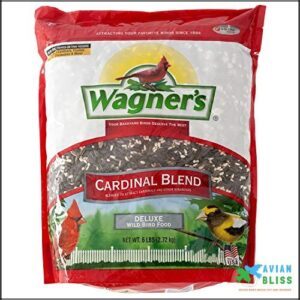
Few blends hit the sweet spot quite like Wagner’s Cardinal Wild Bird Food. This 6-lb bag packs a deliberate 60/40 mix of black-oil sunflower and safflower seeds — exactly what cardinals seek out when they’re burning energy through cold mornings or nesting season.
The math here is simple: black-oil sunflower delivers fat and protein through thin, easy-to-crack shells, while safflower naturally keeps squirrels at bay without chasing off songbirds. No filler grains, no milo, no wasted space.
What you get is pure, oil-rich nutrition that promotes year-round cardinal health. The Velcro press-lok closure keeps the bag sealed between refills, so seeds stay dry and fresh longer.
It’s mid-range priced, USA-made, and genuinely earns its spot at your feeder.
| Best For | Backyard birders who want to attract cardinals and songbirds without dealing with squirrel raids or messy seed waste. |
|---|---|
| Product Type | Bird Seed |
| Price | $13.48 |
| Cardinal Friendly | Yes |
| Weather Resistant | Resealable bag |
| Squirrel Deterrent | Partial |
| Ease of Use | Velcro closure |
| Additional Features |
|
- The 60/40 sunflower-safflower blend is exactly what cardinals love, so you’ll see more of the birds you actually want.
- High oil content means real nutrition — especially helpful during breeding season when birds need the extra energy.
- No filler seeds means less mess on the ground and fewer uninvited guests like rodents.
- At $13.48 for 6 lbs, it costs more than generic blends, so it adds up if you’re refilling often.
- Safflower helps, but it’s not squirrel-proof — some persistent squirrels will still help themselves.
- Popular feeders go through this mix fast, so busy yards may need frequent restocking.
Choosing The Right Feeders for Cardinals
The feeder you choose matters just as much as the seed inside it. Cardinals are picky about where they land, and the wrong setup can send them straight to your neighbor’s yard.
Here are the feeder types that actually work.
Hopper Feeders
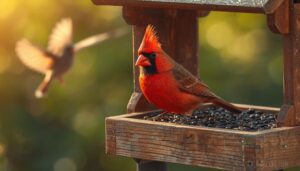
Hopper feeders are a smart, low-fuss choice for attracting cardinals consistently.
Their gravity dispensing mechanism steadily delivers black oil sunflower seeds and safflower seeds into the tray — no clumping, no waste. An anti-clog design keeps flow smooth, while weatherproof sealing protects your cardinal-friendly seed blends from moisture.
Many models even include an adjustable perch width, making feeding comfortable for cardinals’ larger frames.
Tray and Platform Feeders
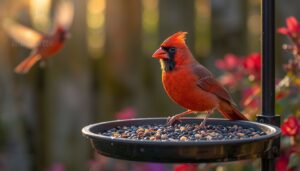
If cardinals had a vote, platform feeders would win every time. Their flat, open trays give cardinals the wide landing zone they prefer — no awkward clinging, just comfortable foraging.
A Modular Tray System with Durable Materials like powder-coated metal holds your sunflower seeds and seed mix without warping or rusting. Adjustable Height mounting and a Wind-Resistant Design keep your Cardinal-friendly feeder selection stable and stocked, making this style one of the most practical choices you can add to your yard.
Feeders With Large Perches
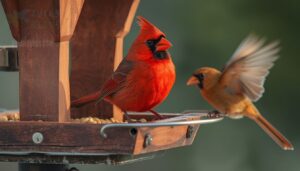
A perch makes or breaks the whole setup. With Perch Width Optimization in mind, look for feeders offering 1.75–2 inch wide perches — cardinals visit about 20% more often when they’re comfortable landing.
Heavy Base Stability and Corrosion Resistant Hardware keep things solid through rough weather. A Smooth Surface Finish protects feet and discourages pests, while Weight-Activated Doors block squirrels.
Smart feeder design for cardinals really does pay off.
Feeders to Avoid
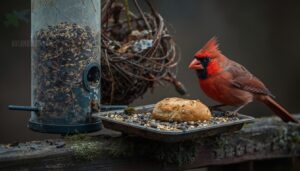
Some feeders actually work against you. Plastic tube feeders jam ports and frustrate cardinals with tight fits. Wire mesh feeders can snag beaks mid-feed. Bread pastry trays breed mold fast, turning seed toxic. Bare soil feeders harbor parasites underneath. Open suet blocks in unfenced spots invite raccoons overnight. Even large tube feeders, hopper feeders, and platform feeders fail when feeder design cuts corners.
Stick with clean, sturdy ground feeding stations built to last.
- Plastic tube feeders trap moisture and jam
- Wire mesh feeders risk beak injuries
- Bread pastry trays accelerate dangerous mold growth
- Bare soil feeders breed harmful parasites
- Open suet blocks attract nighttime pest invasions
Where to Place Cardinal Feeders
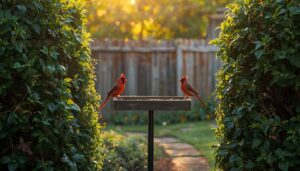
Even the best bird food won’t help much if your feeder is in the wrong spot. Cardinals are cautious birds — they want to feel safe before they commit to a meal.
Here are the key placement factors that’ll make a real difference.
Near Shelter (Shrubs & Bushes)
Think of shrubs as your feeder’s security system. Place feeders 10–15 feet from dense shrubs, native plants, or a layered multi‑stem structure — cardinals visit up to 38% more often when escape routes are close.
An edge planting strategy using dense hedge corridors and seasonal leaf retention gives birds year‑round confidence. Dense shrubs and cardinal‑friendly seed blends together create a welcoming, safe backyard habitat.
Avoiding High-Traffic Areas
Quiet path selection matters just as much as shelter.
Position feeders at least 15 meters from driveways, sidewalks, and busy foot traffic, using traffic buffer zones — dense shrubs work as natural noise shielding strategies.
Shade placement helps, too, keeping activity calm and hidden from passing disturbances.
Keep stations clear of dog runs and cat routes.
Pedestrian safe distances give cardinals the predictability they need to feed without flushing.
Height and Accessibility
Once you’ve found that calm, low-traffic corner, ideal mounting height seals the deal. Hang feeders 5 to 6 feet off the ground — that’s your sweet spot for cardinal-friendly feeder selection and your own sanity.
Here’s why that feeder height works so well:
- Cardinals scan for predators comfortably from chest-level perches.
- Feeder reach distance stays easy — no ladder required.
- Cats can’t leap high enough to ambush feeding birds.
- Baffles block raccoons most effectively at this elevation.
Perch proximity and entryway clearance keep landings smooth and stress‑free.
Safe Distance From Windows
Height sorted — now let’s talk windows. Follow the 3-30 rule for collision prevention: place feeders either within 3 feet of windows or beyond 30 feet away.
That 15–30-foot gap is where cardinals hit glass at full speed. Smart pole positioning and shrub buffer zones slow their approach naturally. Add screening decals to nearby glass for extra bird safety — a simple fix that genuinely saves lives.
Creating a Cardinal-Friendly Habitat
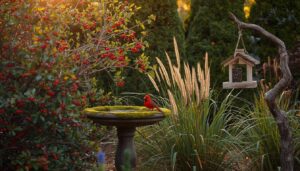
Food and feeders will only get you so far — cardinals also need a yard that feels safe and familiar. The right plants and landscaping choices can turn your outdoor space into somewhere they actually want to stay.
Here’s what makes the biggest difference.
Planting Native Shrubs and Trees
Native plants are your yard’s best-kept secret for drawing cardinals in. Species like dogwoods, serviceberries, and junipers offer the berries and shelter cardinals evolved with — no feeder required.
Here’s what to plant and how:
- Serviceberries fruit early summer, perfectly timed for hungry nestlings
- Dogwoods offer berry clusters from late summer through fall
- Junipers provide dense shrubs with year-round evergreen cover
- Hawthorns create thorny, predator-proof branches cardinals love
- Native viburnums extend food availability deep into winter
Planting timing matters — late fall or early spring gives roots the best start. Focus on soil preparation by mixing in compost before planting. Follow a consistent watering schedule throughout the first season, and layer mulch application (2–4 inches) to lock in moisture. Check sunlight requirements per species; most flowering natives thrive in full sun to light shade.
Providing Dense Cover and Nesting Sites
Building a Layered Shrub Mosaic is one of the smartest moves you can make for cardinal nesting sites. Dense shrubs with Thicket Height Variation — ranging from ground level up to ten feet — give cardinals the layered cover for birds they instinctively seek.
Add Thorny Shrub Barriers along fence lines, tuck Brush Pile Placement nearby, and sprinkle Ground Litter Habitat beneath native plantings. Cardinals practically move in.
Using Evergreen Plants for Winter Shelter
When winter hits hard, evergreens become your cardinals’ best allies. Native Evergreen Species like Eastern red cedar and American holly create Microclimate Pockets that stay several degrees warmer than open yards — thanks to Dense Branching that cuts wind chill dramatically.
Position these Evergreen Windbreaks on your property’s north or west side, within 10–15 feet of black oil sunflower seeds and your cardinal blend.
That’s Snow Shelter Insulation working for you.
Landscaping for Year-Round Attraction
Think of your yard as a living mosaic — every layer working together to keep cardinals coming back, no matter the season. Layered planting is the real secret: combine ornamental grasses (their seed heads persist through frost) with seasonal flower beds, native berry shrubs, and a windbreak hedgerow along your yard’s edge.
- Mulch ground cover beneath feeders softens landings and signals safety
- Year‑round water sources — heated in winter — seal the deal
- Native serviceberries and crabapples extend your seed mix and bird nutrition naturally
- Seasonal adjustments to feeding stations match what cardinals actually need
- Creating cardinal habitat with native plants multiplies visits up to eightfold
Providing Water Sources for Cardinals
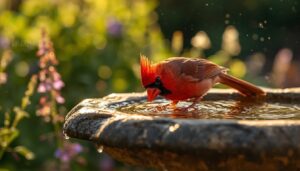
Cardinals need more than just food to feel at home in your yard — fresh water is just as important. Whether it’s for drinking or bathing, a reliable water source can make your setup noticeably more attractive to them.
Here’s what works best.
Ground-Level Bird Baths
Cardinals are ground feeders by nature — so a ground-level bird bath fits right into how they already move.
Aim for a shallow edge depth of 2–3 inches with a non-skid bottom so they wade confidently. A wide rim width gives them a steady sip spot. For stone base stability, set it on pavers or a microhabitat gravel ring.
| Feature | Ideal Spec | Why It Matters |
|---|---|---|
| Shallow Edge Depth | 2–3 inches | Safe wading access |
| Rim Width | Broad, flat | Steady perching |
| Non-Skid Bottom | Textured surface | Prevents slipping |
Position near shrubs for quick escape cover.
Heated Bird Baths for Winter
A heated bird bath is one of the smartest investments for winter bird feeding.
Look for a model with thermostat control — it kicks in around 32°F, so the energy efficient heater only runs when needed.
That anti freeze design keeps water liquid without spiking your electric bill.
Most run on standard outlets, making power supply options simple.
Year-round water sources like these keep cardinals coming back reliably.
Regular Cleaning and Maintenance
A neglected feeder is basically a petri dish with a perch. Feeder hygiene isn’t optional — it’s the difference between a thriving backyard flock and a sick one.
A neglected feeder isn’t just messy — it’s a health hazard that puts your whole backyard flock at risk
Here’s a simple sanitizing schedule to follow:
- Scrub bird baths every 3 days in warm months using a non-toxic solution to stop algae and biofilm growth
- Clean feeders every two weeks — component disassembly lets you reach every hidden crevice where mold hides
- Swap out old seed within two weeks to prevent rancidity and pest attraction
- Do a seasonal deep clean each spring, midsummer, and late fall
- Start cleaning log tracking to spot patterns and stay ahead of problems
Consistent feeder maintenance keeps your cardinals healthy and coming back.
Seasonal Cardinal Feeding Tips
Cardinals don’t eat the same way in July as they do in January — and what you put in your feeder should reflect that. Their nutritional needs shift with the seasons, and matching your offerings to those changes makes a real difference in how often they show up.
Here’s how to feed cardinals smarter, month by month.
Spring and Summer Diet Needs
Once warm weather rolls in, your feeding strategy needs a seasonal tune‑up.
Insect protein — from live or dried mealworms — becomes critical, supporting breeding pairs and growing fledglings. Toss in fresh berries for vitamin-rich, hydrating fruit that hot days demand.
Keep black oil sunflower seeds and safflower seeds stocked as your anchor.
Smart seasonal nutrient timing through varied cardinal seed blends makes all the difference.
Fall and Winter Food Preferences
As temperatures drop, your feeding station needs a cold-weather upgrade. High fat seeds — especially black oil sunflower seeds and safflower seeds — become the backbone of smart winter feeding strategies for cardinals.
Their fat content fuels warmth from the inside out. Round things out with suet blends, nutritious nuts, dried berries, and high-energy seed mixes for birds.
Even mealworms pull weight as insect protein when bugs disappear. Together, these keep cardinals well-fed through the coldest months.
Adjusting Food Types by Season
Cold months aren’t the end of the story — they’re just one chapter. Seasonal feeding strategies for cardinals mean shifting your menu as nature does.
- Spring Protein Boost: Add mealworms and peanuts to support nesting cardinals from March onward.
- Summer Hydration Fruit: Mix chopped apple or berries with sunflower seeds during heat waves.
- Autumn Energy Mix and Winter Calorie Dense blends rely on high-fat seed options like safflower and black oil sunflower.
Seasonal Seed Rotation keeps cardinals coming back all year.
Preventing Squirrels and Unwanted Pests
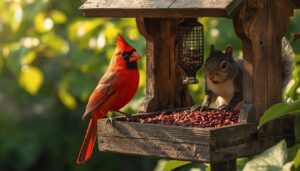
Squirrels can empty a feeder faster than cardinals ever get a chance to eat. The good news is few smart choices go a long way toward keeping the seed where it belongs.
Here’s what actually works.
Squirrel-Proof Feeders and Poles
Squirrels are clever — but the right setup beats them every time. Squirrel-proof bird feeders with weight-activated mechanisms shut seed ports the moment a heavier pest lands, while cardinals feed freely. Pair that with chew-resistant materials and a cone baffle design mounted 5–6 feet high for serious pole stability.
| Feature | Why It Works |
|---|---|
| Cone baffle | Forces squirrels to slide off |
| Weight-activated ports | Closes under heavier animals |
| Smooth steel poles | Eliminates climbing grip |
Keep feeders 10–12 feet from fences or trees — your favorite cardinal-friendly feeder selection stays squirrel-free.
Using Safflower to Deter Squirrels
Here’s your quietest squirrel prevention method yet — just swap your seed mix for safflower seeds. Their Bitter Taste Deterrent works naturally; squirrels find the flavor unpleasant and move on within days. Cardinals, though, crack right through that Seed Hardness Barrier without trouble.
- Safflower Port Design limits larger mammals access at the feeder opening
- Pairs beautifully with Weight Sensitive Feeders for double protection
- Offers Cardinal-friendly feeder selection year-round through Seasonal Seed Rotation
- Fewer squirrels means more seeds for your cardinals
Regular Feeder Maintenance and Cleaning
Keeping your feeder clean is honestly one of the best pest deterrents you have. Daily Seed Removal stops mold before it starts. A quick Mild Soap Wash weekly takes care of oils and grime, while Vinegar Disinfection addresses stubborn mold naturally.
Always prioritize Component Drying before refilling — moisture invites trouble. Schedule a Quarterly Deep Clean for lasting bird feeder hygiene and consistent cardinal visits.
Frequently Asked Questions (FAQs)
What to feed to attract cardinals?
The simpler the menu, the more often they’ll show up.
Start with black oil sunflower seeds and safflower seeds, then round out your cardinal blend with shelled peanuts, cracked corn, and mealworms.
How to attract cardinals to your bird house?
Here’s the thing — cardinals don’t nest in birdhouses. No entrance hole size or nest box insulation will change that. They prefer dense shrubs.
Place feeders with black oil sunflower seeds near thick cover instead.
Why are cardinals not coming to my feeder?
Think of feeder as a restaurant — if the location, menu, or vibe feels off, cardinals simply won’t show up.
Stale seed, excessive noise, predator visibility, or an insufficient perch width quietly drive them away.
What time of day do cardinals eat most?
Cardinals feed most actively at dawn and again just before dusk — two daily feeding peaks driven by instinct.
That morning feeding peak fuels their dawn foraging surge, while the dusk feeding spike tops off energy reserves for the night.
How long does it take to attract cardinals?
Most backyard birders spot their first cardinal within 1 to 3 days — your initial visitation window shortens fast when fresh food, clean water, and safe cover work together.
Do cardinals migrate or stay year-round?
Northern Cardinals are nonmigratory bird species — they stay put year-round. Territory Fidelity is strong, with adults returning to the same yard across multiple winters.
Keep your feeders stocked, and they’ll never really leave.
What colors attract cardinals to your yard?
Red feeder accents catch a cardinal’s eye fastest. Yellow perch highlights spark curiosity, while a green camouflage strategy keeps them calm.
Pink flower lures and a natural brown backdrop complete the welcome.
Can cardinals recognize individual humans who feed them?
Yes — they absolutely can.
Cardinals use facial cues and consistent attire to recognize trusted feeders, building memory retention through your feeding routine. That familiarity grows into real trust building over time.
Do cardinals prefer feeding alone or in groups?
Cardinals lean toward solo foraging, though their territorial tendencies soften in winter when seasonal flocking briefly brings small groups together — especially near cover-rich spots where social signaling makes finding food easier.
What time of day are cardinals most active?
Dawn Foraging and the Late Afternoon Peak are your best windows. Cardinals surge at first light and return before dusk — plan your bird feeding schedule around those two golden hours.
Conclusion
Think of your yard as a stage. The cardinals are the headliners—they only show up when the conditions are right.
Stack the lineup with black-oil sunflower seeds, safflower, and shelled peanuts, pair it with a roomy platform feeder near dense shrubs, and keep fresh water available year‑round.
That’s the full setup.
The best bird food for attracting cardinals isn’t a single product—it’s a system you build, season by season.