This site is supported by our readers. We may earn a commission, at no cost to you, if you purchase through links.
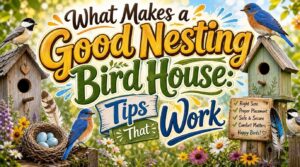
Most birdhouses birdhouses bought at garden centers never host a single nest.
Birds reject them—not out of pickiness, but because the dimensions, materials, or placement don’t match what their instincts demand.
A chickadee won’t squeeze through a hole sized for a bluebird, and a bluebird won’t nest in a box mounted too close to tree cover.
These aren’t minor details.
They’re the difference between a box that sits empty for years and one that raises three clutches a season.
Getting what makes a good nesting bird house right comes down to a handful of specific, learnable choices.
Table Of Contents
Key Takeaways
- Match your birdhouse to a specific species—entrance hole size, floor dimensions, and box depth aren’t suggestions, they’re what separates a thriving nest from an empty box all season.
- Untreated cedar with thick ¾-inch walls, drainage holes, ventilation near the roof, and a sloped overhang keep chicks safe from heat, moisture, and mold.
- Where you place the box matters as much as how it’s built—bluebirds need open fields at 5–8 feet, chickadees want dense thickets, and tree swallows won’t go far from water.
- Clean the box after each brood, mount a predator baffle at least four feet up, and put it out in late winter so scout birds find it before nesting season starts.
A Good Bird House Fits Species
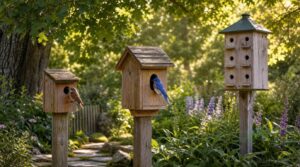
Not every bird house works for every bird—size and style matter more than most people expect. A bluebird won’t settle into a box built for a wren, and a purple martin needs something completely different from both. Here’s what to look for when matching a house to the species you want to attract.
Getting the details right—hole diameter, cavity depth, mounting height—is where most people stumble, so this complete guide to choosing the right bird house for your yard breaks it all down species by species.
Target Cavity-nesting Birds
Not every bird nests the same way. Cavity-nesting birds — like eastern bluebirds, black-capped chickadees, house wrens, and tree swallows — raise their young inside enclosed spaces, whether a hollow tree or a well-built box.
Building for a specific target species means the house actually gets used, instead of sitting empty or attracting the wrong visitors entirely.
Many species, like bluebirds, rely on natural cavities in dead trees created by primary nesters.
Correct Floor Dimensions
Once you’ve matched your box to the right species, the floor is where nesting requirements get specific. Floor size guidelines vary: bluebirds need roughly 4×5 inches, while chickadees do well with 3×4 inches.
Here’s what to get right:
- Use untreated cedar or pine, at least ¾ inch thick
- Add drainage holes along the lowest floor edge
- Tilt the floor slightly toward the entrance
- Keep clearance above the floor to prevent water pooling
- Match floor dimensions to your target species
Proper Box Depth
Floor size sets the stage, but box depth shapes whether a nest actually works. Small cavity nesters like chickadees need just 5–6 inches of internal depth, while bluebirds require 7–9 inches to give eggs and nestlings proper room.
| Species | Recommended Depth | Key Reason |
|---|---|---|
| Chickadee | 5–6 inches | Limits mites, retains heat |
| Wren | 5–6 inches | Matches natural hollow size |
| Bluebird | 7–9 inches | Provides incubation space |
| Tree Swallow | 6–8 inches | Reduces moisture buildup |
| Screech-owl | 12–15 inches | Accommodates larger clutch |
Depth also works with ventilation — a deeper box needs adequate vent holes near the roof to move humid air out before mold sets in.
Species-specific House Styles
Once you’ve nailed the right depth, the full shape of the house comes together.
Bluebirds need a 5½ × 5½ inch floor with a 1½-inch entrance hole. Chickadees do best with a 5 × 5 inch base and a 1¼-inch opening. Wrens prefer a narrower 4 × 6 inch floor with a 1⅛-inch hole — snug enough to feel safe.
Avoid One-size-fits-all Designs
A generic box won’t serve every bird well. Species-specific house design matters because a bluebird box is simply too roomy for a wren, and a wren-sized hole locks out a tree swallow.
Matching the right box to the right bird makes all the difference, and this guide to species-specific birdhouses available online can help you find a fit that actually works.
Think of it like shoes — the right fit protects what’s inside. Tailor your nest box dimensions and entrance hole size to your target species every time.
Like shoes, the right nest box fit protects what’s inside—match dimensions and entrance hole to your target species
Entrance Holes Control Nest Safety
The entrance hole is one of the most important parts of any nest box — get it wrong, and the wrong birds move in. Each species needs a specific hole size to feel safe and keep out unwanted visitors. Here’s what works for the most common cavity nesters.
Bluebird Hole Size
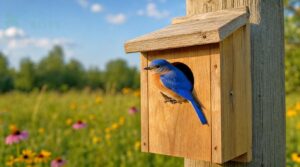
The entrance hole is the first line of defense for your bluebird family. Eastern bluebirds need a 1½-inch diameter hole, while Western and Mountain bluebirds do better with 1⁹⁄₁₆ inches. That slightly larger size works for all three species in shared habitats.
- Starlings can’t squeeze through holes at or under 1⁹⁄₁₆ inches
- Too-large holes expose nestlings to cold drafts and predators
- The Right Bird Right House tool helps confirm the correct size for your region
Inspect hole diameter regularly — wood wears down over time, and even small enlargements invite unwanted guests.
Chickadee Hole Size
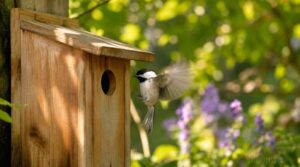
Chickadees need a 1 1/8-inch diameter entrance hole — just right to let them slip in head-first while keeping larger birds out.
| Feature | Specification | Why It Matters |
|---|---|---|
| Hole diameter | 1 1/8 inches | Excludes competitors |
| Entrance height placement | 6–8 inches above floor | Matches nesting posture |
| Wall material | Untreated cedar or pine | Prevents chemical harm |
Drilling clean technique matters too — smooth edges protect delicate heads. This size suits both spring nesting and winter roosting.
Wren Hole Size
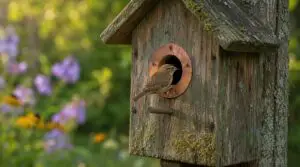
Wrens are small birds that need a 1¼-inch entrance hole — precise enough to let a House Wren or Northern House Wren slip through comfortably while keeping most competitors out. A circular hole design works best because it’s easy to cut cleanly and won’t snag feathers. Place it using side opening placement, about 4–6 inches above the floor, for better wind and rain protection.
Adding a predator guard around the opening gives wrens an extra layer of safety from raccoons and squirrels. And don’t adjust the size year to year — annual hole consistency keeps returning wrens confident the box is still a safe home.
Larger Cavity Nesters
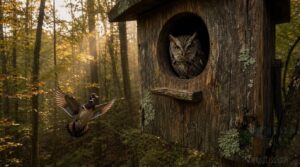
Some birds need a lot more room than a wren or chickadee ever would. Screech-owls, wood ducks, and similar larger cavity nesters require an internal diameter of 2–4 inches and a depth of 8–10 inches — enough space for their bodies and growing chicks.
- A 10 × 10-inch floor accommodates natural movement
- Elliptical openings (roughly 4 × 3 inches) let adults pass without stress
- Deeper boxes conceal broods from predators more effectively
Mount these boxes 12–40 feet high and always include a predator baffle.
Excluding Invasive Birds
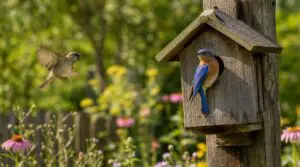
Two invasive nonnative species — House Sparrows and European Starlings — will claim any box you leave unguarded.
| Bird | Hole Size | Result |
|---|---|---|
| House Wren | 1 inch | Excludes sparrows |
| Chickadee | 1⅛ inches | Blocks starlings |
| Bluebird | 1½ inches | Deters most invaders |
| Tree Swallow | 1½ inches | Limits larger birds |
| Starling | 2+ inches | Gains full access |
Monitor monthly and remove invasive nests promptly.
Safe Materials Improve Nesting Success
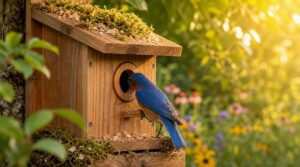
The wood you choose matters more than most people realize. A poorly made box can trap heat, hold moisture, or even leach chemicals that harm developing chicks. Here are the key material choices that give nesting birds the best possible start.
Untreated Cedar or Pine
Regarding birdhouse materials, untreated cedar or pine is your best starting point. Cedar naturally resists rot and insects, so it holds up season after season without chemical finishes.
Pine costs less, but weathers faster. Both woods let moisture escape, keeping the cavity dry and safe for nesting birds.
Thick Insulated Walls
Wall thickness matters more than most builders realize. Aim for ¾‑inch minimum wood — it slows heat transfer, keeping chicks cooler on hot days and warmer on cold nights. This natural thermal resistance protects developing nestlings from dangerous temperature swings.
Cedar’s density also acts as a moisture barrier, preventing condensation from building up inside the cavity.
Sloped Overhanging Roof
The roof does more than cover the box. A sloped overhanging roof, angled 15–30 degrees, sheds rain away from the entrance and walls, keeping the nest cavity dry.
Extending the overhang 2–4 inches over the front adds eave protection, blocking wind‑driven rain and summer sun— both of which stress developing nestlings more than most people expect.
Ventilation and Drainage Holes
A dry nest is a safe nest. Ventilation holes near the top let rising warm air escape without creating a draft on eggs or chicks. Drill two to four holes, 1/8–1/4 inch wide, for small songbirds.
At the floor, small drainage holes, 3/8–1/2 inch, channel any moisture out before mold sets in.
Natural, Earth-tone Finishes
The color of your birdhouse matters more than you might think. Earth-tone stains and linseed oil blend the box into its surroundings, reducing stress on nesting birds.
These finishes use mineral-based pigments that stay stable in sunlight without fading fast. They’re also non‑toxic when cured, so no harmful fumes reach eggs or chicks nearby.
Placement Makes Birdhouses More Attractive
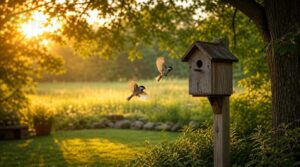
Where you put a birdhouse matters just as much as how it’s built. Each species has its own idea of the perfect neighborhood, and getting that wrong means an empty box all season. Here’s what works for the birds you most want to attract.
Open Fields for Bluebirds
Bluebirds thrive where the land opens up — think grassy fields with a few scattered trees nearby.
Mount your box 5–8 feet high on a metal pole with a predator baffle. Face it east, toward morning sun. Space boxes 200–300 feet apart to honor their territorial nature.
Clean fields with native grasses naturally boost insect abundance, especially in late spring.
Thickets for Chickadees
Chickadees are homebodies at heart — they want dense thicket shelter close to their box.
Place your box 5–10 feet high near shrubs and small trees. Here’s what makes the spot work:
- Mixed evergreen and deciduous growth for year-round food sources
- Shrub layers 3–8 feet high creating insect foraging zones
- Interwoven branches for camouflage protection
- Spacing boxes 10–20 feet apart to reduce competition
Woody Areas for Wrens
Northern house wrens thrive in dense understory habitat — think tangled shrubs, low branches, and leafy edges where insects are plentiful.
Hang your box 6–10 feet high from a tree near mixed native shrubs and woody vegetation.
A 1⅛-inch entrance hole keeps the space just right for wrens while blocking larger, unwanted birds.
Water Access for Swallows
Tree swallows are almost never far from water — they skim open ponds and rivers mid-flight, sipping without ever landing.
Place your box 4–6 feet high near a garden pond, slow stream, or birdbath with gently sloped edges:
- Keep water shallow and clean
- Use a fountain or bubbler for movement cues
- Avoid steep drop-offs
- Skip pesticides nearby
- Space boxes 30–100 feet apart
Open Lawns for Martins
Purple martins are all about open space. Mount their apartment-style house 15–20 feet high on a metal pole in a clear, open lawn — no tall hedges or dense shrubs within 30 meters.
Keep the grass evenly mowed and avoid pesticides so dragonflies and beetles thrive nearby.
A water source within 200 meters helps too.
Maintenance Keeps Nest Boxes Healthy
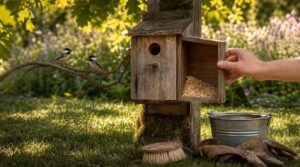
A nest box doesn’t stop working for you once the birds move out — it needs a little care to stay safe and useful season after season. The good news is that keeping boxes healthy doesn’t take much time or effort. Here are five simple steps that make a real difference.
Install Before Breeding Season
Timing is everything regarding seasonal installation. Set up your boxes in late winter, ideally a full two months before nesting begins.
Birds scout locations early, so an empty box found in February beats one that appears in April.
Keep a simple log of installation dates for each box — it makes tracking maintenance cycles much easier next year.
Use Predator Baffles
Even with perfect timing, a nest box without predator protection is an open invitation for trouble.
Mount a galvanized steel baffle on your pole, positioned at least four feet above ground. This smooth, dome‑shaped guard stops raccoons, snakes, and squirrels cold. Choose a baffle 6–24 inches in diameter that fits your pole snugly, leaving no gap to climb through.
Skip Decorative Perches
Once your baffle is in place, take a look at the box itself.
If it has a decorative perch, remove it. Perches give predators an easy foothold right at the entrance hole.
Birds don’t need them — they grip the opening naturally.
A bare interior and simple cavity keep the box safer, cleaner, and more inviting for the birds you actually want.
Clean After Fledging
Once the young birds leave, your box needs a reset before the next family moves in.
Start by removing all old nest material and disposing of it — don’t reuse anything moldy or soiled. Then scrub the interior with one part bleach to nine parts water, rinse thoroughly, and let it dry completely before closing it back up.
- Wear gloves and eye protection when handling droppings
- Scoop out fecal matter with a disposable tool
- Scrub any staining with mild detergent, then rinse clean
- Photograph the interior condition to track changes each season
Repeat this seasonal cleaning every spring and fall to keep pests, mites, and mold from building up over time.
Monitor Nests Briefly
Keeping an eye on your nest box doesn’t have to mean hours outside. Quick nest checks — once every three to four days — give you a clear picture of egg counts and fledging dates without stressing the birds.
Keep each visit under a minute, log what you see, and consider joining NestWatch, Cornell Lab’s citizen science platform, to make your data count.
Frequently Asked Questions (FAQs)
Can multiple bird species share one birdhouse?
Like roommates who can’t agree on the thermostat, most birds don’t share well. Mixed species nesting rarely works — each species needs species-specific house design and exclusive space to nest successfully.
How long do nesting boxes typically last outdoors?
Cedar and redwood boxes last 10–20 years outdoors. Untreated wood rots in 2–5 years. Regular cleaning and a weatherproof finish extend any box’s life considerably.
Do birds reuse the same box every year?
Will birds come back to the same box? Many cavity nesters do return, especially if the box stayed safe and clean. Regular spring cleaning makes reuse far more likely.
What paint colors should you avoid on birdhouses?
Avoid dark colors like black and navy — they absorb heat and can overheat eggs. Skip oil-based or lead paints entirely. Stick to light earth tones or non-toxic latex for safe, bird-friendly results.
Should birdhouses be removed or left up in winter?
Most experts recommend leaving birdhouses up through winter. Chickadees and bluebirds actively roost in them on cold nights, reducing energy loss. Just do a thorough fall cleaning first to remove parasites.
Conclusion
The smallest details carry the most weight—a quarter-inch difference in entrance hole size can mean the difference between a thriving nest and an empty box.
Understanding what makes a good nesting bird house isn’t complicated once you see it through the bird’s eyes: the right species fit, safe materials, thoughtful placement, and consistent upkeep.
Get those four things right, and you won’t need to wait long before something small and feathered decides your yard is worth staying in.
- https://woodworking.stackexchange.com/questions/1085/are-drain-holes-in-a-wooden-bird-house-necessary-and-if-so-whats-the-best-way
- https://dev.welcomewildlife.com/birdhouse-dimensions
- https://nestwatch.org/learn/all-about-birdhouses/features-of-a-good-birdhouse
- https://talmagefarm.com/blog/83361/choosing-a-birdhouse