This site is supported by our readers. We may earn a commission, at no cost to you, if you purchase through links.
Most people write off winter as the dead season for birdwatching. That’s a mistake.
While summer birders chase warblers through dense foliage, winter strips the trees bare and pushes species into the open—eagles stacking up by the hundreds over Oregon’s Klamath Basin, 100,000 snow geese crowding a Pennsylvania lake, tundra swans resting on mudflats before dawn. Cold concentrates birds in ways summer never does.
From the Gulf Coast refuges of Texas to the black spruce bogs of northern Minnesota, the best winter birdwatching locations reward anyone willing to layer up and pay attention.
Table Of Contents
Key Takeaways
- Winter strips trees bare and pushes birds into the open, concentrating species like bald eagles, snow geese, and tundra swans in ways that summer birding simply can’t match.
- A handful of standout locations — Klamath Basin, Sax‑Zim Bog, Texas Gulf refuges, and the Everglades — deliver some of the most dramatic wildlife spectacles in North America during the cold months.
- Dressing right and choosing the correct optics (7x–12x binoculars for general scanning, a 15x–60x spotting scope for distant birds) are the two things that make or break a winter birding trip.
- Early morning is your best window — most winter birds feed hard in the first two hours after sunrise, so show up before the light does.
Best Coastal Winter Birding Trails
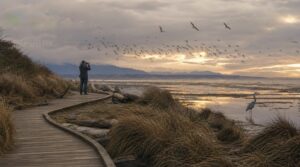
Coastal trails are where winter birding really delivers — cold air, open water, and birds stacked from horizon to horizon. The U.S. coastline runs through some wildly different habitats, from Pacific estuaries to Gulf marshes to Atlantic barrier islands, each pulling in its own mix of species.
From protected Pacific bays to Atlantic barrier islands, species like the Horned Grebe winter along both U.S. coasts, making cold-weather coastal walks genuinely rewarding.
Here are the coastal trails worth putting on your radar this winter.
Oregon Coast Hotspots
The Oregon Coast Birding Trail’s 173 designated hotspots stretch along the Pacific Flyway, giving winter birders a serious edge.
At Cannon Beach, Haystack Rock draws tufted puffins, while Tillamook Bay and Cape Meares host buffleheads and surf scoters riding the winter swells.
Keep an eye out for bald eagles hunting low over estuaries between tide pool stops.
Texas Coastal Refuges
Where Oregon delivers dramatic cliffs and surf, Texas trades altitude for sheer abundance. The Great Texas Coastal Birding Trail runs 308 sites across the coast, and the Gulf refuges are some of its crown jewels:
- Brazoria NWR — 45,764 acres of tidal marsh and coastal prairie
- San Bernard NWR — brackish wetlands holding massive winter waterfowl flocks
- Big Boggy NWR — compact but rich with shorebirds and wading birds
- Christmas Bay Preserve — oyster reefs and seagrass drawing diving ducks
Refuge management here focuses heavily on prairie restoration and impoundment flooding, which pulls in pintails, wigeons, and snow geese by the thousands each winter.
These sites support a substantial portion of the annual massive waterfowl migration that brings over 2 million ducks and geese to the Texas coast each fall.
Delaware Coastal Birding
While Texas overwhelms with sheer scale, Delaware plays a quieter but just as rewarding game.
The Delaware Birding Trail threads through six ecological regions, and its coastal zone — salt marshes, tidal flats, open bay — holds surprises all winter.
Bombay Hook NWR regularly draws bald eagles and massive snow goose flocks, while Cape Henlopen State Park delivers solid winter raptor watching along the Atlantic Flyway.
Shorebirds and Seabirds
Along the coast, shorebirds and seabirds follow the tides like a schedule.
Mudflat foraging peaks at low tide, when long-billed species probe exposed sediment for worms and crustaceans. Keep an eye out for bill adaptation clues — a curved bill means deep probing, a short one means surface-picking.
Conservation zones along the Oregon Coast Birding Trail protect these feeding grounds year-round.
Winter Waterfowl Highlights
Winter waterfowl don’t spread themselves evenly — they pile up wherever open water and food overlap. Coastal duck flocks of mallards, northern pintails, and American wigeons concentrate on unfrozen bays and tidal flats, feeding on aquatic vegetation and invertebrates at low tide.
Along the Pacific flyway, surf scoters favor rocky shorelines, while buffleheads cluster near pilings in sheltered harbors.
Top Southern Winter Birdwatching Destinations
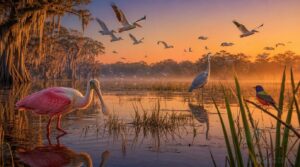
The South doesn’t just tolerate winter — it doubles down on birds. From the Gulf Coast to the Chihuahuan Desert, temperatures stay mild enough that some of the country’s most striking species stick around all season long. Here’s where you’ll want to point your binoculars.
When you’re ready to photograph these winter residents, brushing up on bird photography action shot techniques will help you capture every wing beat in sharp detail.
Florida Birding Trail Network
Florida’s Great Florida Birding and Wildlife Trail is one of the most ambitious birding trail networks in the country — 500+ wildlife viewing sites organized across four regions: East, West, Panhandle, and South. Here are four things that make it unparalleled for winter birdwatching:
- Habitat variety — wetlands, mangroves, pine flatwoods, and coastal scrub all within reach
- Gateway sites guide you to nearby clusters, usually within an hour’s drive
- Accessible boardwalks and towers put wintering waterfowl right at eye level
- An interactive site finder lets you filter by region, amenities, and activities
Look for the swallow-tailed kite logo on roadside signs — it marks every trail entry point.
Everglades Dry-season Birding
When water levels drop across Everglades National Park each November, something extraordinary happens — birds pile in.
| Spot | Key Species | Best Time |
|---|---|---|
| Anhinga Trail | Anhingas, herons, wood storks | Dawn |
| Taylor Slough | Snail kites, ibis, limpkins | Early morning |
| Mangrove shoreline | Osprey, pelicans, roseate spoonbills | Late afternoon |
Dry-season photography conditions are ideal here — low water concentrates wetland birds tightly, giving you close, unobstructed views from boardwalks.
Big Bend Winter Birds
Few places feel as surprisingly alive in winter as Big Bend National Park. The park hosts around 100 wintering bird species from December through February — ducks, sparrows, raptors — drawn in by its Rio Grande wetlands and canyon cover.
Keep an eye out for northern pintails and green-winged teal along Rio Grande Village, one of the park’s most reliable birding hotspots.
Painted Buntings and Pelicans
Two birds steal the show at Merritt Island National Wildlife Refuge each winter: the painted bunting and the American white pelican.
The male bunting — electric blue head, red chest, green back — looks almost unreal against Florida scrub. Keep feeders stocked with millet to pull buntings close.
Pelicans cruise estuaries on nine-foot wingspans.
Mild-weather Birding Routes
Not every winter birding trip needs to mean frozen fingers and predawn alarms.
The Great Florida Birding and Wildlife Trail and the Great Texas Coastal Birding Trail both offer mild-weather birding routes with boardwalks, viewing decks, and calm coastal loops where you can spend a full morning watching herons, pintails, and wigeon without battling ice or wind.
Best Winter Waterfowl Hotspots
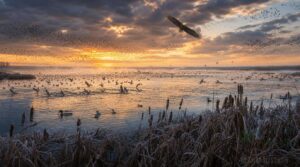
Winter waterfowl watching in the U.S. isn’t just good — it’s genuinely hard to believe until you’ve stood at the edge of a marsh and watched thousands of birds move across the sky at once. handful of spots across the country pull these birds in impressive numbers, from eagle-packed river valleys to bays thick with diving ducks.
Here are the best places to find them this winter.
Klamath Basin Eagles
Few places in North America stop you in your tracks quite like the Klamath Basin in winter. Between December and January, somewhere between 500 and 700 bald eagles descend on this sprawling refuge complex straddling the Oregon-California border — the largest wintering concentration on the continent.
Every winter, up to 700 bald eagles descend on the Klamath Basin — the largest wintering concentration in North America
Drive the Lower Klamath National Wildlife Refuge Auto Tour Route and keep an eye out for eagles perched on fence posts or circling low over flooded fields. Tule Lake and Lower Klamath refuges hold massive waterfowl flocks, which is exactly what draws the eagles in.
What makes Klamath Basin bald eagle winter birding astonishing:
- Bear Valley functions as a communal night roost, with hundreds of eagles gathering at dusk
- Eagle roosting sites peak in mid-January, offering your best viewing windows
- Over 200,000 refuge acres support active winter eagle foraging across open wetlands
Conservation efforts here have steadily improved habitat through strategic winter flooding of agricultural fields, concentrating prey and keeping eagles well-fed through the season.
Middle Creek Snow Geese
From soaring eagles over Klamath to a completely different spectacle — shift your gaze east to Pennsylvania.
At Middle Creek Wildlife Management Area, snow geese from the Atlantic Flyway pack a 400-acre lake between February and March, sometimes numbering 100,000 or more.
Arrive at sunrise to catch the roost departure: thousands of birds lifting off in swirling, white curtains.
Niagara River Gulls
Swap snow geese for gulls, and head north to the Greater Niagara Birding Trail.
In winter, the Niagara River draws over 100,000 gulls — ring-billed, herring, Bonaparte’s, and lesser black-backed — feeding on emerald shiners flushed up by turbine outflows. Keep an eye out for mixed-species flocks swirling above the open water near Niagara Falls.
Tundra Swan Viewing
From gull clouds to something altogether quieter— tundra swans arriving in shallow wetlands are an astonishing sight.
Bear River Migratory Bird Refuge and Klamath Basin are top stops along major flyways.
Arrive at first light, scan flooded fields, and watch for white bodies with black bills resting on mudflats before the morning feeding begins.
Estuaries, Lakes, and Marshes
Where waterfowl gather in winter, the landscape does the work. Estuaries, lakes, and marshes concentrate brackish waterfowl along major flyways, mixing saltwater and freshwater into feeding grounds that few habitats can match.
Tidal mudflats, reed-fringed shorelines, and flooded marshes each draw different species — so scan all three layers.
Wetland restoration has quietly brought many of these birding hotspots back to life.
Best Boreal Winter Birding Locations
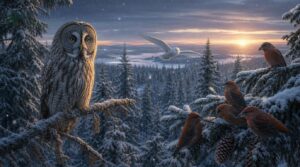
If you’re chasing owls, crossbills, and birds that most people never get to see, boreal winter birding is its own league. The cold doesn’t thin things out — it actually concentrates some of North America’s most sought-after species into a handful of notable spots. Here’s where serious winter birders are heading in 2026.
Sax-Zim Bog Owls
Few birding destinations in the lower 48 match Sax-Zim Bog for raw, boreal magic. Spanning over 300 square miles of black spruce bogs and mixed conifers in northern Minnesota, it’s one of the most reliable spots in the country to find Great Gray Owl during winter owl irruptions — those years when vole populations spike and owls push south in numbers.
Drive the county roads slowly. Owls perch openly on dead snags and treetop spires, especially at dawn and dusk when they’re actively hunting. Keep an eye out for the great gray owl’s astonishing facial disc — nearly a foot across — framed against a pale winter sky. Boreal owl sightings are also common near mature spruce stands, and hawk owls occasionally appear along open bog edges.
Here’s what makes this one of the best birding hotspots in the U.S. in winter:
- The Friends of Sax-Zim Bog welcome center near Zim posts daily sighting reports, so you always know where to look
- Edge habitat between wetlands and forest creates prime hunting ground during crepuscular hours
- Snowy owls occasionally join the mix in harsher winters, drifting down from the Arctic
- Citizen science groups and birding clubs run organized field trips during peak owl season
Sax-Zim access is straightforward — most birding happens from public roads, no trail-breaking required. Responsible birding matters here, though. Owl conservation depends on visitors keeping a respectful distance and resisting the urge to play calls, which stresses birds during an already demanding season.
Michigan Upper Peninsula
Michigan’s Upper Peninsula is one of those places that rewards the cold. In winter, snowy owl habitat expands here as Arctic birds drift south into open fields and lake margins around Lake Greatest shores.
Keep an eye out along forest edges near Pictured Rocks — Upper Peninsula wildlife concentrates where bog meets conifer, making cold weather birding surprisingly productive. Snow buntings sweep low across frozen shorelines in rolling flocks.
Canada Jays and Grosbeaks
Two birds define the boreal winter experience better than almost any others: the Canada jay and the grosbeaks.
Five things worth knowing:
- Canada jays cache thousands of food items in bark crevices and lichen — their version of a winter pantry.
- Winter diet shifts toward berries, carrion, and seeds when insects vanish.
- Pine and Evening Grosbeaks gather in loud, colorful feeder flocks.
- Both species stay tied to intact boreal forest habitat.
- Grosbeak males display brighter plumage heading into breeding season — a useful ID clue.
Crossbills and Chickadees
Crossbills and chickadees are two of winter’s most entertaining boreal regulars.
Crossbill bill variation — shaped by regional cone crops — means the bird prying open spruce cones in Minnesota may look subtly different from one doing the same in Oregon.
Meanwhile, chickadees are quietly resourceful survivalists, caching food in bark crevices and recalling hundreds of hiding spots all winter long.
Snowy Owl Habitats
Few winter sightings stop you cold like a snowy owl on a fence post, white against gray sky.
These Arctic tundra nesters drift south when lemming cycles crash, landing on coastal dunes, agricultural fields, and national wildlife refuges that mimic open tundra.
Climate change is shifting their patterns, so spotting one today feels increasingly rare.
Winter Birdwatching Planning Tips
Knowing where to go is only half the battle — getting there prepared makes all the difference. A few smart choices before you head out can turn a cold, frustrating morning into one you’ll remember for years. Here’s what to keep in mind before your next winter birding trip.
Essential Cold-weather Gear
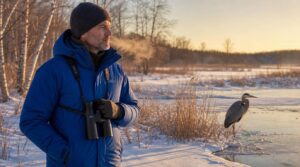
Cold weather has a way of cutting your birding session short if you’re not dressed right.
Start with thermal base layers — Merino wool or synthetic fabrics that pull moisture away from your skin. Over that, add an insulated parka with breathable fabric, so you stay warm without overheating.
Waterproof gloves with touchscreen fingertips let you check your field guide without bare-handing the cold.
Spotting Scopes and Binoculars
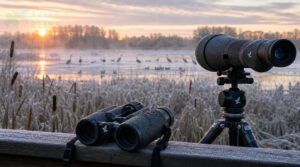
Dressing right gets you out the door — but the right optics keep you in the field.
For birding, binoculars (7x–12x) handle most situations well, giving you a wide field of view for quick scanning.
When birds are distant, a spotting scope with 15x–60x magnification paired with a stable tripod makes all the difference.
Look for fully multi-coated lenses for sharper light transmission in low winter light.
Winter Bird Identification
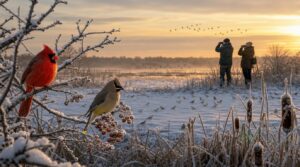
Good optics reveal the bird — but knowing what to look for seals the ID.
Winter plumage clues are your first filter. Many species shift colors seasonally: northern cardinals fade to duller browns, and snow buntings flash bright white underparts that stand out clearly against frozen ground. Seasonal bill colors change too, so check field guides updated for winter.
Focus on facial pattern recognition — a black mask on a cedar waxwing separates it instantly from similar-looking thrushes. Then scan for wing bar identification on flying birds. These quick visual anchors work whether you’re at winter wildlife refuges, national parks, or watching winter bird migration pass overhead.
Bird Photography Tips
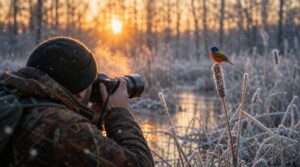
Once you’ve spotted and ID’d a bird, the next instinct is to capture it. A few settings make all the difference.
Shutter speed of 1/1000s or faster freezes wing movement cleanly. Pair that with continuous autofocus tracking and burst mode, and you’ll pull sharp frames from chaos.
Shoot during early morning light and position the bird off-center for natural-feeling shots.
Responsible Refuge Visits
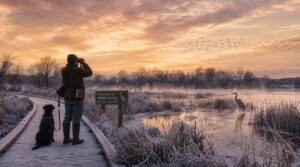
When you visit a wildlife refuge or birding hotspot, you’re a guest — and that mindset matters. Always get consent before entering private spaces, respect quiet hours so you don’t disturb roosting birds or resting residents, and keep pets supervised.
Learn basic cultural etiquette beforehand, carry emergency contacts, and follow posted rules. Good birders leave places exactly as they found them.
Frequently Asked Questions (FAQs)
Which apps help identify winter birds in the field?
A few apps make field ID much easier. Merlin Sound ID works offline, BirdNET Audio processes recordings instantly, and BirdsEye Alerts flags nearby species. iBird Pro’s visual recognition and photo-matching round out your toolkit perfectly.
Do birding trails charge entrance or parking fees?
Some trails are free; others aren’t. Entrance fees usually run $2–$10 per adult, with parking fees adding $1–$6 per vehicle. An annual pass often covers both and pays for itself quickly.
How do weather patterns affect winter bird migrations?
Weather drives everything. Temperature thresholds, wind patterns, and cold snaps all shift when and where birds move. A sudden freeze can trigger mass movements overnight, while steady tailwinds push flocks hundreds of miles in a single flight.
Are guided winter birding tours available at these locations?
Yes, guided winter birding tours run at most major sites, from Oregon’s coast to Texas refuges and Sax-Zim Bog. Many require advance booking, with seasonal itineraries usually running November through February.
What time of day are winter birds most active?
Early morning is prime time — most winter birds feed hard in the first two hours after sunrise. Activity dips midday, then picks up again late afternoon before roost.
Conclusion
Like a lens slowly coming into focus, winter reveals what summer hides—birds pushed into the open, concentrated along coasts, marshes, and bogs where you can actually see them. The best winter birdwatching locations don’t ask much: a willingness to get cold, move slowly, and look carefully.
Eagles, owls, snow geese, tundra swans—they’re all out there waiting. You just have to show up.
- https://www.birdcollective.com/blogs/news/our-15-top-us-birdwatching-destinations
- https://www.audubon.org/magazine/8-great-winter-birding-trails
- https://www.nature.org/en-us/about-us/where-we-work/united-states/washington/stories-in-washington/snow-geese
- http://www.oregoncoastbirding.com/
- https://tpwd.texas.gov/huntwild/wildlife/wildlife-trails/ctc