This site is supported by our readers. We may earn a commission, at no cost to you, if you purchase through links.
A chickadee’s body temperature can drop 10-12 degrees overnight just to survive a January freeze, and come morning, it needs fuel fast. That’s the reality your backyard visitors face all winter: burning through up to 80% of their fat reserves during cold snaps, with little room for error. A sunflower seed packed with 38% fat does more for a bird’s survival than a whole feeder of cheap filler.
Choosing the right wild bird seed for winter feeding means understanding what your feathered friends actually need—energy-dense fuel, not empty calories. Get it right, and you’ll watch cardinals, nuthatches, and woodpeckers return to your yard through the harshest months.
Table Of Contents
- Key Takeaways
- Top 9 Wild Bird Seeds for Winter
- 1. Wagner’s Black Oil Sunflower Bird Seed
- 2. Peanut Delight No Melt Suet
- 3. Organic Shelled Peanuts for Wildlife
- 4. High Energy All Season Suet
- 5. Kaytee Striped Sunflower Bird Seed
- 6. High Energy Wild Bird Suet Cakes
- 7. Audubon Park Cardinal Blend Bird Food
- 8. Kaytee Shelled Peanuts For Wild Birds
- 9. Meadow Ridge Farms Black Oil Sunflower Seed
- Winter Nutritional Needs for Wild Birds
- Matching Seed Types to Bird Species
- Feeder Placement and Winter Maintenance
- Storing Bird Seed to Keep It Fresh
- Frequently Asked Questions (FAQs)
- What is the best thing to feed wild birds in the winter?
- What is the 5 7 9 rule for bird feeders?
- Why put a potato in the bird feeder?
- What is the best seed to feed wild birds?
- How much bird seed should I buy?
- What time of day should I feed birds?
- Can I make homemade bird seed mixes myself?
- Do I need different feeders for different seeds?
- Is it okay to feed birds year-round?
- Conclusion
Key Takeaways
- Small songbirds can burn up to 80% of their fat reserves in a single cold snap, making high-fat foods like black oil sunflower seeds (38%+ fat) essential winter fuel.
- The best winter seed blends prioritize energy density, aiming for at least 70% sunflower, safflower, and peanuts with minimal filler grains like millet.
- Matching seed and feeder type to species matters, since thick-beaked birds like cardinals need platform feeders while small finches rely on nyjer seed in mesh feeders.
- Proper feeder placement (5-7 feet high, away from windows and predator cover) and regular cleaning with a bleach solution prevent disease and injury among visiting birds.
Top 9 Wild Bird Seeds for Winter
Winter turns backyard feeding into a real lifeline, and picking the right seed can make all the difference for the birds counting on you.
Understanding which seeds pack the most energy and appeal to your local species starts with a solid grasp of essential bird feeding habits and preferences.
Not every bag on the store shelf offers the fat and protein your feathered visitors need to make it through those long, cold nights.
Here are nine tried-and-true options worth adding to your feeder lineup this season.
1. Wagner’s Black Oil Sunflower Bird Seed
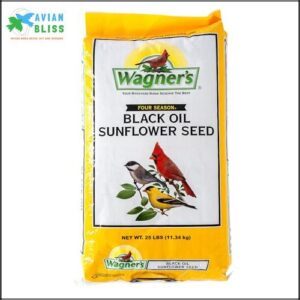
A backyard feeder’s true test is whether birds keep coming back, and Wagner’s Black Oil Sunflower Bird Seed passes with room to spare. These thin-shelled seeds pack 38.5% crude fat, giving cardinals, chickadees, and woodpeckers the fuel they need on frigid mornings.
Made in the USA and sold in 5, 20, or 50-pound bags, it fits hopper or tray feeders easily. Feeding tests show 75% of visitors prefer it—proof your feathered friends know good nutrition when they taste it.
| Best For | Backyard bird enthusiasts who want to attract a wide variety of wild birds like cardinals, chickadees, finches, nuthatches, and woodpeckers to their feeders. |
|---|---|
| Form | Seed |
| Life Stage | All |
| Primary Ingredient | Sunflower |
| Feeder Type | Tray/Hopper |
| Target Species | Cardinals/Finches |
| Country of Origin | USA |
| Additional Features |
|
- Thin-shell design makes it easy for birds to access the seed quickly
- High energy content supports wild bird health across all life stages
- Made in the USA using high-quality grains
- Only works well with the right equipment, like tray or hopper feeders
- Designed for wild birds only, not suitable for domestic pets
- Requires additional feeding hardware for optimal results, which may mean extra setup or cost
2. Peanut Delight No Melt Suet
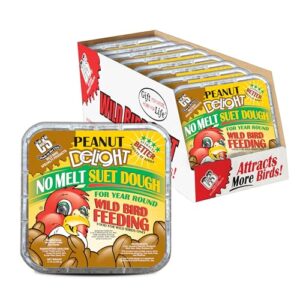
Seeds aren’t the only game in town when insect-eaters and clinging birds come calling. C&S Peanut Delight is a no-melt suet dough made from roasted peanuts, beef suet, corn, and oats, holding its shape in temperatures up to 100°F.
Each 11.75-ounce cake fits standard suet feeders and delivers 20% crude fat—the dense energy woodpeckers, nuthatches, and chickadees need. Refrigerate before loading; it eases removal and keeps mess to a minimum.
| Best For | Backyard bird enthusiasts in warm climates who want to attract woodpeckers, nuthatches, chickadees, and wrens without dealing with melted, messy suet. |
|---|---|
| Form | Suet Dough |
| Life Stage | All |
| Primary Ingredient | Suet/Peanut |
| Feeder Type | Suet Feeder |
| Target Species | Woodpeckers/Wrens |
| Country of Origin | USA |
| Additional Features |
|
- Holds its shape in temperatures up to 100°F, making it ideal for year-round feeding in hot weather
- Fully consumable dough leaves behind no shells or waste, keeping feeders and the ground below clean
- Made in the USA with a high energy blend of beef suet and roasted peanuts for essential fats and protein
- Requires a standard wire suet feeder, so it won’t work for open tray or platform setups
- Needs refrigeration beforehand for easier removal from the packaging, adding an extra step
- Contains peanuts, which may not be suitable for feeders in areas with peanut allergy concerns or picky bird populations
3. Organic Shelled Peanuts for Wildlife
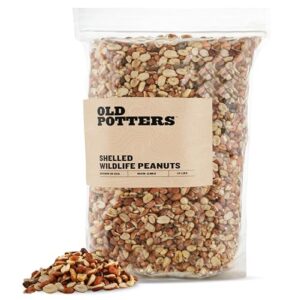
Some birds just don’t do suet, and that’s where organic shelled peanuts earn their keep. Each 100-gram serving packs 25.8 grams of protein and 567 calories, fueling the muscle and fat reserves birds burn through overnight.
Woodpeckers, jays, and nuthatches flock to these, shells already removed so smaller beaks aren’t left struggling. Stick to raw, unsalted peanuts from trustworthy sources—aflatoxin contamination is no joke. Feed responsibly, alongside seeds and suet, and your yard becomes a genuine winter refuge.
| Best For | Backyard bird enthusiasts who want to support woodpeckers, jays, nuthatches, and other wild birds (plus squirrels) with an easy-to-eat, high-protein food source through the colder months. |
|---|---|
| Form | Shelled |
| Life Stage | N/A |
| Primary Ingredient | Peanuts |
| Feeder Type | Any |
| Target Species | Songbirds/Squirrels |
| Country of Origin | USA |
| Additional Features |
|
- Shells are already removed, making it easy for smaller birds to eat without a struggle
- Non-GMO and organic, sourced from small farms across the USA
- High in protein and calories, helping birds maintain energy and fat reserves overnight
- Bulk quantity means you’ll need proper storage to keep peanuts fresh
- Raw peanuts carry some risk of aflatoxin contamination if not sourced carefully
- Meant for wildlife only, so it’s not a substitute for pet-safe or human-grade peanuts
4. High Energy All Season Suet
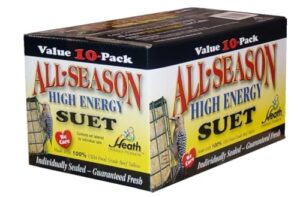
Some yards need year-round backup, not just a winter fix, and that’s where High Energy All Season Suet steps in. At 35% crude fat and roughly 385 calories per 11-ounce cake, it packs serious fuel while staying firm up to 100°F.
Rendered beef suet blends with corn, millet, and black oil sunflower seeds, so woodpeckers, chickadees, and wrens all find something to love, no matter the season.
| Best For | backyard bird enthusiasts who want to keep woodpeckers, chickadees, nuthatches, and wrens fed with a high-energy suet that holds up in any season. |
|---|---|
| Form | Suet Cake |
| Life Stage | All |
| Primary Ingredient | Suet Blend |
| Feeder Type | Suet Feeder |
| Target Species | Songbirds |
| Country of Origin | USA |
| Additional Features |
|
- Nutrient-rich Bird’s Blend formula supports energy needs year-round, from winter survival to spring nesting
- Stays firm in temperatures up to 100°F, so it won’t melt or turn mushy in warmer months
- Bulk 10-pack of unlabeled cakes gives backyard bird lovers a long-term supply without constant restocking
- Individual suet cakes are unlabeled, making them hard to identify once out of the packaging
- Packaging can be tricky to open and may tear easily during use
- Putty-like texture can leave residue in feeders and containers, and may also attract squirrels
5. Kaytee Striped Sunflower Bird Seed
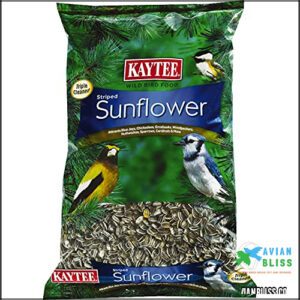
Thicker shells set this one apart, giving larger-beaked visitors like blue jays and cardinals an easier grip than black oil varieties allow.
For a well-rounded mix that keeps your feeder busy all season, pair striped varieties with expert-recommended winter bird seed blends tailored to cold-weather feeding needs.
Each 5-pound bag delivers 22% crude fat and around 450–500 calories per pound, plenty to fuel cold nights. Triple-cleaned processing strips away 95% of harvest debris, so your feeder stays tidier between refills.
Because the shells resist moisture better, spoilage risk drops, too. Your yard’s toughest-beaked regulars will settle in fast.
| Best For | This is best for bird enthusiasts who want to attract larger, striking backyard visitors like blue jays, woodpeckers, and cardinals with a high-energy outdoor feed. |
|---|---|
| Form | Seed |
| Life Stage | All |
| Primary Ingredient | Sunflower |
| Feeder Type | Any |
| Target Species | Jays/Cardinals |
| Country of Origin | USA |
| Additional Features |
|
- High oil content provides strong energy support for wild birds
- Cleaned seeds mean less mess and debris around the feeder
- Suitable for birds at all life stages
- Mainly appeals to larger bird species, so smaller birds may be less interested
- Meant for outdoor use only, limiting its versatility
- May attract fewer visitors if your yard mostly hosts smaller songbirds
6. High Energy Wild Bird Suet Cakes
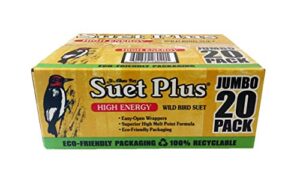
Woodpeckers, chickadees, and nuthatches don’t visit seed feeders as often as they visit suet, and that’s exactly why these cakes earn a spot on your feeder pole. Each 11-ounce cake packs 35% crude fat with rendered beef suet, cracked corn, and black oil sunflower folded in.
The melt-resistant formula holds firm up to 85°F, so it won’t turn into a greasy puddle on warmer days. Suet metabolizes fast, giving shivering birds the quick energy boost they need through frigid nights.
| Best For | Bird lovers who want to attract woodpeckers, chickadees, nuthatches, and other suet-loving species to their yard with a mess-free, high-energy food source. |
|---|---|
| Form | Suet Cake |
| Life Stage | All |
| Primary Ingredient | Suet Blend |
| Feeder Type | Suet Feeder |
| Target Species | Woodpeckers/Cardinals |
| Country of Origin | USA |
| Additional Features |
|
- Melt-resistant formula stays stable in warmer weather instead of turning into a greasy mess
- High-fat blend gives birds a fast energy source, especially helpful during cold weather
- Easy-open, 100% recyclable packaging makes for no-mess dispensing
- Still needs to be stored in a cool, dry spot to stay fresh
- Contains processed grain by-products, which some bird enthusiasts prefer to avoid
- Melt resistance has limits, so extreme heat can still affect the cake’s texture
7. Audubon Park Cardinal Blend Bird Food
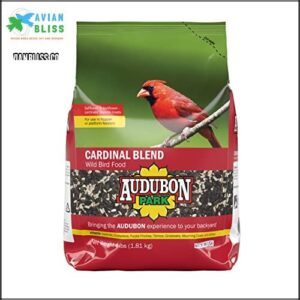
Two ingredients, no fillers, no nonsense: just black oil sunflower and safflower seed, the exact combo cardinals crave most. Their thick beaks crack both with ease, and safflower’s bitter edge happens to keep squirrels at bay.
Chickadees, titmice, and finches will crowd in too, turning your hopper or platform feeder into a genuine winter gathering spot. At 4 pounds, it’s a manageable bag that delivers real energy—no corn, no waste, just seed your feathered friends actually eat.
| Best For | Bird lovers who want to attract cardinals, chickadees, titmice, and finches to a hopper, tube, or platform feeder while keeping squirrels away. |
|---|---|
| Form | Seed |
| Life Stage | All |
| Primary Ingredient | Sunflower/Safflower |
| Feeder Type | Hopper/Tube |
| Target Species | Cardinals/Finches |
| Country of Origin | USA |
| Additional Features |
|
- Simple two-ingredient formula with no fillers, so birds get pure nutrition without waste
- Safflower seed naturally discourages squirrels from raiding the feeder
- Works across multiple feeder types, making it easy to fit into your existing setup
- May contain traces of peanuts, soy, tree nuts, or wheat, which could be a concern for allergy-sensitive households
- Only appeals to birds that specifically eat sunflower and safflower seeds, so it won’t attract every backyard species
- At 4 pounds, larger flocks or high-traffic feeders may go through the bag quickly
8. Kaytee Shelled Peanuts For Wild Birds
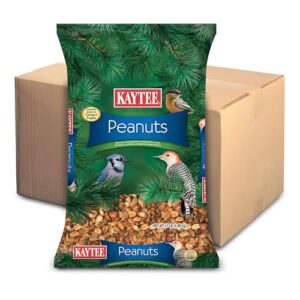
No shell means no work for your birds—they get straight to the fat and protein that carry them through freezing nights. Kaytee’s shelled peanuts pack 45% crude fat and 24% protein, plus zinc, iron, and vitamin E for immune support.
Woodpeckers, nuthatches, jays, towhees, cardinals, and indigo buntings all flock to this one, and smaller titmice and chickadees join in too. Use a hopper or wide mesh feeder, and reseal the bag tight to keep moisture out.
| Best For | Backyard bird enthusiasts who want to attract high-energy species like cardinals, woodpeckers, and blue jays with a mess-free, ready-to-eat peanut feed. |
|---|---|
| Form | Suet Chunk |
| Life Stage | All |
| Primary Ingredient | Suet/Seed |
| Feeder Type | Suet Cage |
| Target Species | Woodpeckers/Sparrows |
| Country of Origin | USA |
| Additional Features |
|
- Shell-free pieces mean 100% edibility and virtually no mess left behind on lawns or patios
- High fat (45%) and protein (24%) content helps birds power through cold weather and supports year-round health
- Attracts a wide variety of species, from woodpeckers and cardinals to smaller chickadees and titmice
- Outdoor use only, so it’s not suitable for indoor bird care
- High fat content may not be appropriate for every bird species
- Requires a compatible hopper, tube, or platform feeder to use effectively
9. Meadow Ridge Farms Black Oil Sunflower Seed
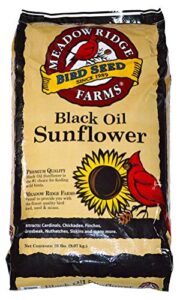
Sourced straight from South Dakota family farms, this 20-pound bag brings simplicity back to backyard feeding: 100% black oil sunflower, nothing else added. Blended and bagged daily in Delano, Minnesota, it stays fresh and works in tube, hopper, window, and platform feeders alike.
Cardinals, finches, nuthatches, and chickadees all show up for it. The thin shells mean less energy spent cracking seed and more spent staying warm—exactly what winter birds need when every calorie counts.
| Best For | backyard bird enthusiasts who want a simple, single-ingredient seed that draws cardinals, finches, nuthatches, and chickadees to tube, hopper, window, or platform feeders. |
|---|---|
| Form | Peanut Pieces |
| Life Stage | All |
| Primary Ingredient | Peanuts |
| Feeder Type | Hopper/Tube |
| Target Species | Cardinals/Jays |
| Country of Origin | USA |
| Additional Features |
|
- 100% black oil sunflower with no fillers or additives
- Freshly blended and bagged daily in Delano, Minnesota
- Thin shells make it easy for birds to crack, giving them more energy to stay warm
- Single-ingredient formula may not cover the full nutritional needs of every bird species
- Meant for adult birds only, not suitable for all life stages
- 20-pound bulk bag requires proper storage to stay fresh
Winter Nutritional Needs for Wild Birds
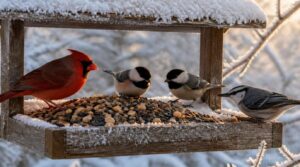
Winter is tough on wild birds, and understanding what fuels them through those long, cold nights can help you feed smarter, not just more. Every bird visiting your feeder is burning through energy reserves fast, so the food you offer needs to work as hard as they do. Here’s what actually keeps them warm and thriving, and how to make sure your seed choices measure up.
Fat Reserves and Cold Survival
Picture losing a tenth of your own body weight overnight, every single night, just to stay warm. That’s winter survival for small songbirds, who burn up to 80% of their fat reserves in a single cold snap.
Small songbirds burn up to 80% of their fat reserves in a single cold snap just to survive the night
This nightly cycle of gaining and losing weight is why winter bird feeding matters so much, and why black oil sunflower seeds remain the best bird seed for winter survival. Providing high fat foods is essential to help birds replace these essential energy reserves.
High-Energy Fats Vs Carbohydrates
Not all calories are created equal. Fat delivers roughly 9 calories per gram versus glycogen’s 4, and it metabolizes three times faster—critical when a bird needs quick overnight survival fuel.
- Higher caloric density than any carb-based seed
- Converts to usable energy fast, when minutes matter
- Costs less metabolic effort than turning carbs into fat
That’s why fat-rich seeds beat filler grains every time.
Key Micronutrients for Immunity
Fat and calories only tell half the story—your backyard birds also need vitamin A, zinc, vitamin E, and selenium for real immune protection.
Zinc powers over 300 enzyme functions; vitamin E fights oxidative stress; selenium boosts antibody production.
Seeds with beta-carotene convert safely to vitamin A, filling gaps in nutrient-dense winter blends most all-seed diets miss entirely.
Ideal Seed Blend Ratios
Vitamins matter, but ratios make or break a mix. Look for at least 70% sunflower, safflower, and peanuts—that’s where real energy hides.
- Guaranteed analysis showing 30% fat, 15% protein
- Shelled peanuts at 20–25% of the mix
- Zero red millet, golden millet, or flax
- Mealworms added at 5–10% for feathers
- High edible content, minimal shell waste
Matching Seed Types to Bird Species
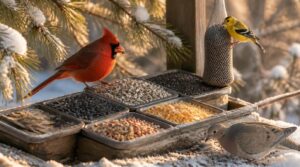
Not every bird eats the same way, and that’s exactly why one seed mix won’t please them all. Some species need thick shells cracked open, while others just want soft, easy bites they can grab and go. Here’s how to match the right seed to the right beak.
Woodpeckers and Blue Jays
Ever watch a blue jay bully every other bird off the feeder? These two are winter’s toughest customers, favoring black oil sunflower seeds, peanuts, and suet cakes.
| Bird | Top Picks | Winter Habit |
|---|---|---|
| Woodpecker | Suet, shelled peanuts | Drills bark for insects |
| Blue Jay | Sunflower, whole peanuts | Caches acorns in throat pouch |
Male woodpeckers forage high; females work lower trunks. Blue jays flock together, dominating suet bird feeders through sheer nerve.
Cardinals and Thick-Beaked Birds
That flash of red at your feeder isn’t an accident—cardinals plan their visits, arriving first at dawn and lingering until dusk. Their thick, conical beaks evolved for cracking hard shells, making black oil sunflower seeds and safflower easy targets.
Skip tube feeders; cardinals need platform feeders for stable footing. Pair sunflower seeds with suet cakes for the high energy content winter demands.
Chickadees and Nuthatches
Fifty sunflower seeds a day—that’s roughly what a chickadee needs just to survive winter’s cold. These tiny birds and their nuthatch neighbors thrive on black oil sunflower seeds and unsalted peanuts.
Nuthatches forage headfirst down tree trunks, later caching extras under bark for lean days. Both species dart in, grab one seed, and retreat—so keep suet cakes and tube feeders stocked along their regular winter foraging routes.
Ground-Foraging Sparrows
Watch a chipping sparrow work a feeding area and you’ll see thick, triangular bills built for cracking, not just pecking. These ground foragers use double scratch techniques, hopping and kicking through leaf litter to expose hidden seeds.
Scatter cracked corn and millet directly on soil—elevated platforms won’t cut it. One sparrow eats 2.25 pounds of seed all winter, so keep feeding areas generous for these social flocks.
Small-Beaked Finches
A tiny conical beak, barely an inch long, is precision equipment for tiny seed extraction from catkins and cones. That’s why nyjer seed keeps goldfinches and siskins coming back—35-40% oil content fuels winter flocks that can number in the thousands.
They’ll stash a throat-pouch’s worth for later, then pack a tube feeder’s narrow ports shoulder to shoulder, working nyjer and safflower with astonishing speed.
Feeder Placement and Winter Maintenance
Good seed only does half the job; where and how you set up your feeder matters just as much. A well-placed, well-kept feeder keeps birds safe, fed, and coming back all winter long. Here’s what you need to know about placement and upkeep, from height to cleaning to keeping the seed dry.
Ideal Feeder Height and Distance
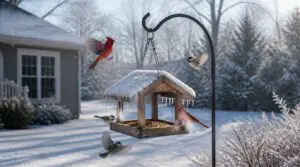
Where you hang your feeder matters as much as what’s in it. Aim for 5 to 7 feet high—tall enough to block cats and stop squirrels, who can leap 8 feet horizontally.
Keep feeders within 30 feet of windows or under 3 feet, reducing deadly collisions. Place them 5 to 10 feet from shrubs, giving backyard birds cover without hiding predators nearby.
Cleaning and Sanitizing Schedules
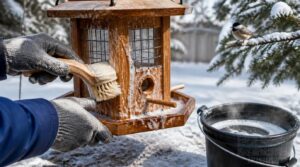
A dirty feeder can spread disease faster than any winter storm. Clean every other week using one part bleach to nine parts water, scrubbing perches and access holes where bacteria hide.
Rake seed hulls beneath feeders weekly, too—soggy ground breeds mold. If you spot sick birds or foul odors, don’t wait: sanitize immediately.
Clean feeders mean healthy, happy visitors all season long.
Weatherproofing Against Moisture
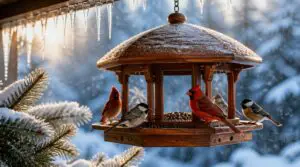
Once your feeder’s sanitized, keeping it dry matters just as much—wet seed spoils fast and breeds mold within days.
Weatherproof feeder designs like dome tops and hopper overhangs deflect snow naturally. Boost protection with:
- Marine-grade varnish on wooden feeders
- Drilled drainage holes for runoff
- Sloped platforms directing water away
Strategic placement under eaves adds another shield, keeping seed fresh and your feathered friends fed.
Predator and Window Safety
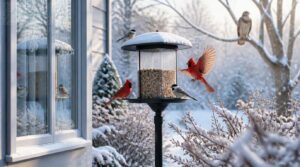
Keeping seed dry is only half the safety picture—where you place that feeder matters just as much.
Stick to the 3-foot or 30-foot rule for windows, since the "danger zone" between causes most fatal strikes.
Add window decals spaced 2-4 inches apart, mount feeders 5-6 feet high, and keep 10-15 feet of open buffer from shrubs to outsmart lurking predators.
Refilling Frequency Guidelines
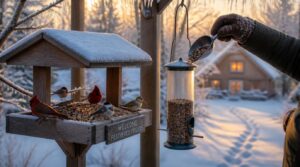
Once safety’s sorted, timing takes over. In deep cold below 20°F, refill twice daily—morning and dusk—so birds have fuel through the night. Snow past six inches or icy crusts calls for the same.
Mild, sunny stretches let you stretch it to every 2-3 days. Watch traffic: empty trays by mid-morning mean it’s time for a top-up.
Storing Bird Seed to Keep It Fresh
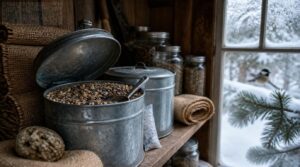
Buying the right seed is only half the job, because how you store it decides whether birds get real nutrition or spoiled leftovers.
Temperature, moisture, and a few warning signs make all the difference between a healthy feeder and a moldy mess.
Here’s what you need to know to keep every bag fresh and safe, right up to that last handful.
Airtight Containers and Temperature
Temperature swings do more damage to birdseed than most folks realize. An airtight container stored between 40-70°F keeps oils from turning rancid, while galvanized metal outperforms plastic in freezing snaps.
- Protects the fat reserves birds depend on to survive frigid nights
- Prevents seed spoilage that wastes your hard-earned money
- Guards against oxidation that robs seeds of nutrition
- Keeps your feeder stocked with food birds actually want
Moisture Control Standards
Rarely does humidity get the credit it deserves, but it’s the real culprit behind mushy, spoiled seed. Aim for 30% relative humidity with moisture content under 12%—cooler spots (40-70°F) make this easier to hold steady.
Silica gel packets nearby (not buried in the seed) help absorb excess moisture, and a simple humidity pen keeps you honest about what’s really happening inside that container.
Spotting Spoiled or Moldy Seed
How do you know when seed’s gone bad? Trust your senses.
- White or greenish fuzz on kernels
- Sour, musty smell replacing that nutty aroma
- Slimy or sticky texture instead of dry, loose seed
- Sprouted shoots or swollen, split shells
- Birds suddenly avoiding a once-busy feeder
Even weak-nosed birds detect rancid oils, so if you smell trouble, they will too—and they’ll skip your feeder entirely.
Foods to Never Feed Birds
Five kitchen staples can kill a bird fast: avocado, chocolate, alcohol, dairy, and onions or garlic. Avocado’s persin stops a heart within days; theobromine in chocolate triggers seizures within hours. Fruit pits carry cyanide, alliums destroy blood cells, and alcohol shuts down the nervous system in one sip.
Skip filler-heavy millet mixes, too—they invite mold and offer little nutrition.
Frequently Asked Questions (FAQs)
What is the best thing to feed wild birds in the winter?
An early bird gets the worm — but a smart bird gets black oil sunflower seeds. With 51% fat for overnight survival energy, plus peanuts and suet for protein and muscle repair, these form the best bird seed for winter feeding.
What is the 5 7 9 rule for bird feeders?
The 5-7-9 rule guides squirrel-proof placement: mount feeders 5 feet high, 7 feet from launch points like fences, and 9 feet below overhanging branches—blocking squirrels’ jumping, leaping, and dropping reach for truly protected winter bird seed.
Why put a potato in the bird feeder?
A plain cooked potato, mashed and unseasoned, offers 87 calories per 100g and draws robins, wrens, and crows that skip seeds entirely. It’s a budget-friendly treat—just swap it in every 1–2 days, room temperature, no salt or butter.
What is the best seed to feed wild birds?
Black oil sunflower seeds are your best bet, delivering roughly 1,800 calories per pound with a high fat content that fuels overnight survival. They’re easy to use, affordable, and welcomed by nearly every backyard species during winter bird feeding.
How much bird seed should I buy?
Think of your feeder as a hungry campfire that needs steady fuel, not occasional kindling. Buy 20-50 pound bulk bags for high-traffic stations, since winter feeding demand spikes and proper storage keeps seed fresh for 3-6 months.
What time of day should I feed birds?
Dawn and dusk work best: morning feeding peaks around 8–9 AM refuel overnight losses, while afternoon visits help backyard birds build evening fat reserves for cold nights.
Adjust with seasonal timing shifts and weather—icy days mean birds need feeders more often.
Can I make homemade bird seed mixes myself?
Absolutely — mixing your own bird seed mixes cuts costs 30-50%, lets you skip filler seeds like milo, and use kitchen scraps.
Customize ratios per species, choosing nutrient-dense ingredients for a truly high energy bird seed mix your feathered friends will thank you for.
Do I need different feeders for different seeds?
Yes—picking the wrong feeder is like serving soup with a fork.
Tube feeder ports suit sunflower seed, mesh feeder airflow keeps nyjer dry, hopper reservoir protection guards mixes, and platform rim design works for ground feeders like cardinals and sparrows perfectly.
Is it okay to feed birds year-round?
Feeding year-round is safe and won’t create dependency—birds forage naturally regardless.
Just remember: summer diets need insects, not seeds, since backyard birds feed chicks protein.
Watching feeders even boosts your mood, so keep that feeder stocked through every season.
Conclusion
A single feeder stocked right could practically rescue an entire flock from winter’s worst nights. That’s barely an exaggeration: birds facing sub-zero cold depend entirely on the fuel you provide.
Choosing quality wild bird seed for winter feeding isn’t just a chore, it’s a lifeline disguised as birdseed. Fill feeders with real fat and protein, keep them clean and dry, and your yard becomes a true sanctuary.
Small effort, big difference—your feathered friends will thank you.
- http://www.wagners.com/products.html
- https://www.springhausagro.com/post/black-sunflower
- https://www.allaboutbirds.org/news/types-of-bird-seed-a-quick-guide
- https://www.homedepot.com/p/Wagner-s-Four-Season-20-lb-Black-Oil-Sunflower-Seed-76026/202260360
- https://paulbhardware.com/black-oil-sunflower-seed-50-lb-sfs50